The Story
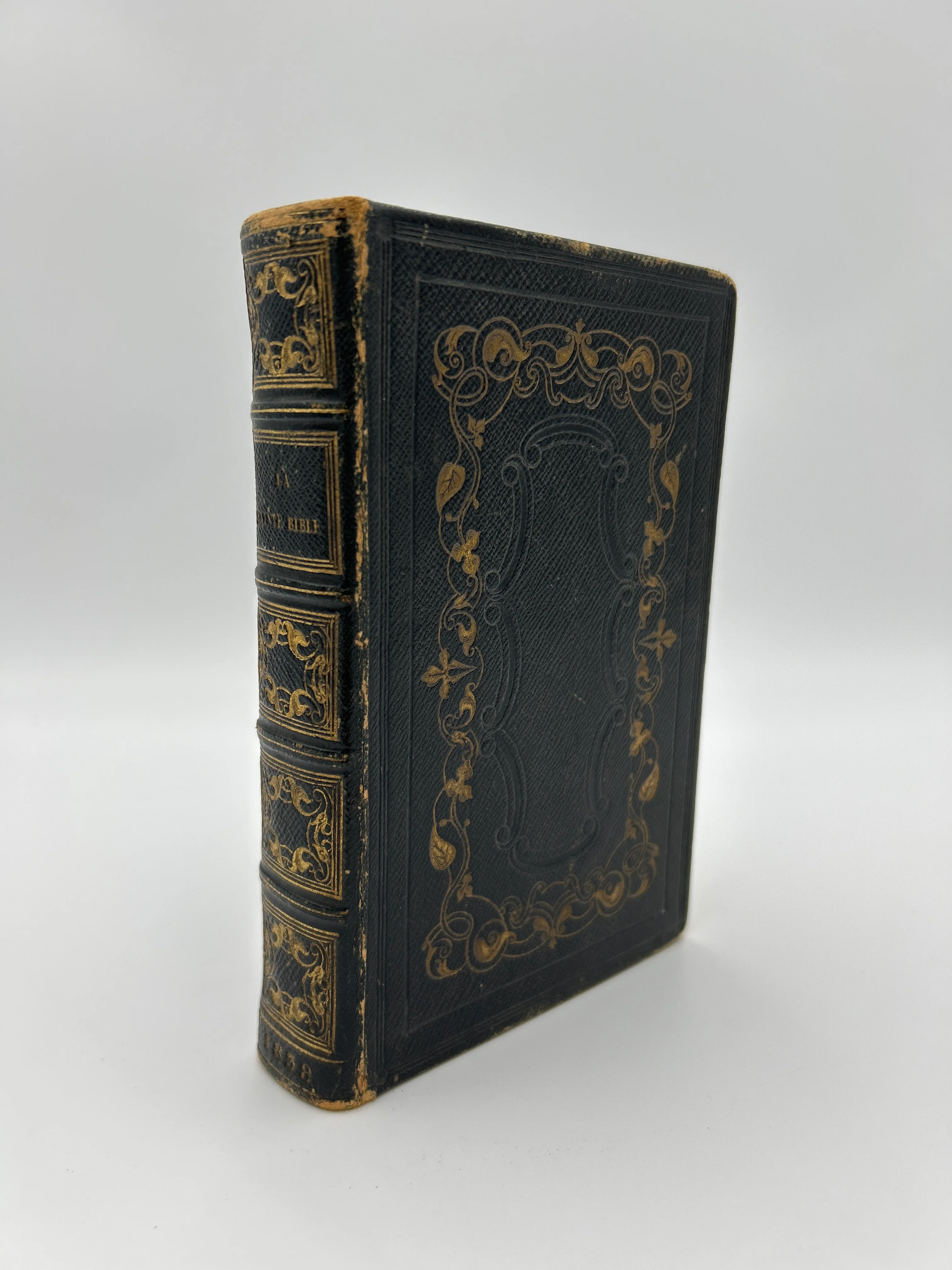
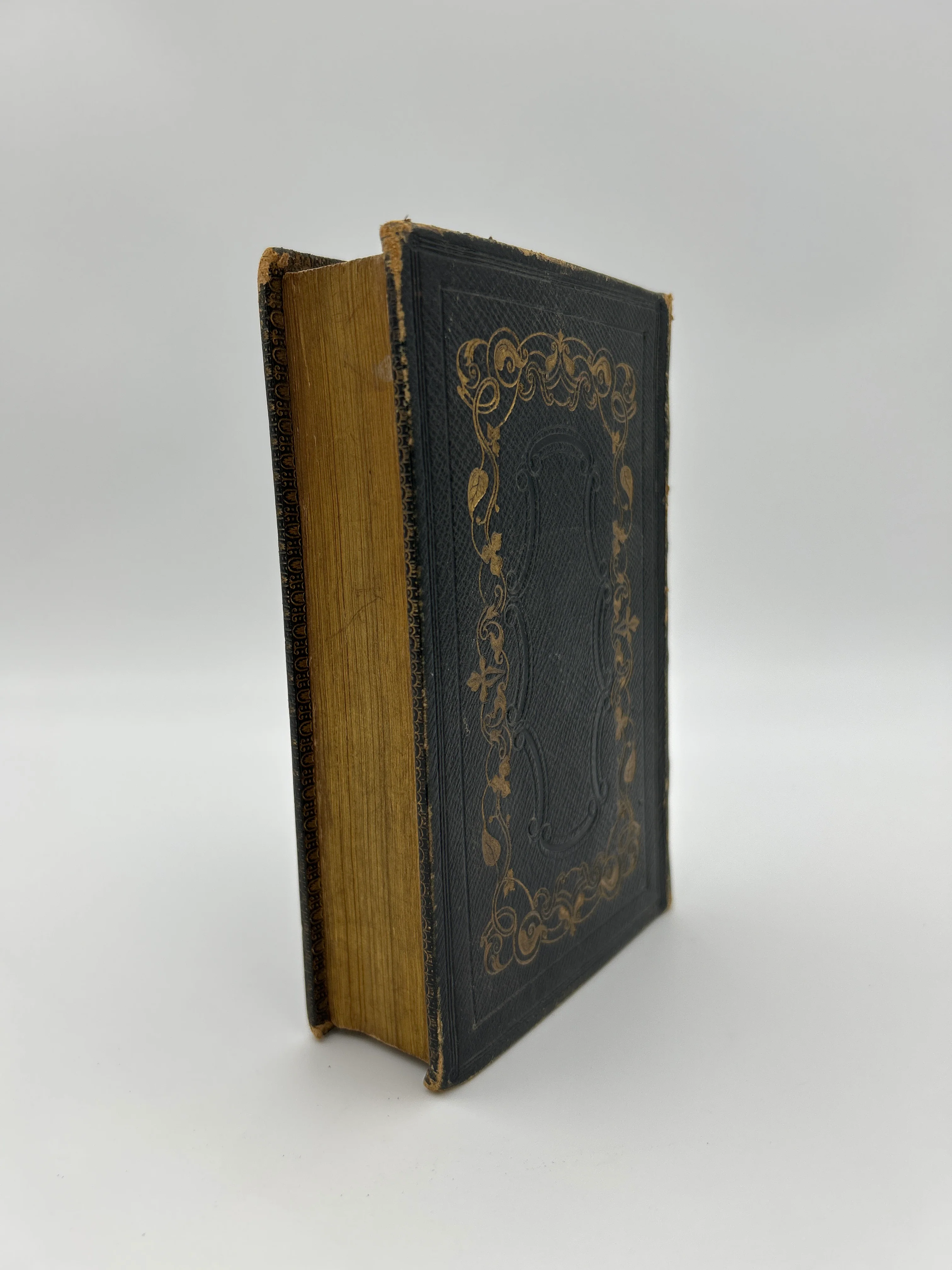
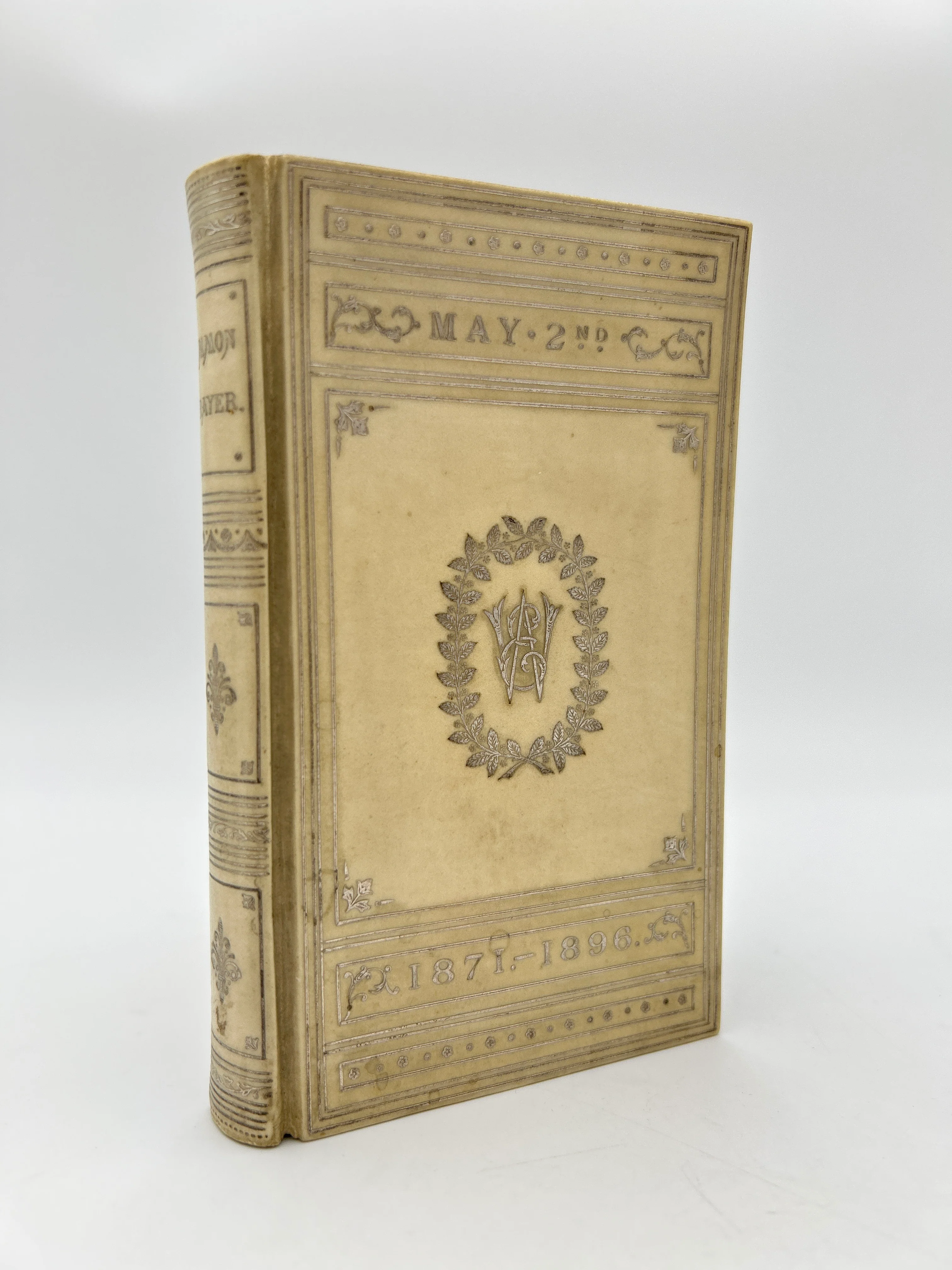
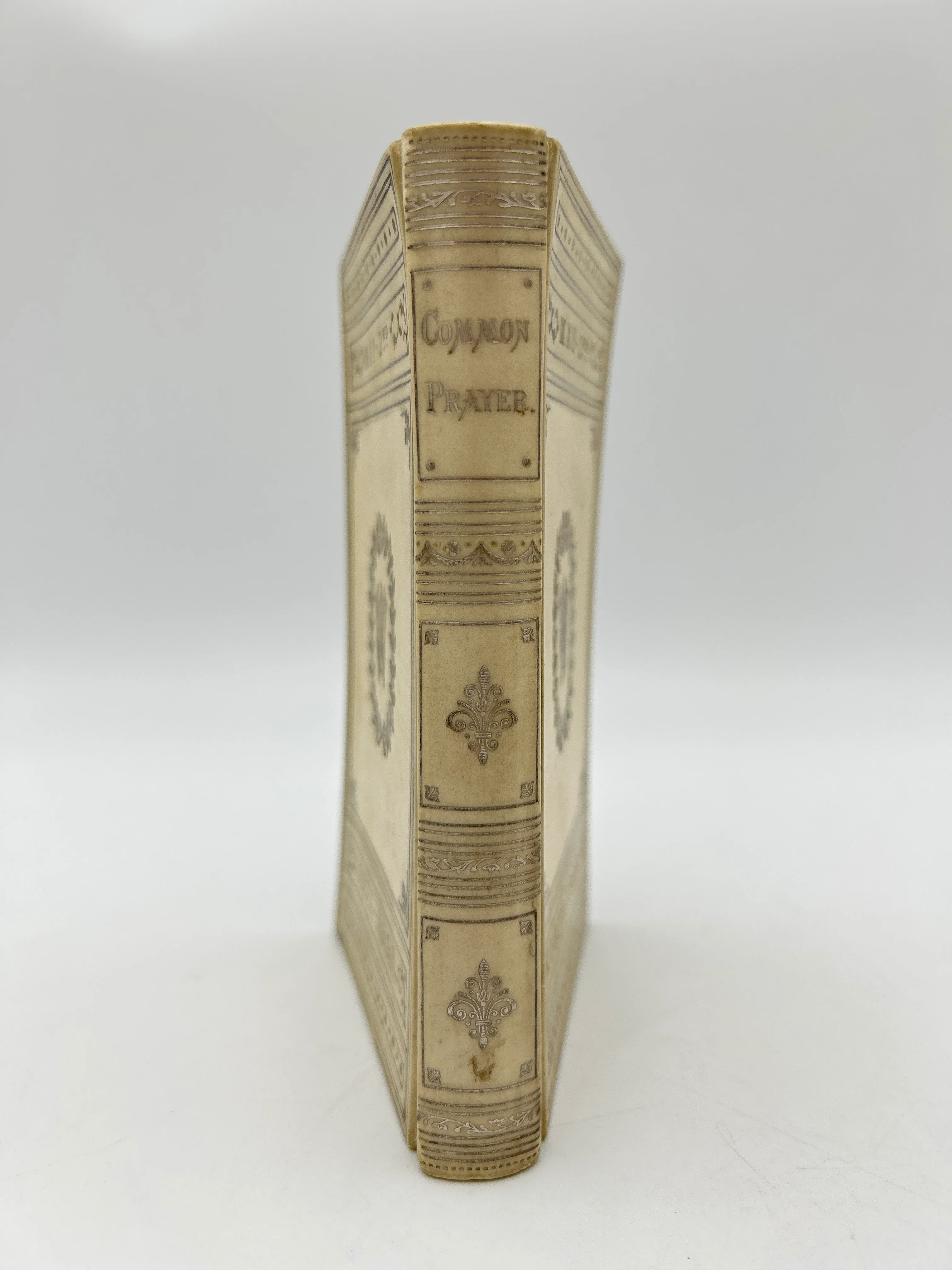
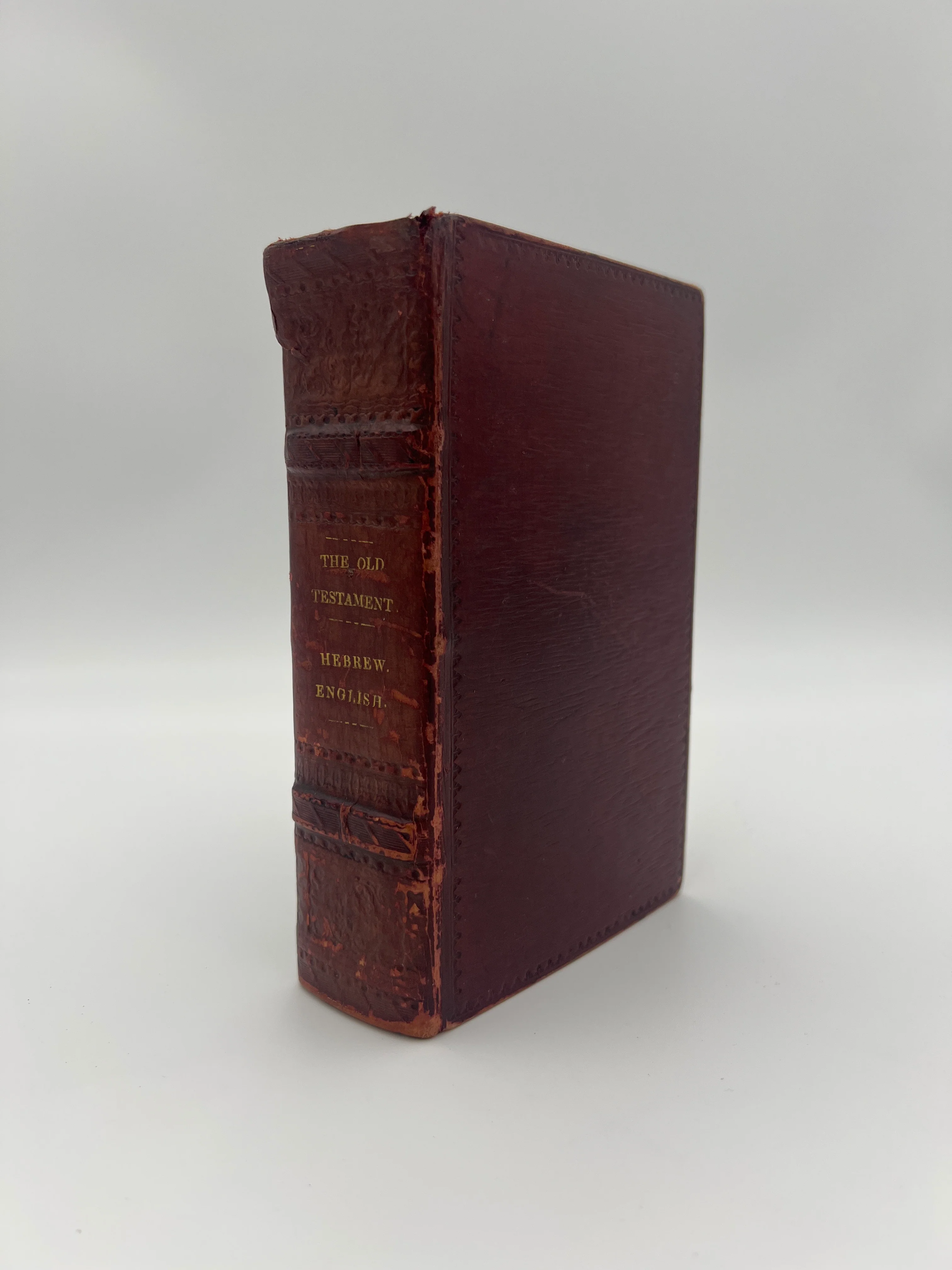
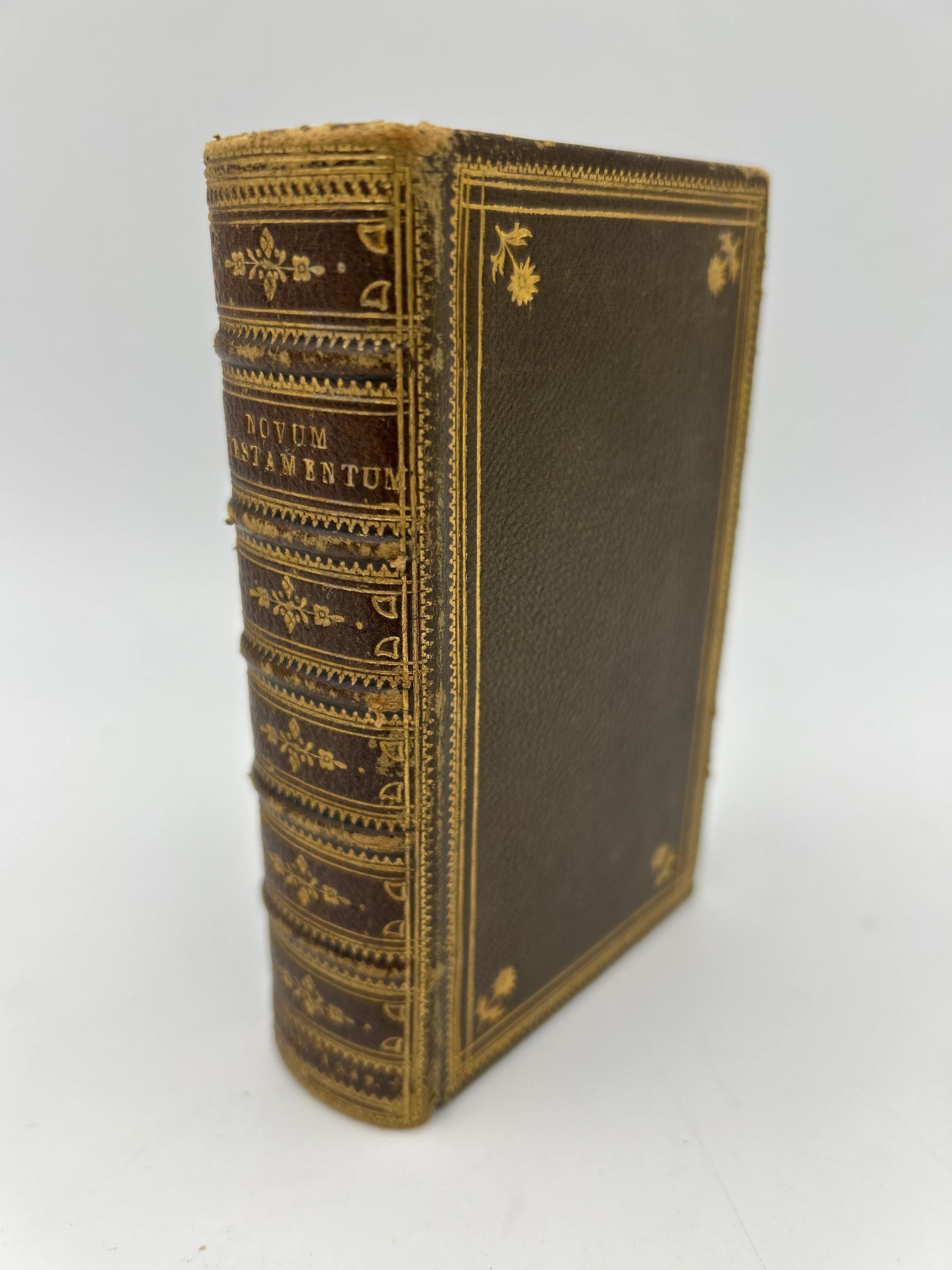
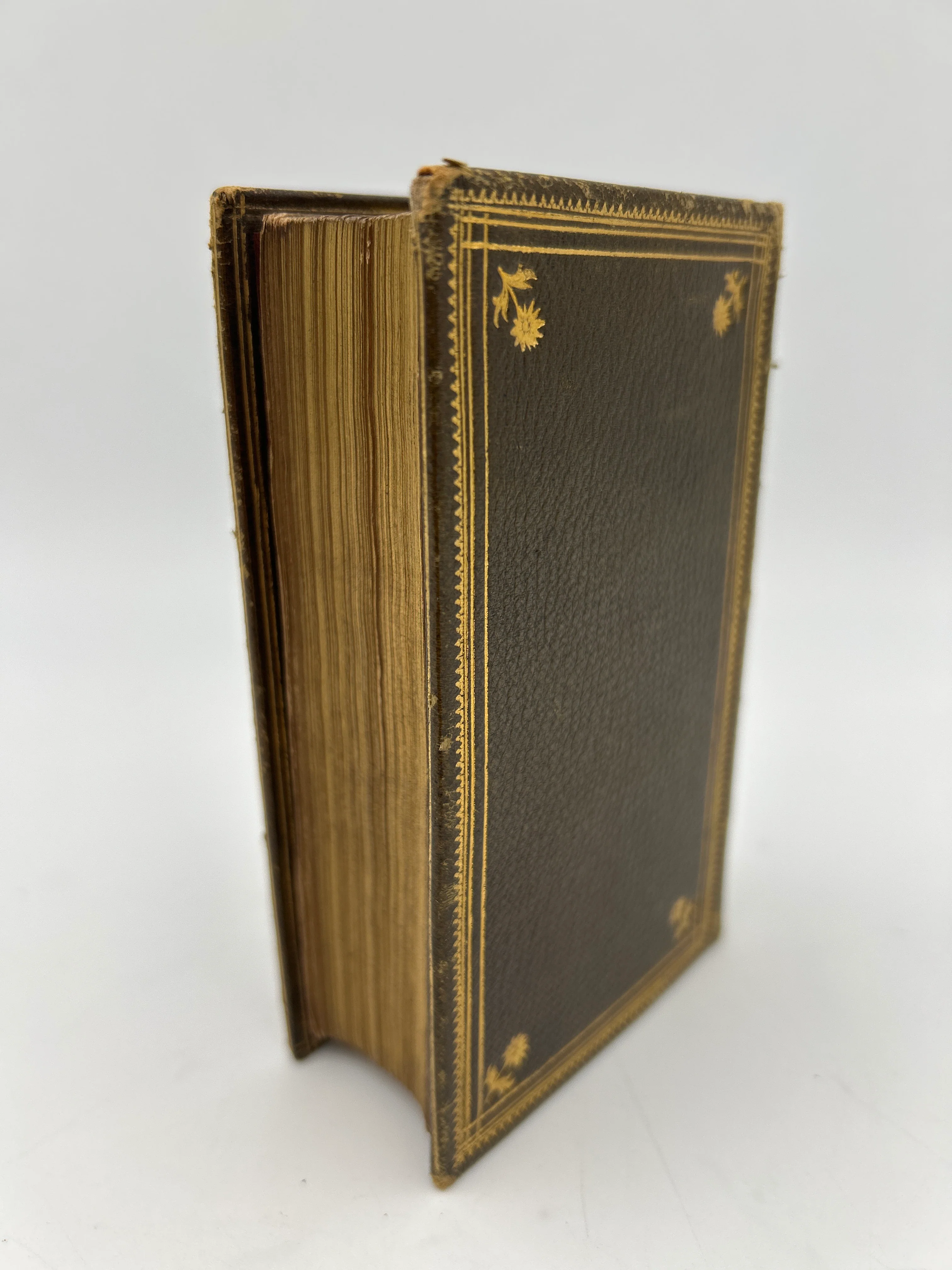
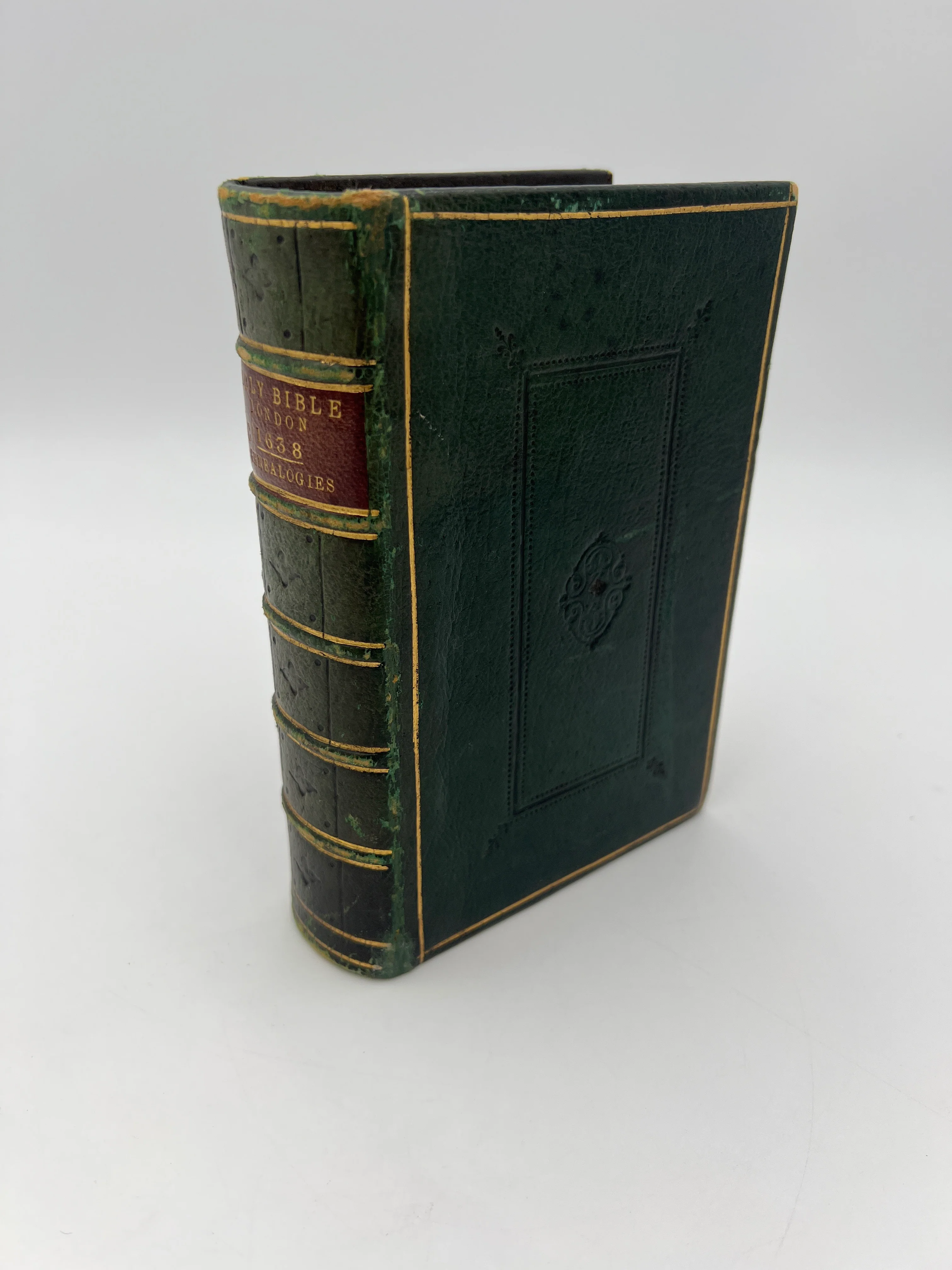
6B Holy Bible with Genealogy Pages at the beginning. London: Robert Barker, 1638.
Notes
The Bible was central to the early history of printing in Europe, beginning most famously with Johannes Gutenberg’s 42-line Bible around 1455, the first major book printed with movable metal type in the West. Early printed Bibles were typically in Latin (the Vulgate) and intended for clergy and scholars, but the Reformation in the 16th century dramatically expanded Bible printing in vernacular languages such as German, English, and French. Advances in printing technology, increased literacy, and religious reform movements made the Bible one of the most widely printed and distributed texts in history, with printers refining typography, layout, chapter divisions, and verse numbering to improve usability for study and worship.
Bibles of the 15th and 16th centuries, often included elaborate genealogy pages illustrated with woodcuts that visually traced biblical lineages, most notably the descent from Adam to Christ. These images combined text and picture in a diagrammatic form, using trees, medallions, and branching lines to make complex genealogies comprehensible to readers who might struggle with dense lists of names. Woodcut illustrations were well suited to early printing because they could be set directly into the type forme alongside movable type, allowing printers to reproduce images and text together on the same page. Beyond their practical function, genealogy woodcuts carried strong theological symbolism, emphasizing continuity, divine order, and fulfillment of prophecy, while also showcasing the technical and artistic ambitions of early printers.
Description
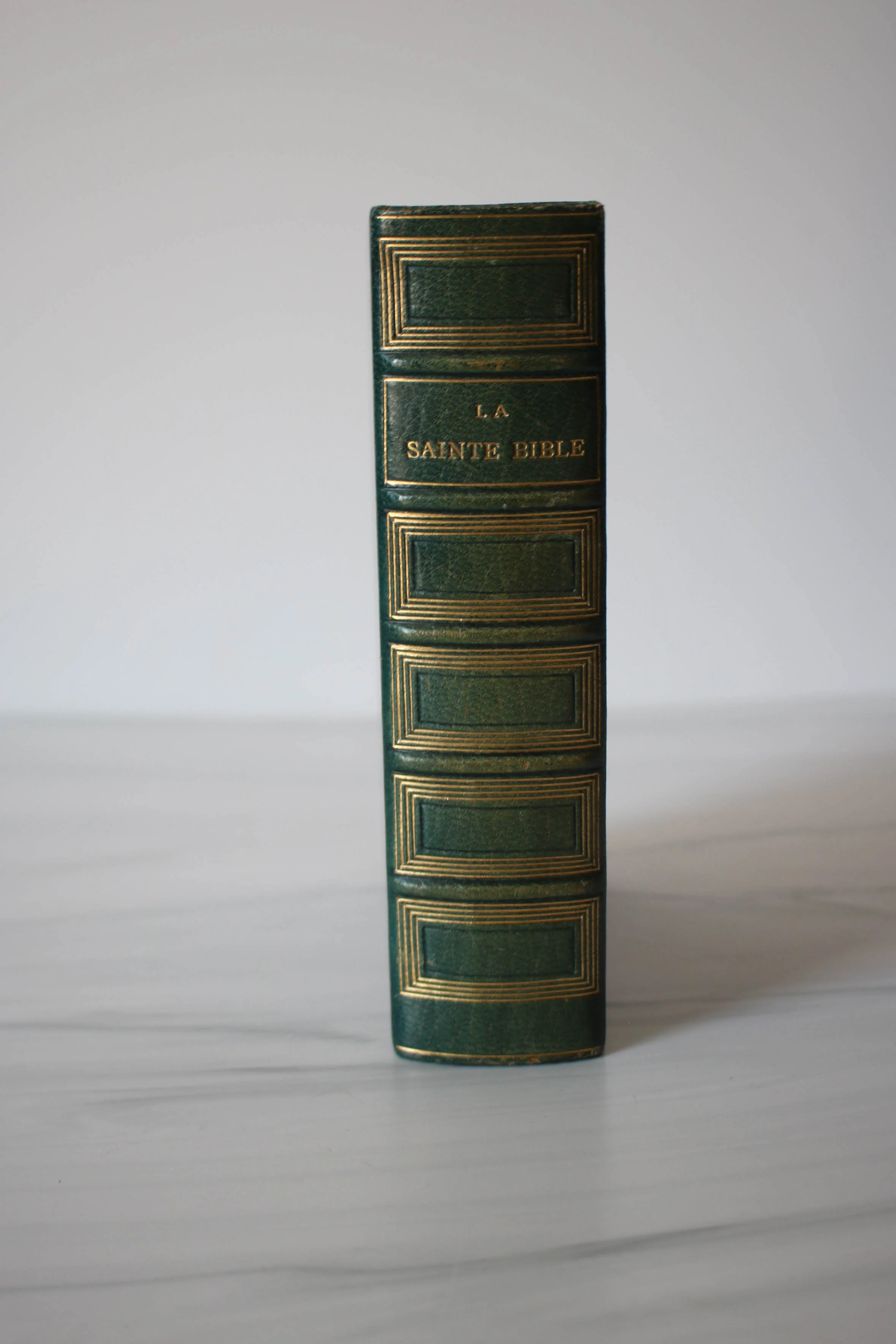
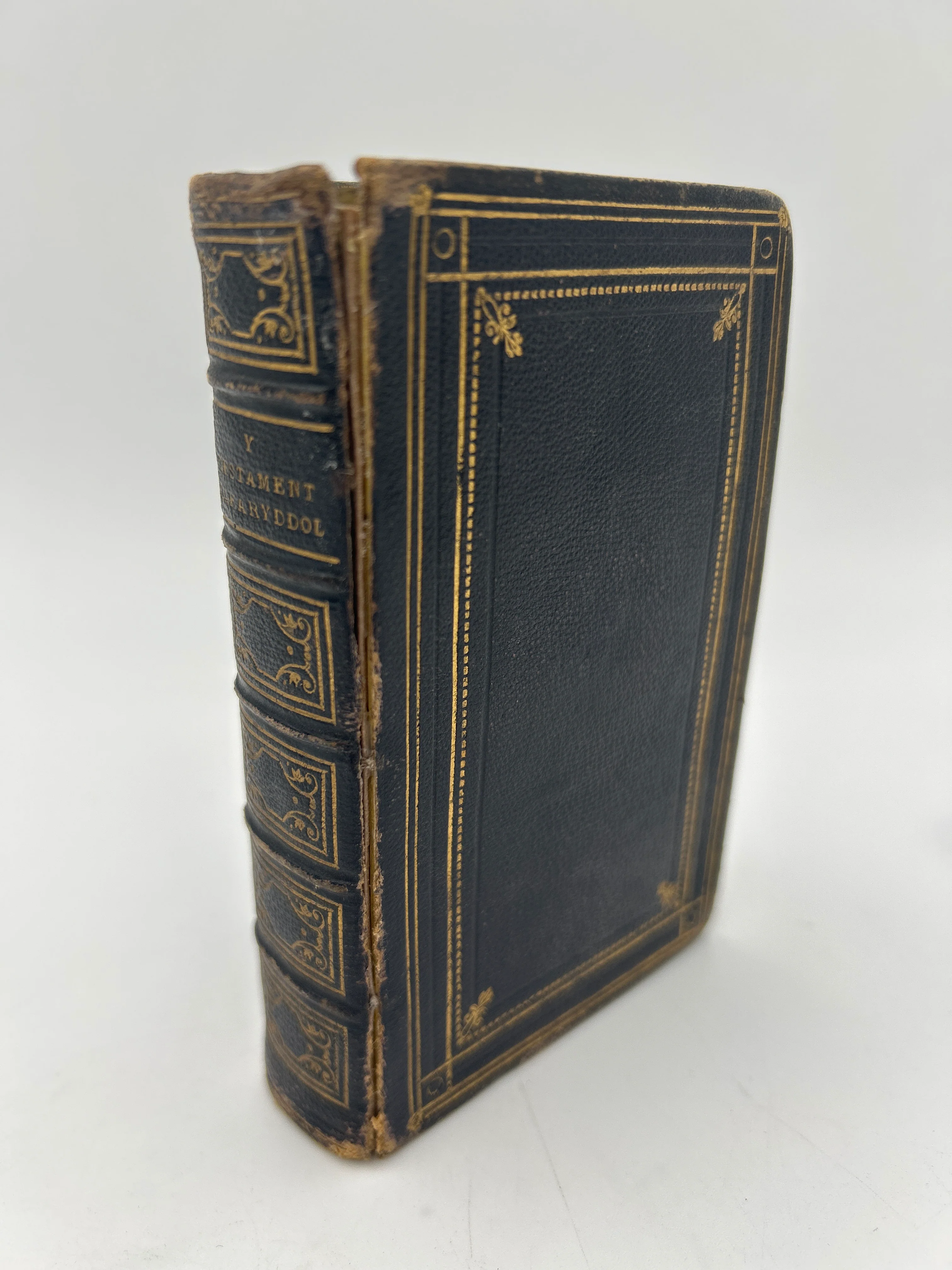
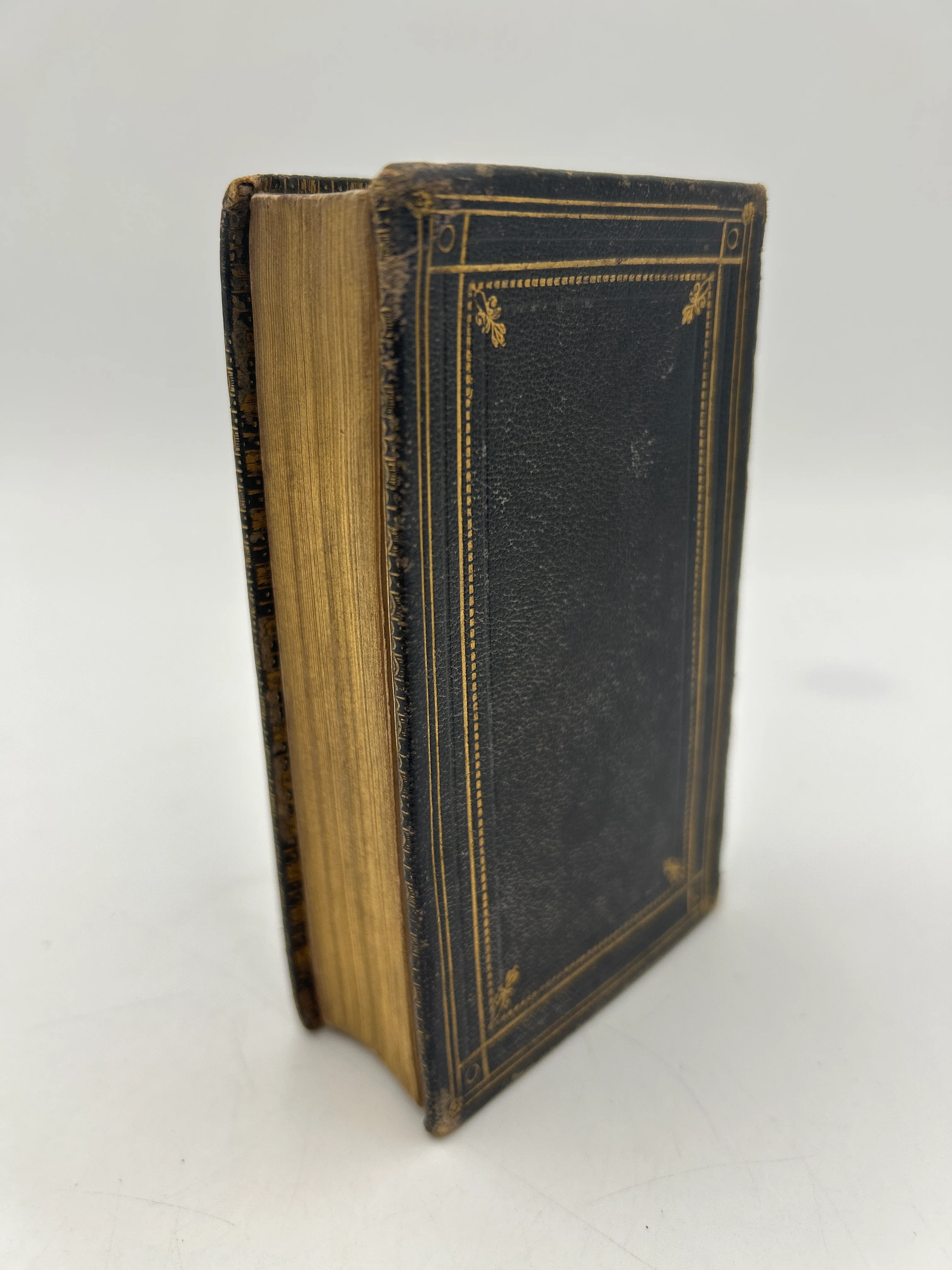
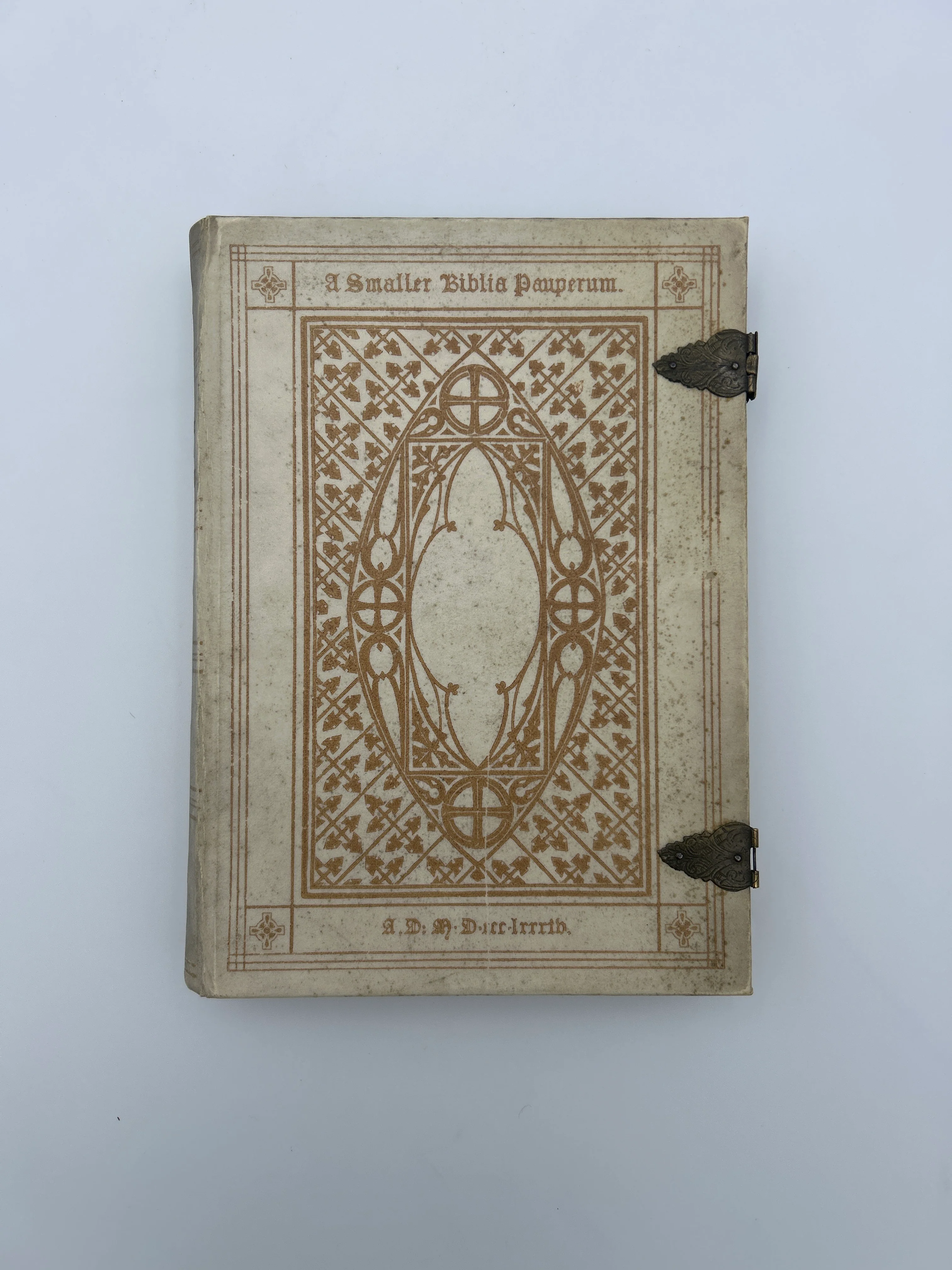
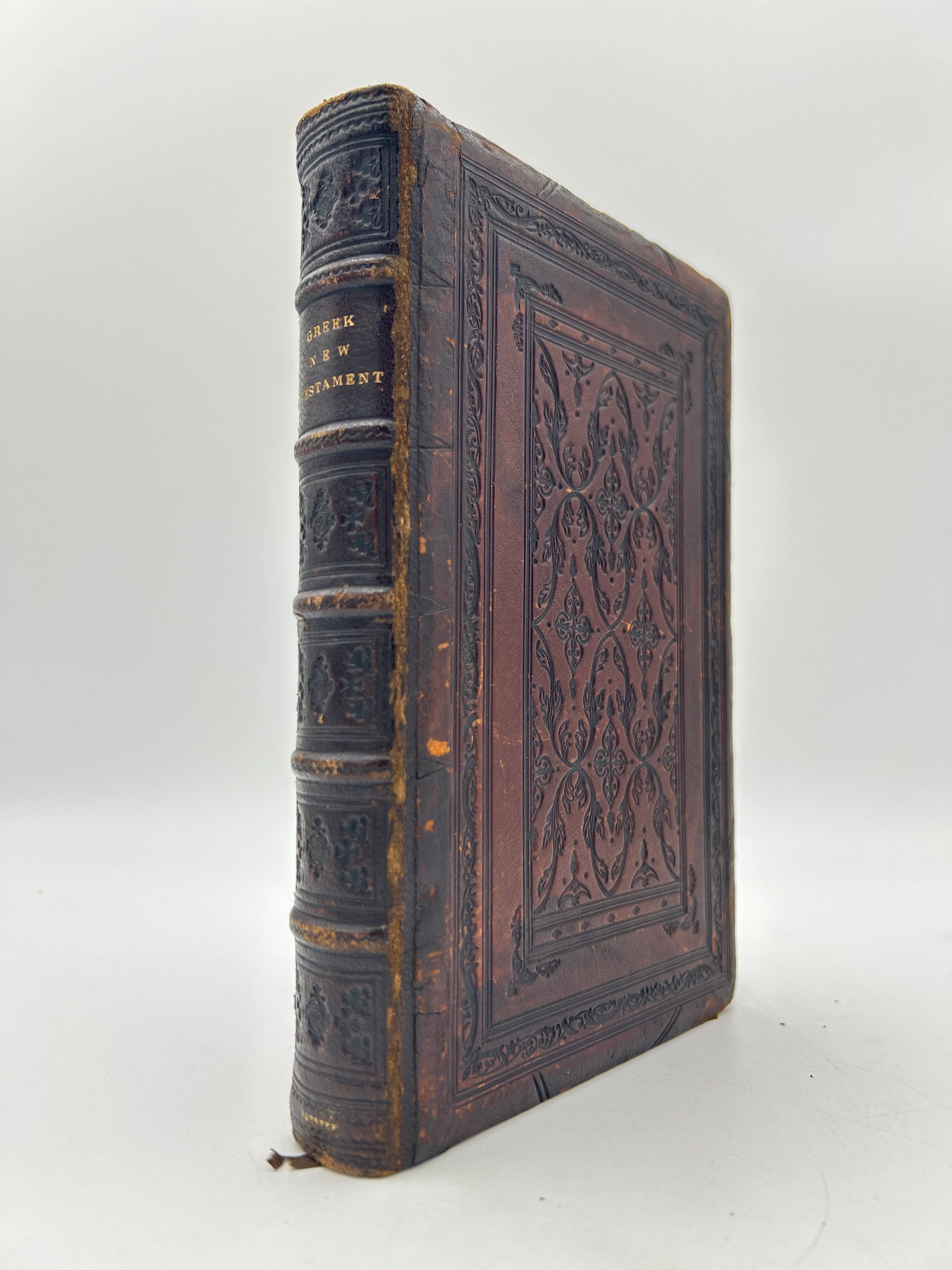
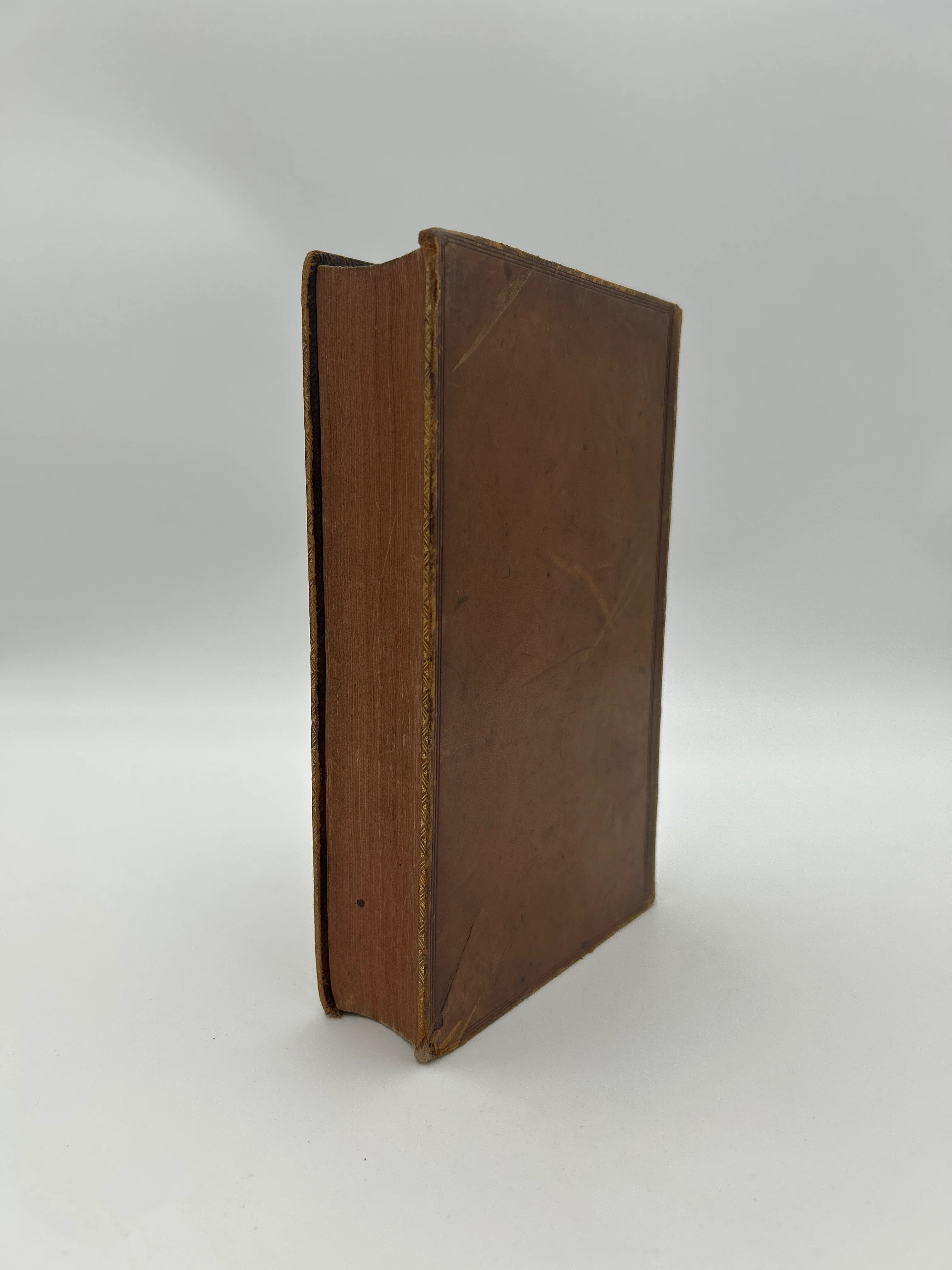
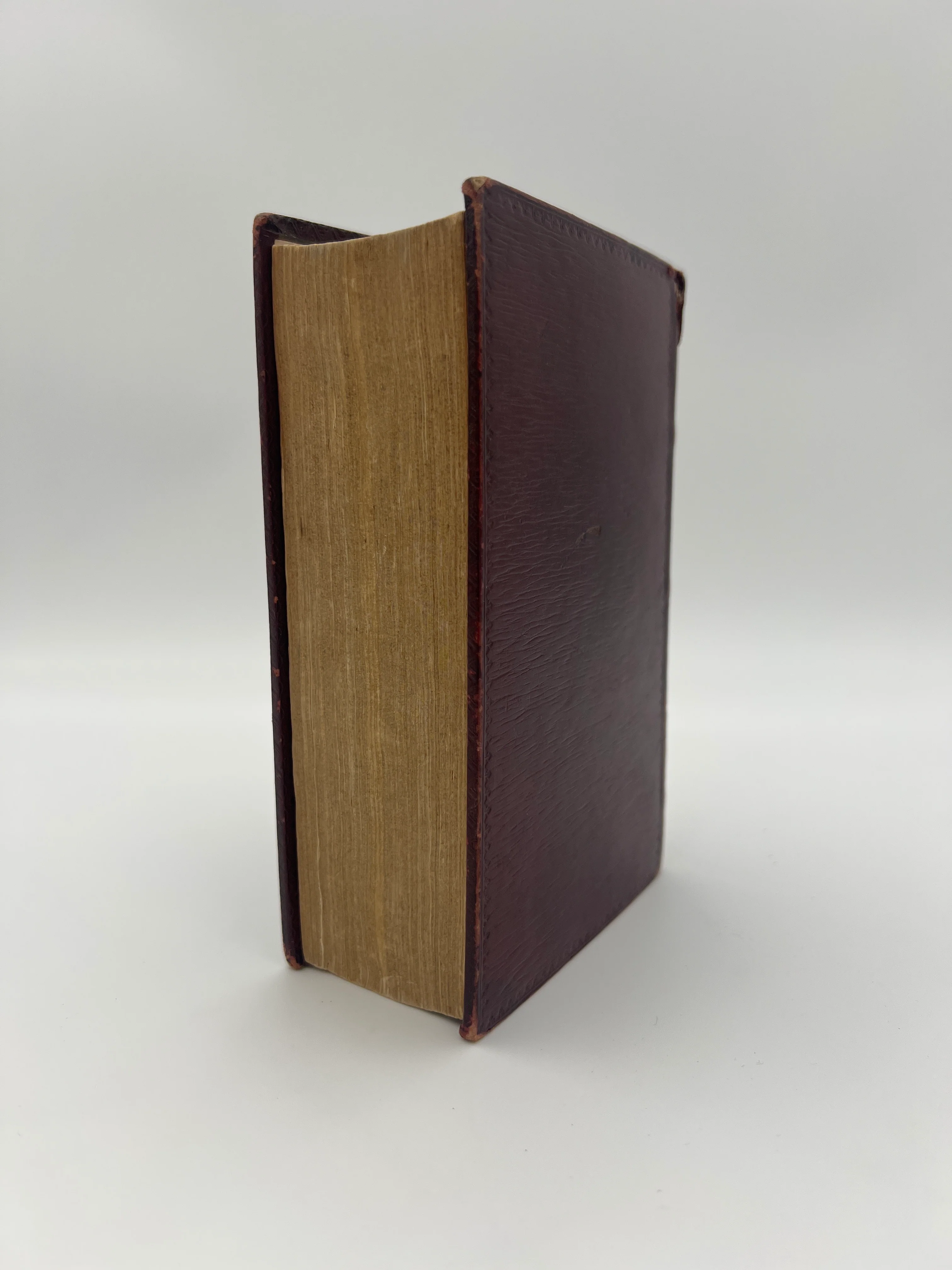
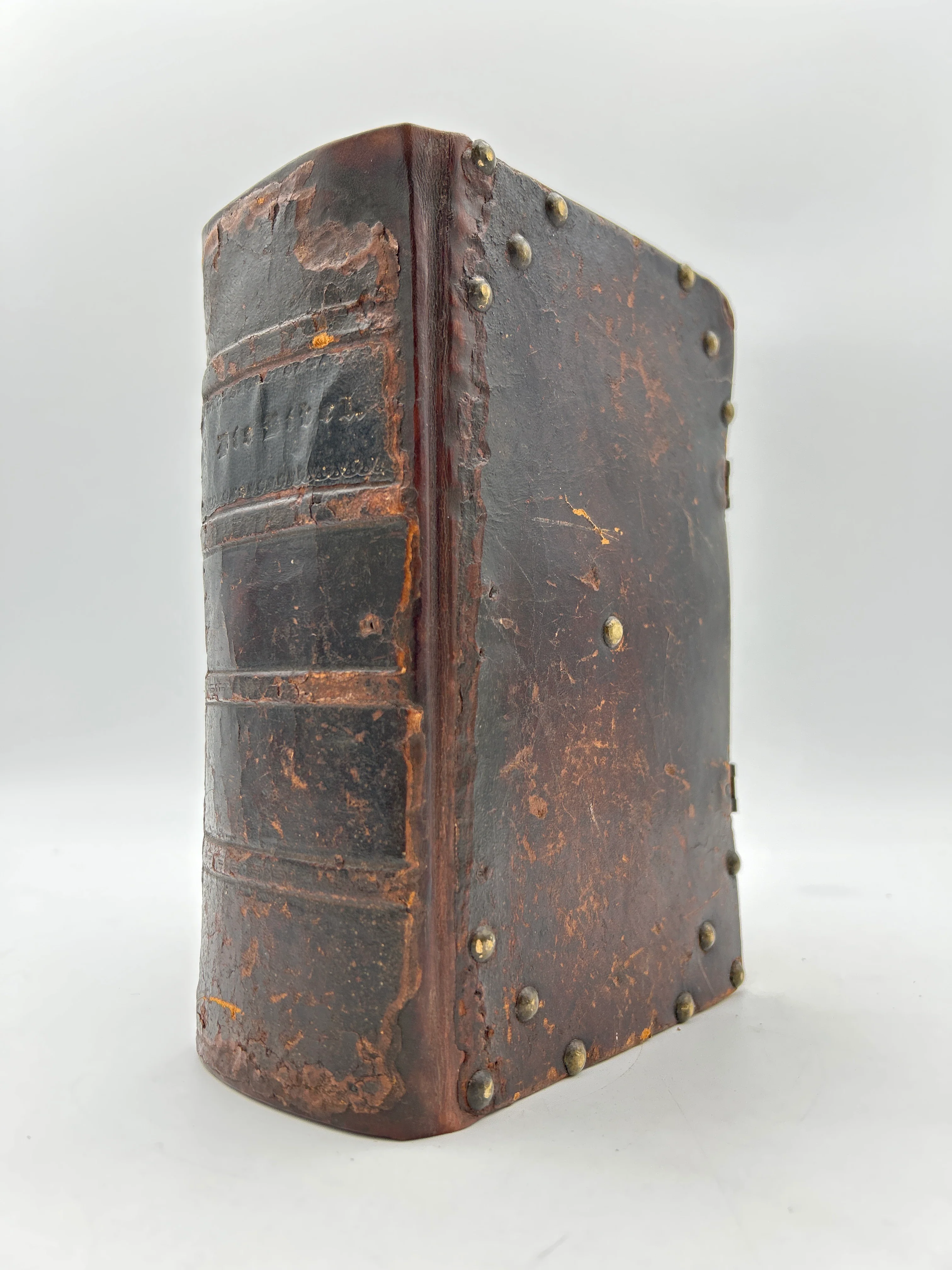
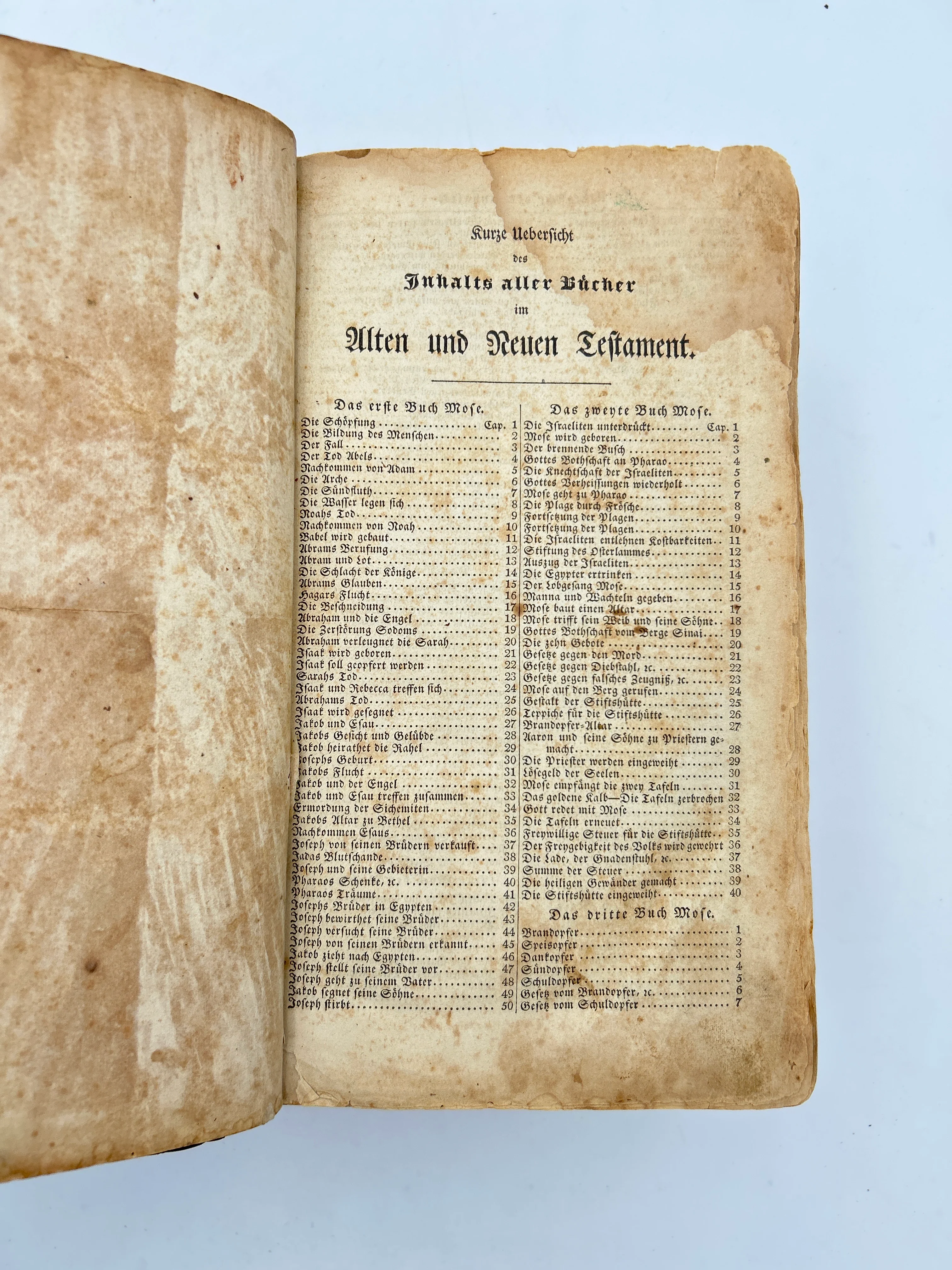
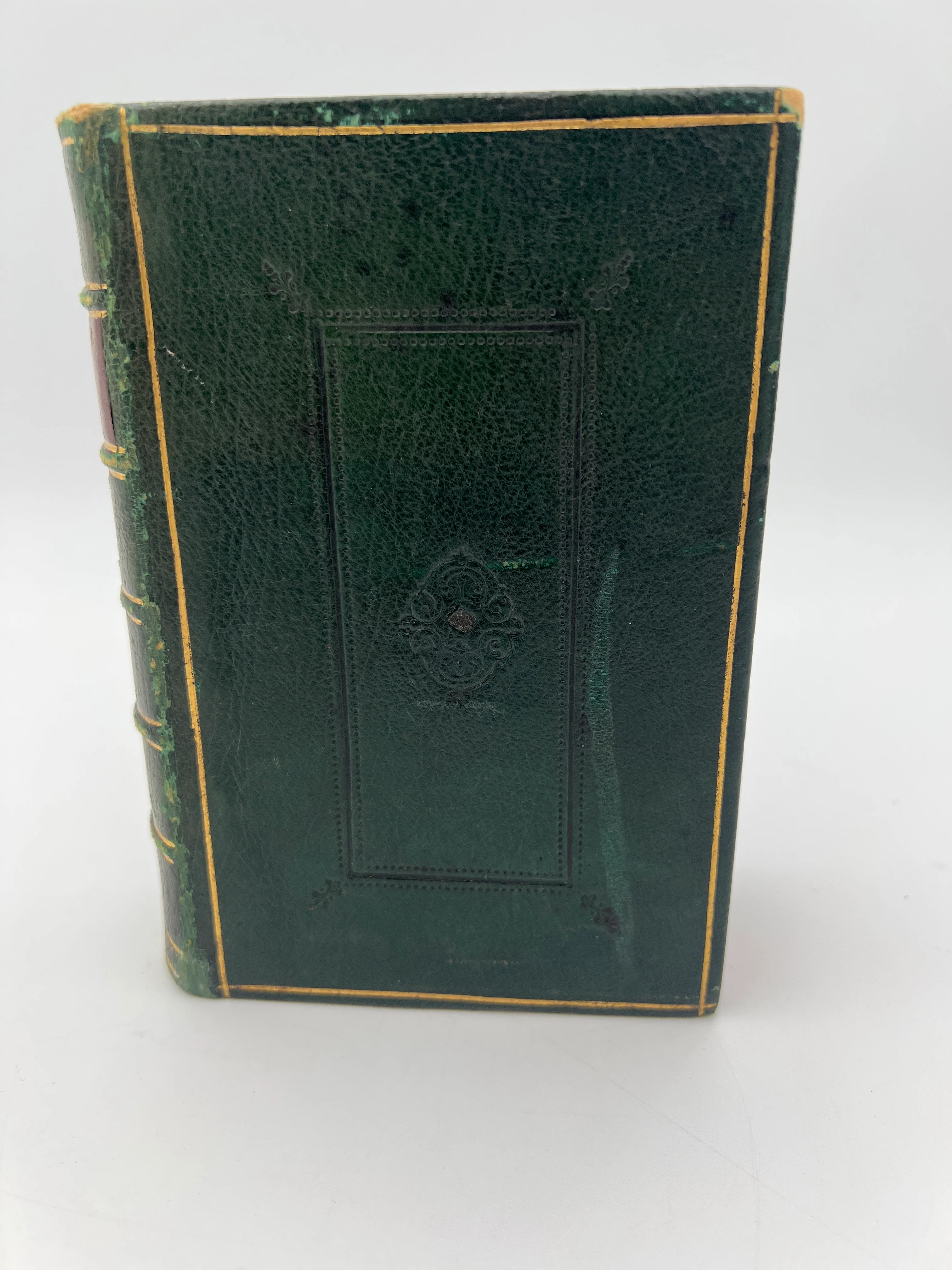
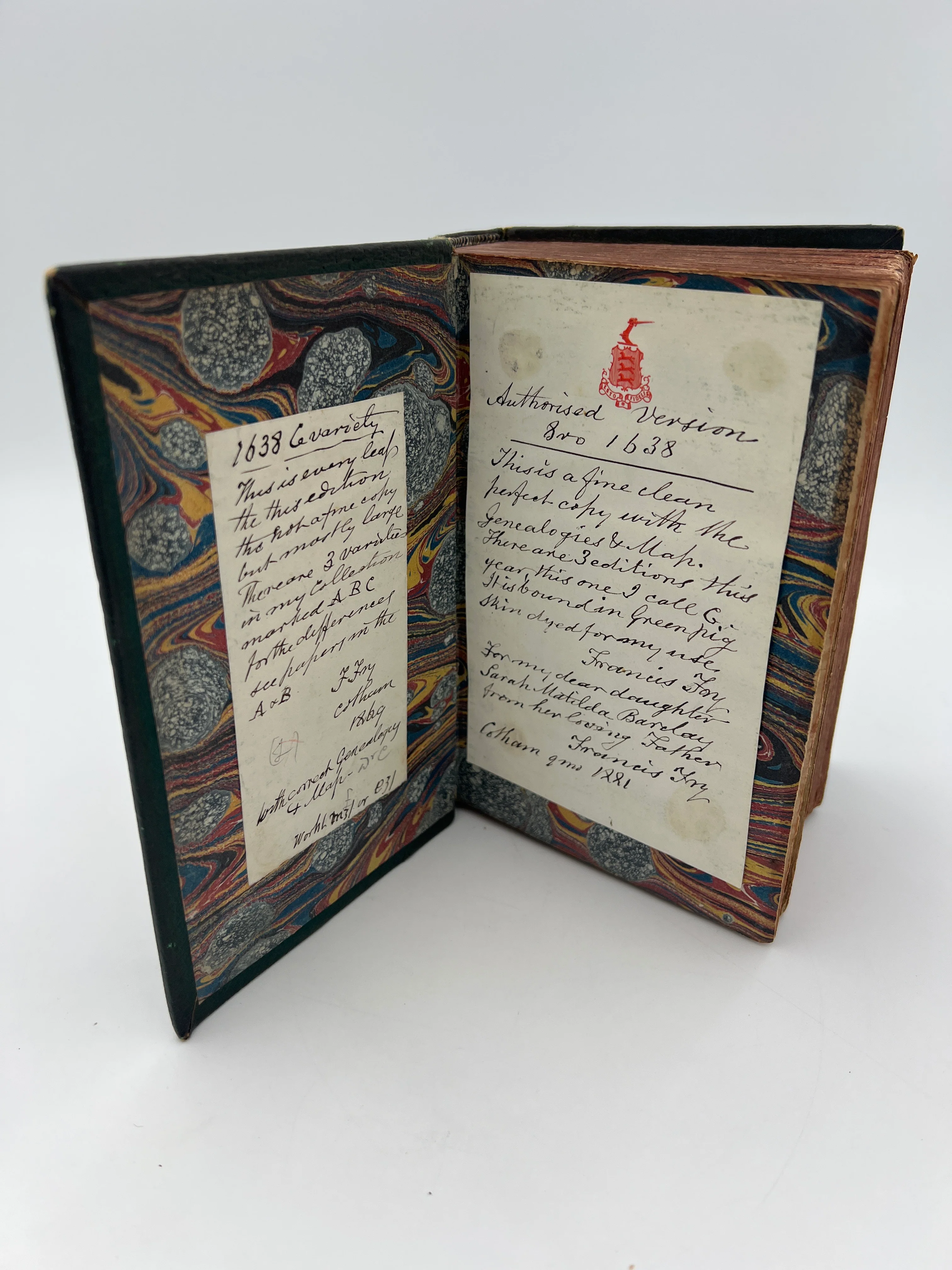
Emerald green leather with gold tooling and debossing on front and back. Five raised bands with gold. Rust color title label. Some rubbing on top and bottom spine. Pastedowns to first marbled endpapers. Seventeen pages of Genealogies before the Bibles. Very fine condition.
Dimensions: 7 x 5 x 1 3/4 inches
Details & Craftsmanship
Every detail has been carefully considered to bring you the perfect product.
Details & Craftsmanship
Every detail has been carefully considered to bring you the perfect product.
Description
6B Holy Bible with Genealogy Pages at the beginning. London: Robert Barker, 1638.
Notes
The Bible was central to the early history of printing in Europe, beginning most famously with Johannes Gutenberg’s 42-line Bible around 1455, the first major book printed with movable metal type in the West. Early printed Bibles were typically in Latin (the Vulgate) and intended for clergy and scholars, but the Reformation in the 16th century dramatically expanded Bible printing in vernacular languages such as German, English, and French. Advances in printing technology, increased literacy, and religious reform movements made the Bible one of the most widely printed and distributed texts in history, with printers refining typography, layout, chapter divisions, and verse numbering to improve usability for study and worship.
Bibles of the 15th and 16th centuries, often included elaborate genealogy pages illustrated with woodcuts that visually traced biblical lineages, most notably the descent from Adam to Christ. These images combined text and picture in a diagrammatic form, using trees, medallions, and branching lines to make complex genealogies comprehensible to readers who might struggle with dense lists of names. Woodcut illustrations were well suited to early printing because they could be set directly into the type forme alongside movable type, allowing printers to reproduce images and text together on the same page. Beyond their practical function, genealogy woodcuts carried strong theological symbolism, emphasizing continuity, divine order, and fulfillment of prophecy, while also showcasing the technical and artistic ambitions of early printers.
Description
Emerald green leather with gold tooling and debossing on front and back. Five raised bands with gold. Rust color title label. Some rubbing on top and bottom spine. Pastedowns to first marbled endpapers. Seventeen pages of Genealogies before the Bibles. Very fine condition.
Dimensions: 7 x 5 x 1 3/4 inches