The Story
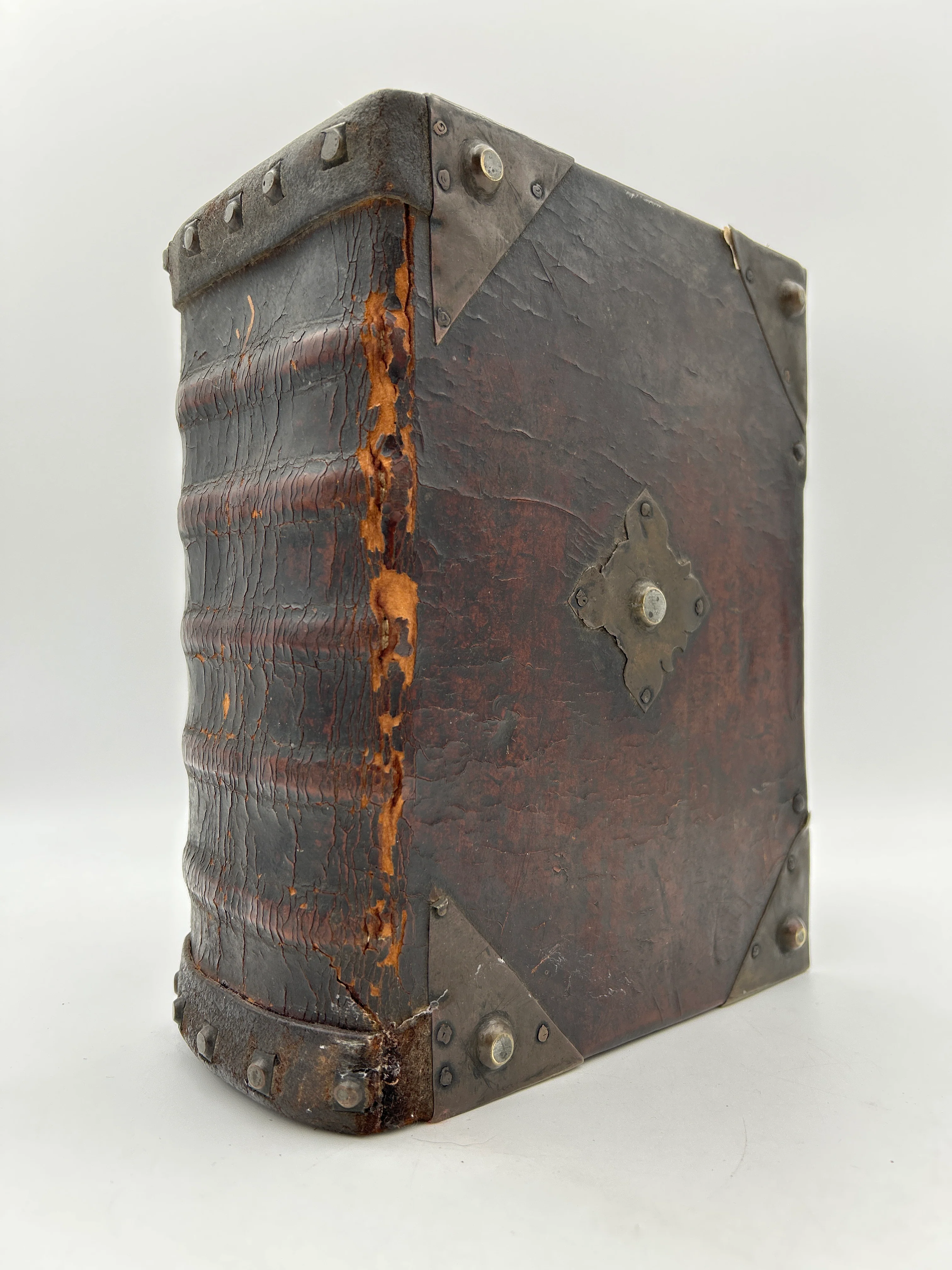
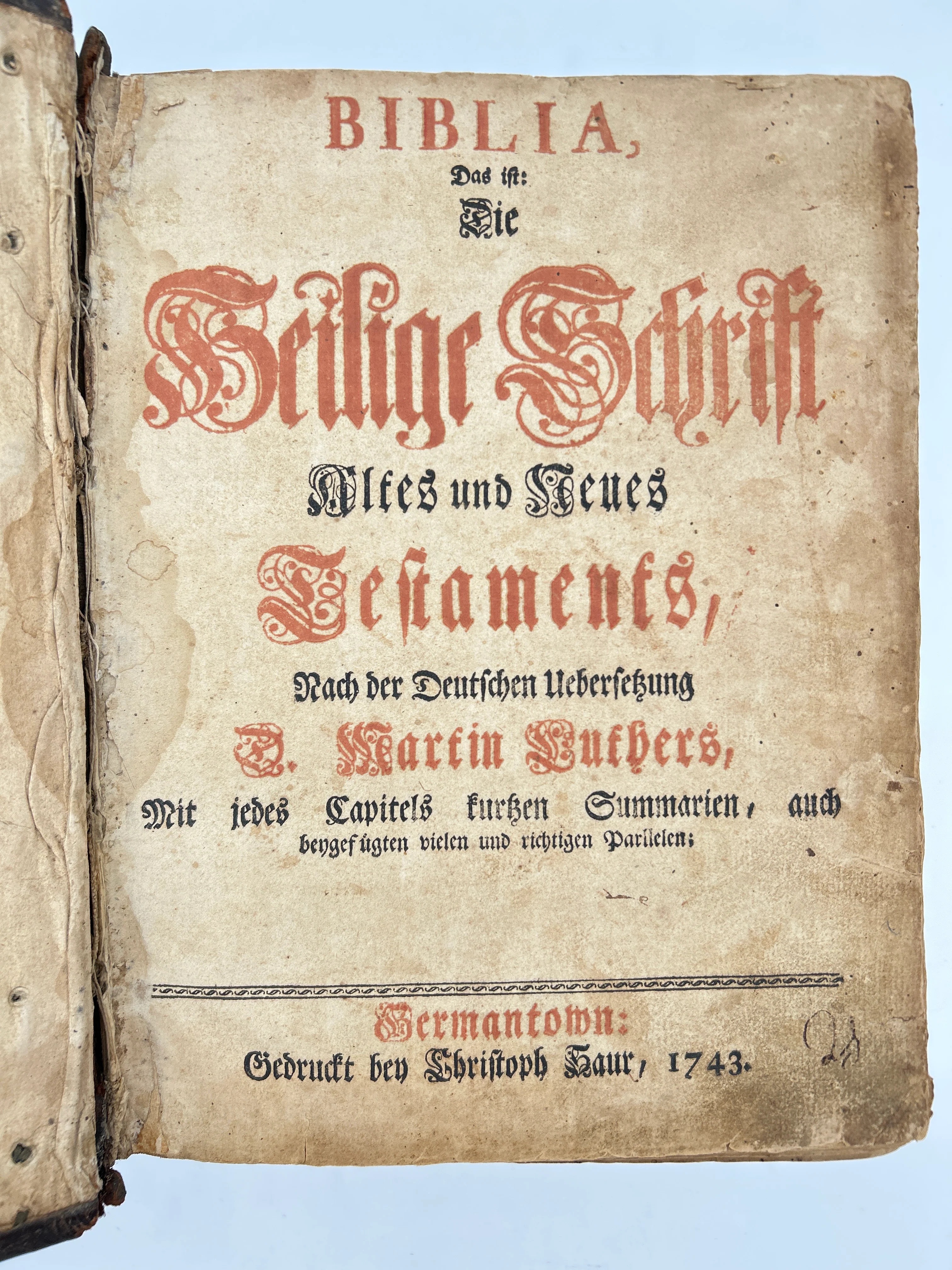
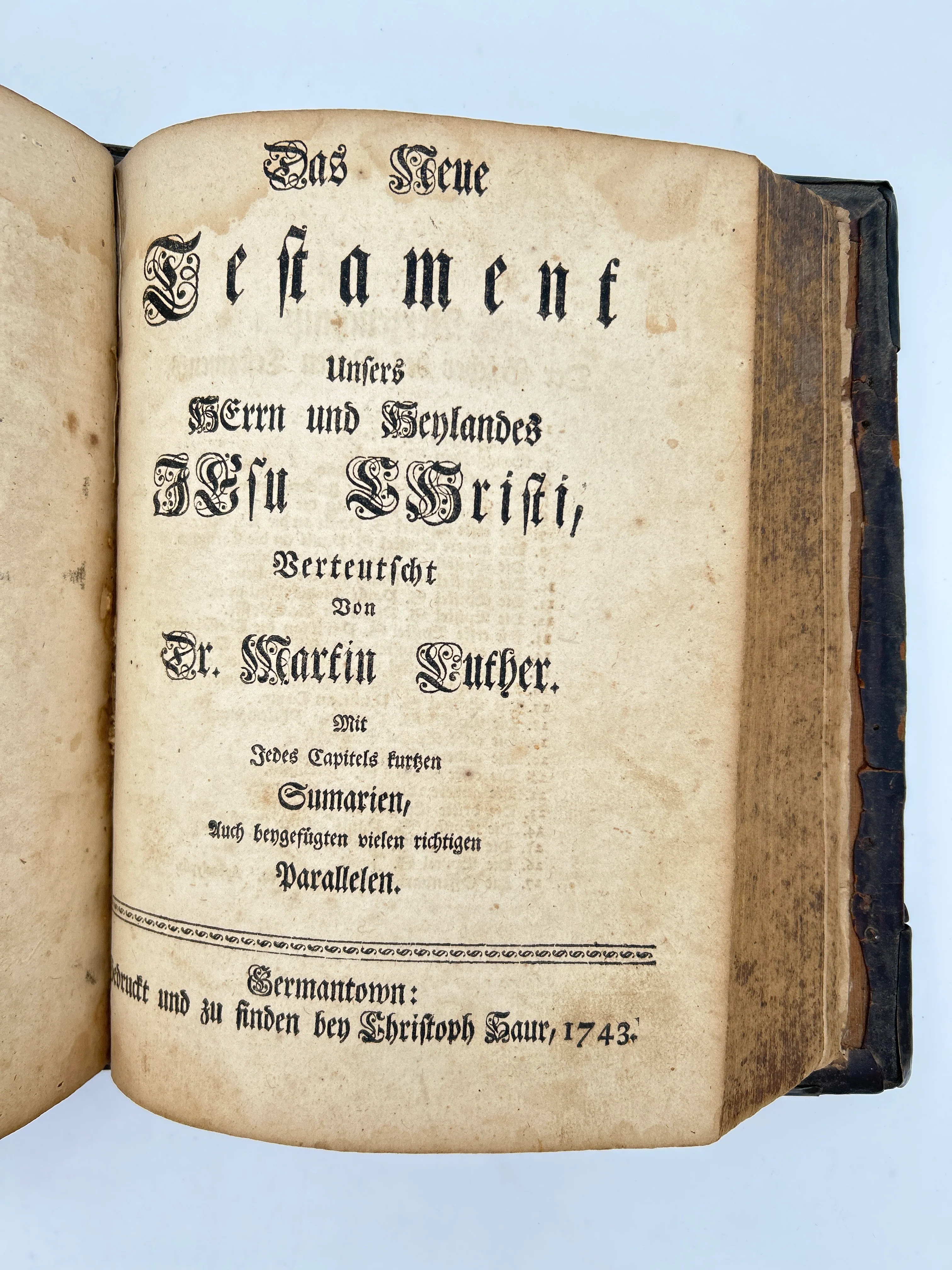
6B Holy Bible translated from the Martin Luther. Germantown: Christopher Saur, 1743 In German.
Notes
Christopher Saur (1693–1758) was a German-born printer and publisher who emigrated to Pennsylvania in the early 18th century, settling in Germantown near Philadelphia. Trained in the printing trade in Germany, he established one of the first German-language presses in North America, producing religious texts, hymnals, and the landmark Saur Bible for the growing German-speaking immigrant population. Beyond printing, Saur was deeply involved in his community, supporting education, literacy, and the preservation of German language and culture in the colonies. His work made him a pivotal figure in early American printing, bridging European traditions with the spiritual and cultural needs of colonial German settlers.
The Saur (or Sauer) German Bible was the first Bible printed in a European language in North America, produced by Christopher Saur (Sauer) in Germantown, Pennsylvania, in 1743, with later editions in 1763 and 1776. It was printed for German-speaking immigrants—especially Mennonites, Amish, Brethren, and other Anabaptist communities—who had settled in colonial Pennsylvania and still relied heavily on the German language for worship and daily life. Saur’s Bible was based on Martin Luther’s German translation, the standard German Bible of the time, but it was printed locally to make Scripture affordable and accessible without relying on expensive imports from Europe.
The importance of the Saur Bible lies in both translation and cultural history. Luther’s German translation had already transformed Christianity by putting Scripture into the everyday language of ordinary people, and Saur’s printing extended that revolution to the New World. By producing a German Bible in America, Saur helped preserve religious identity, literacy, and theological independence among immigrant communities. The Saur Bible also symbolizes early American ideals of religious freedom, freedom of the press, and vernacular access to Scripture, making it a landmark not only in biblical translation history but in American publishing and history as well.
Description
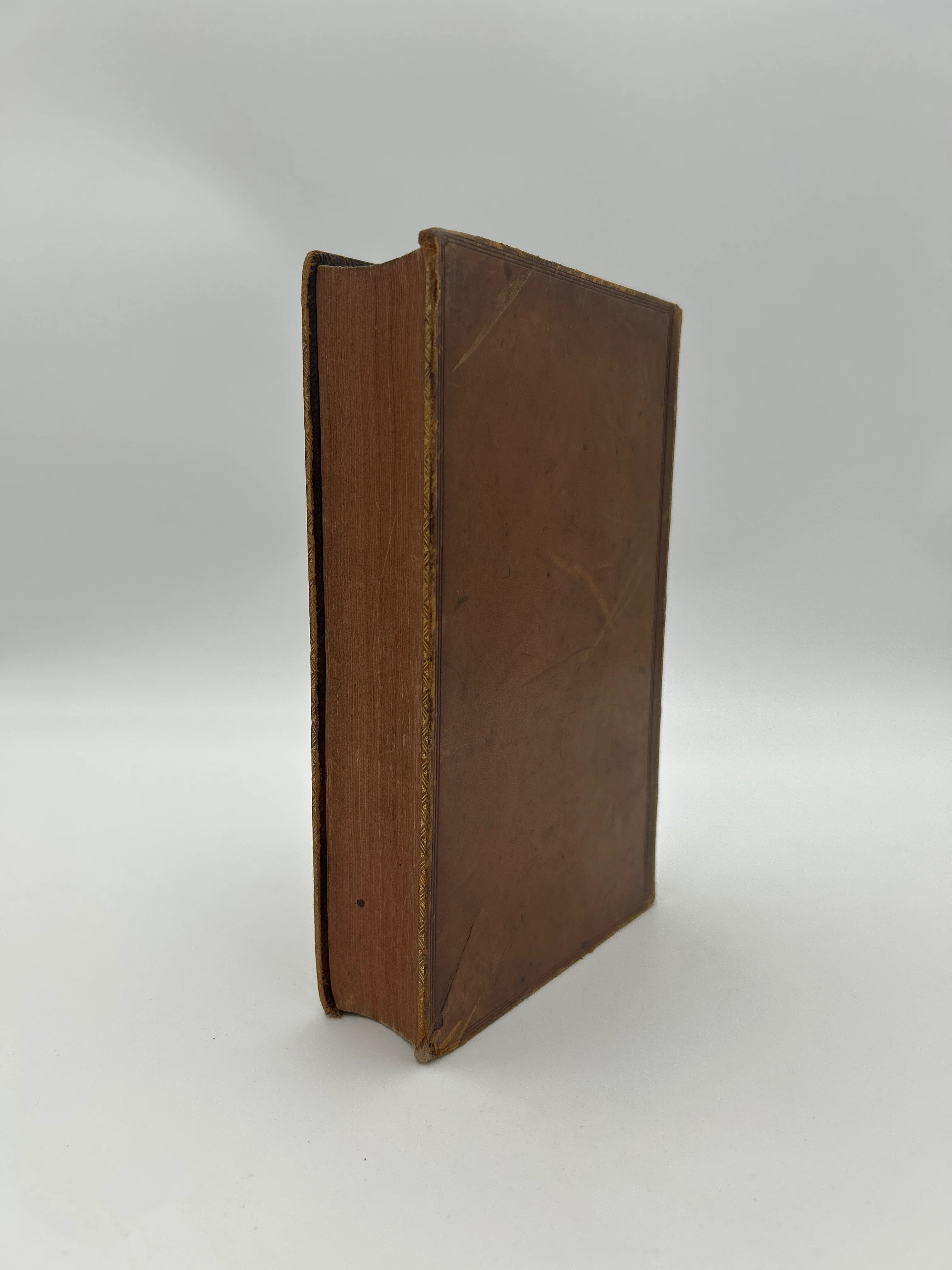
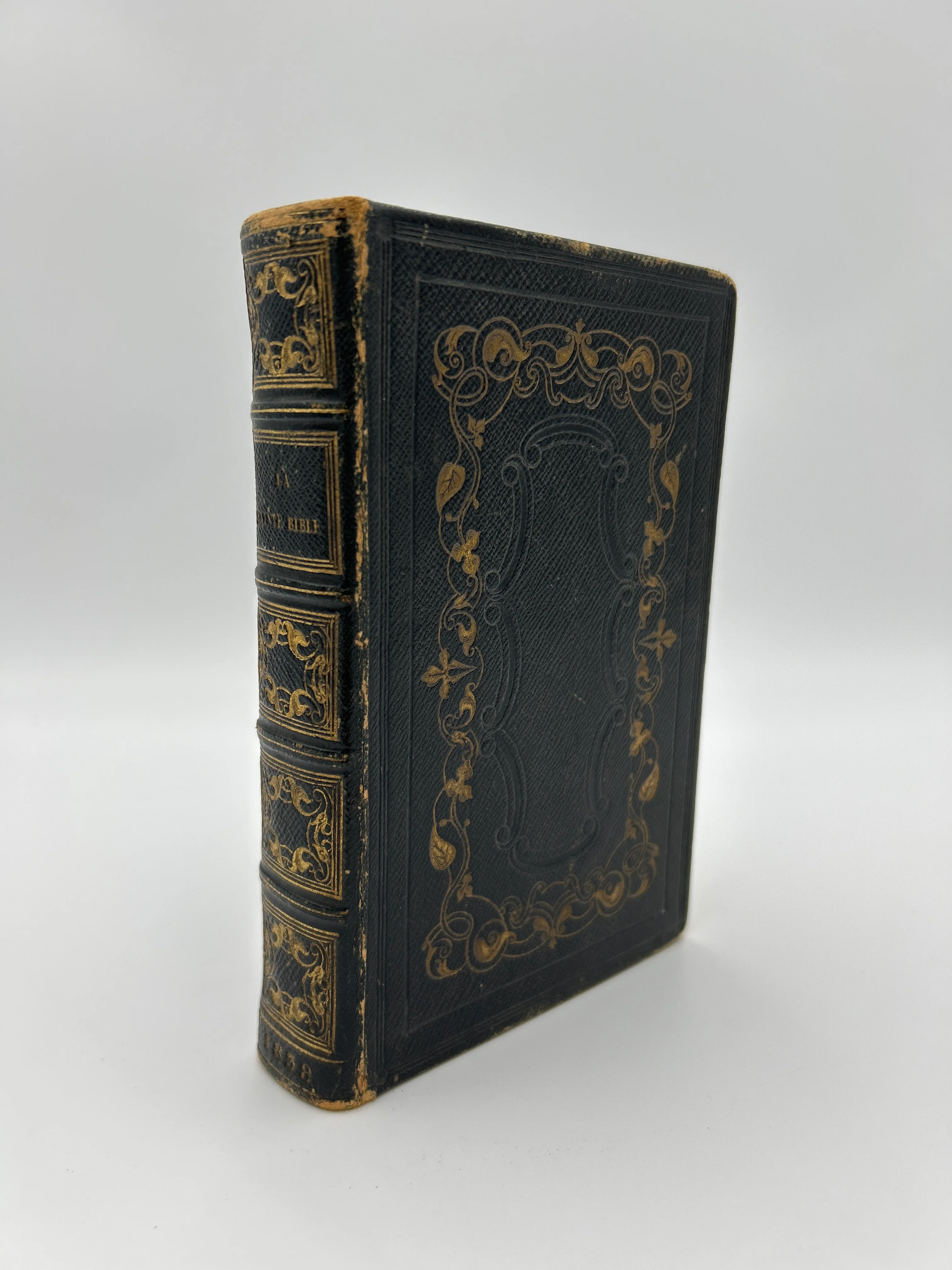
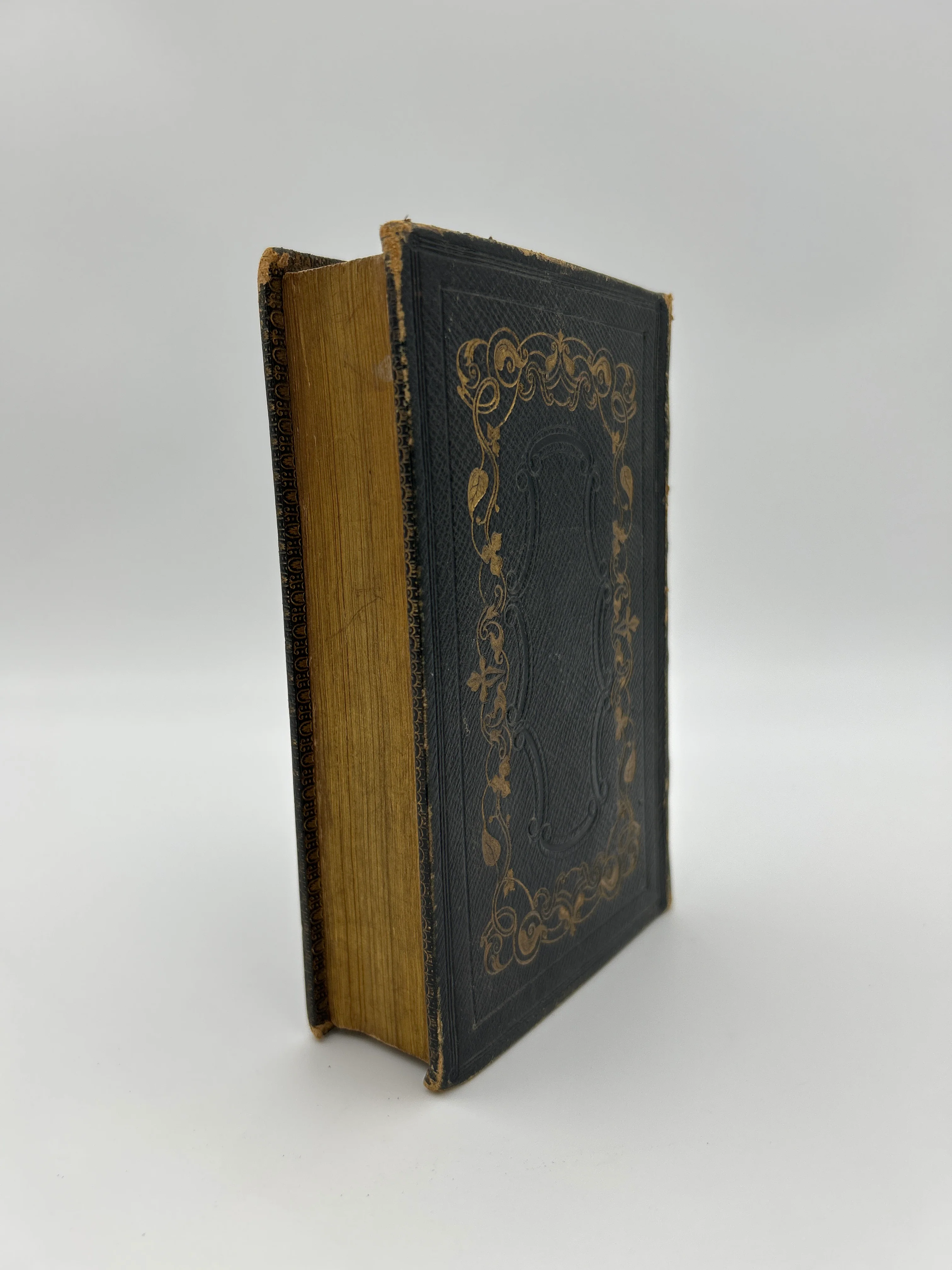
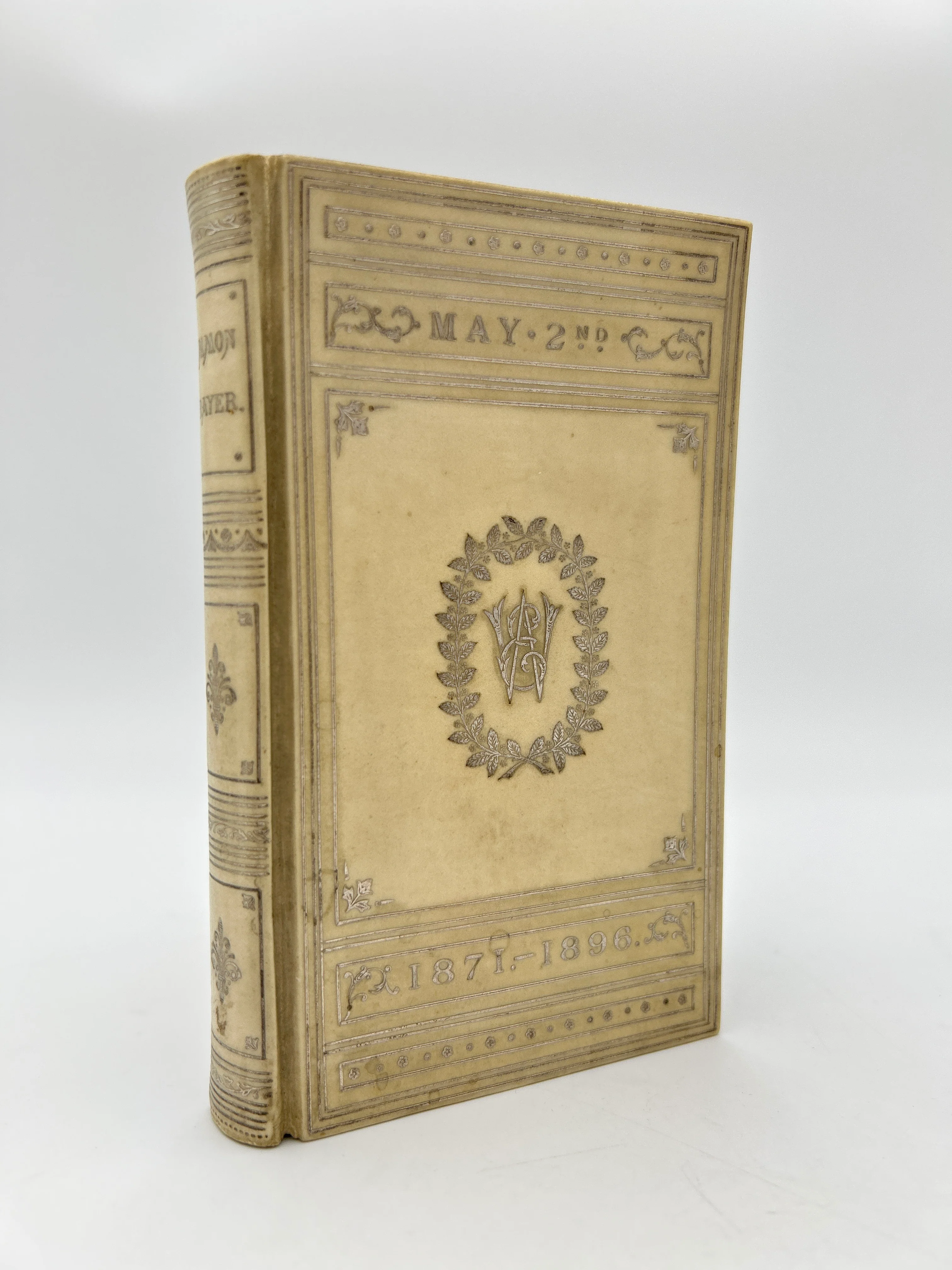
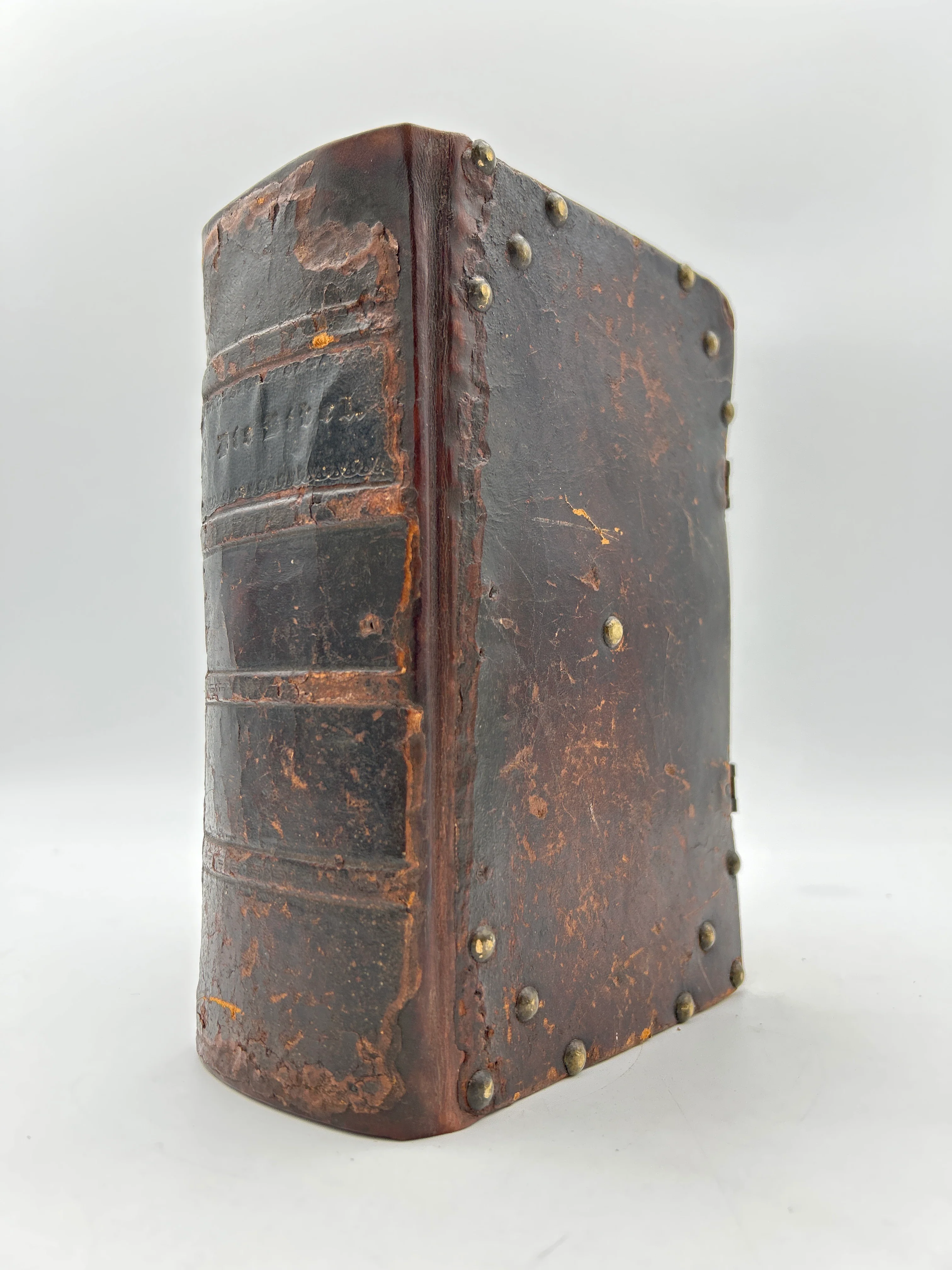
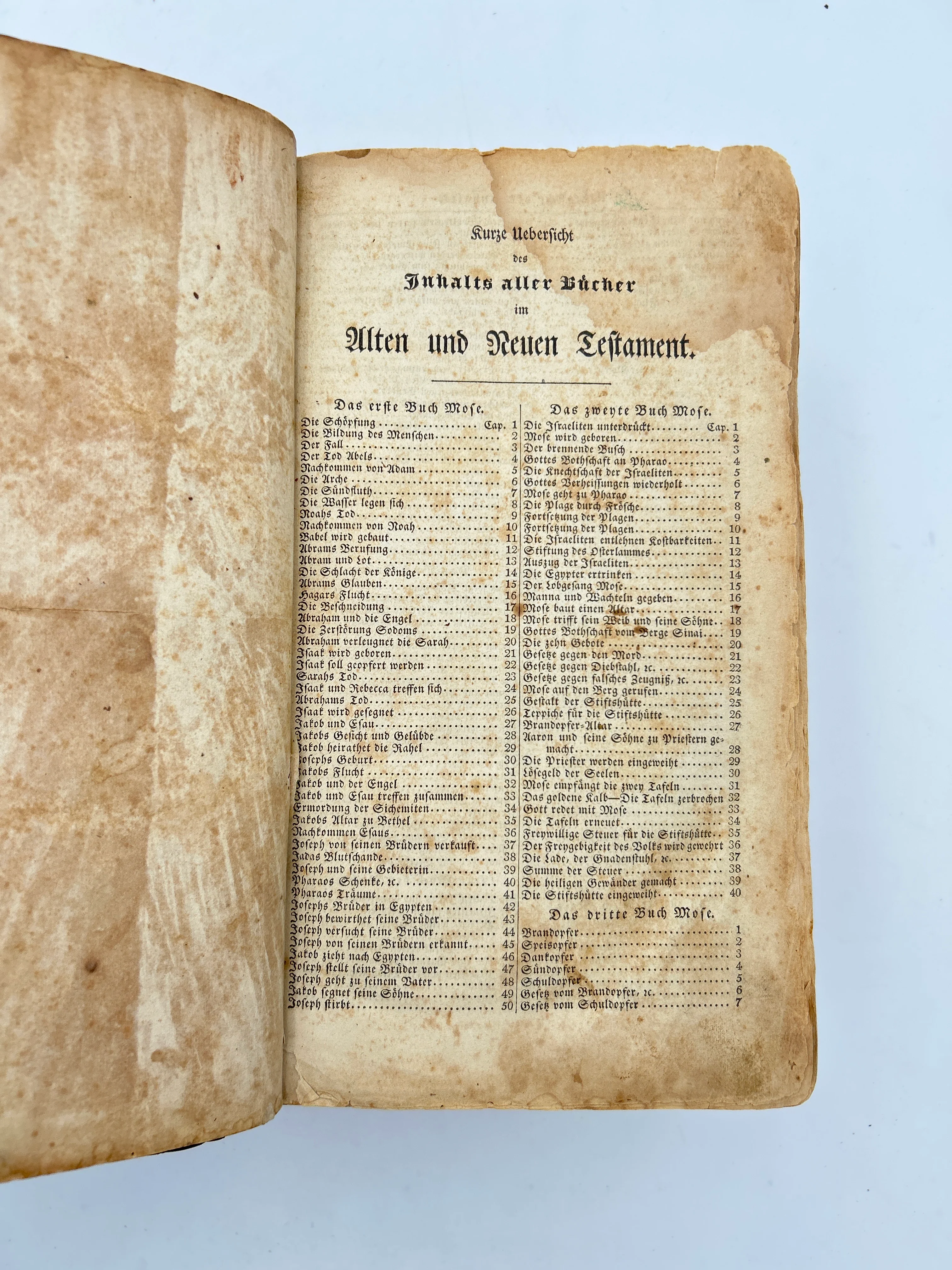
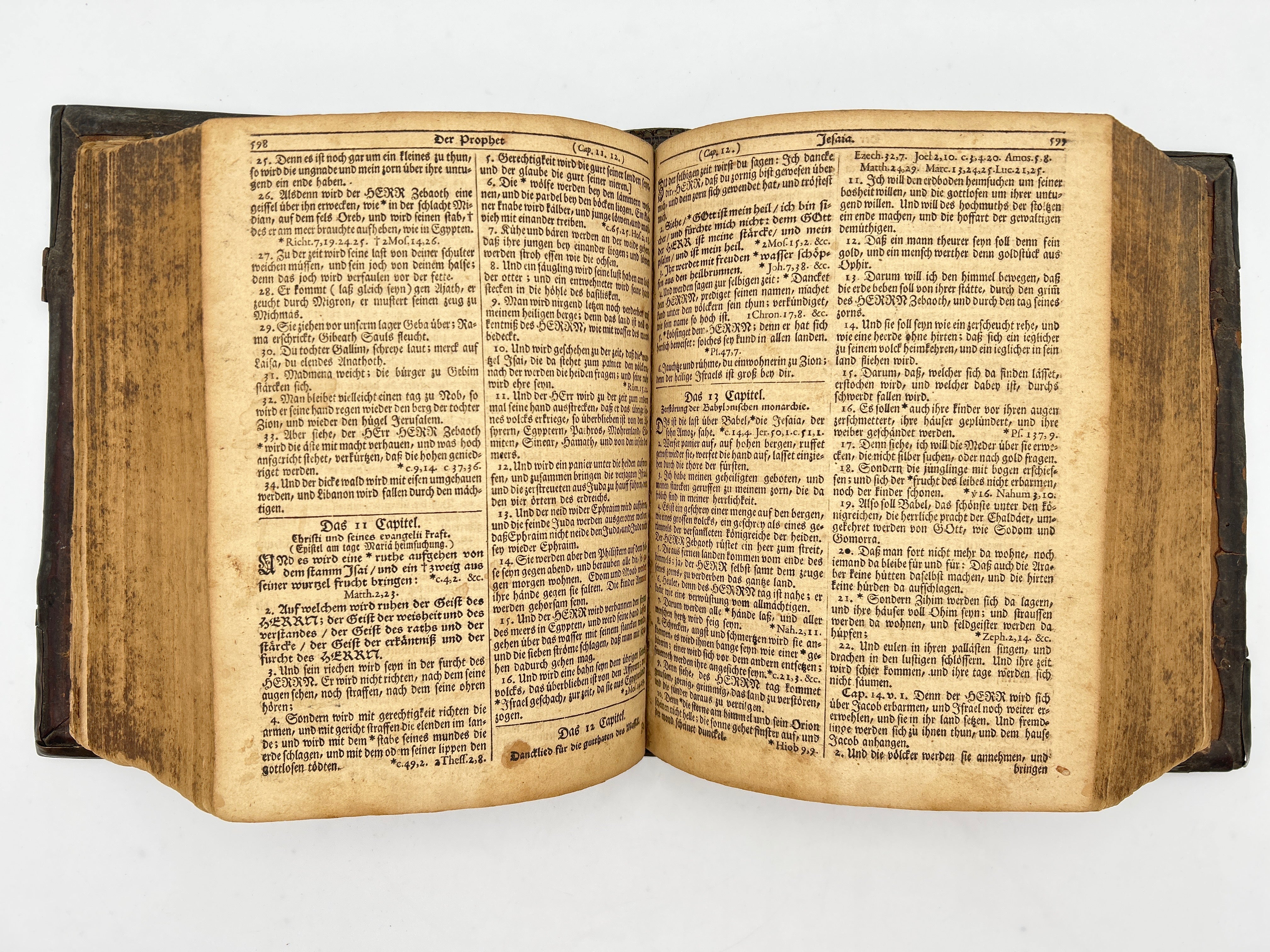
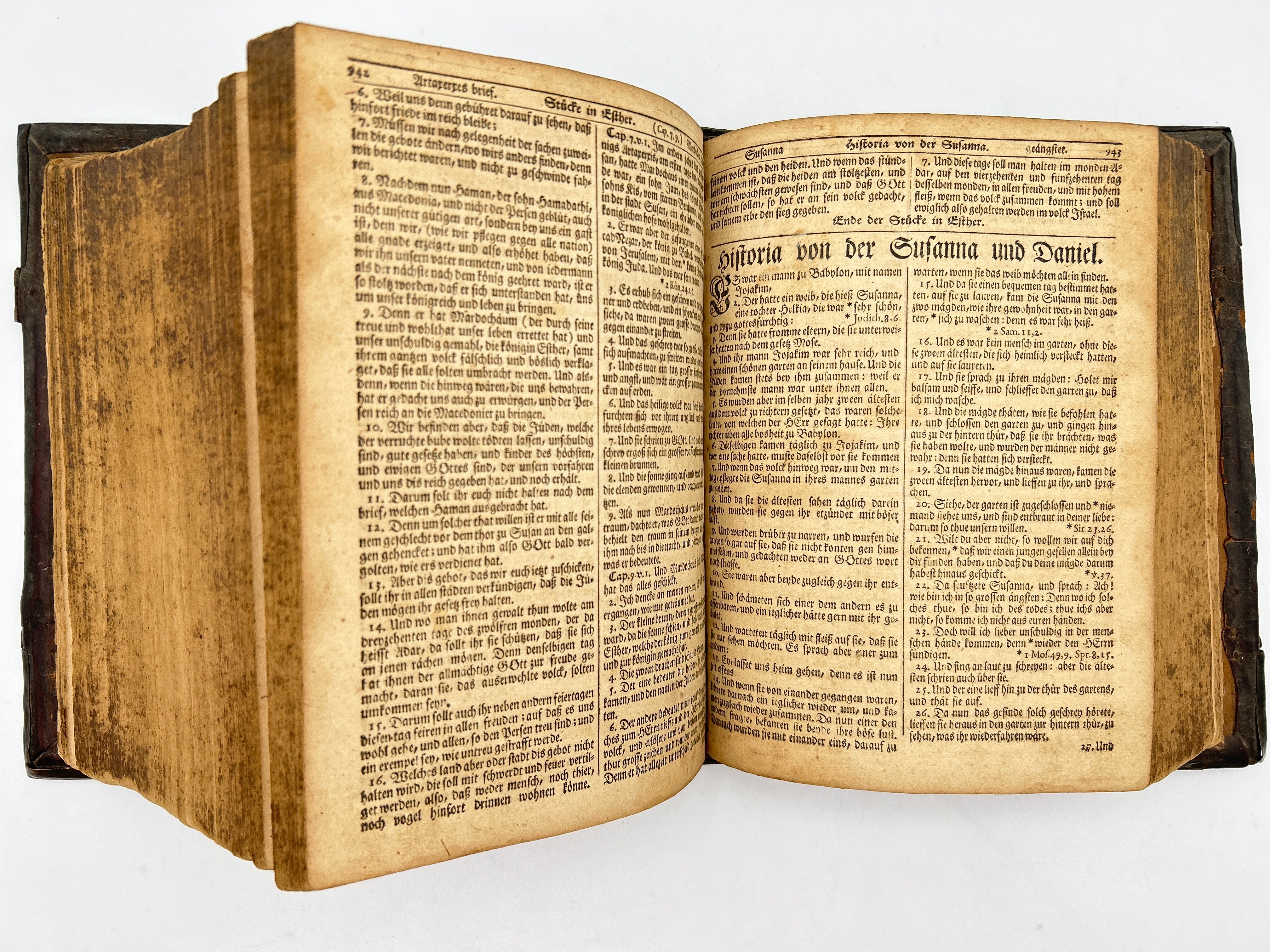
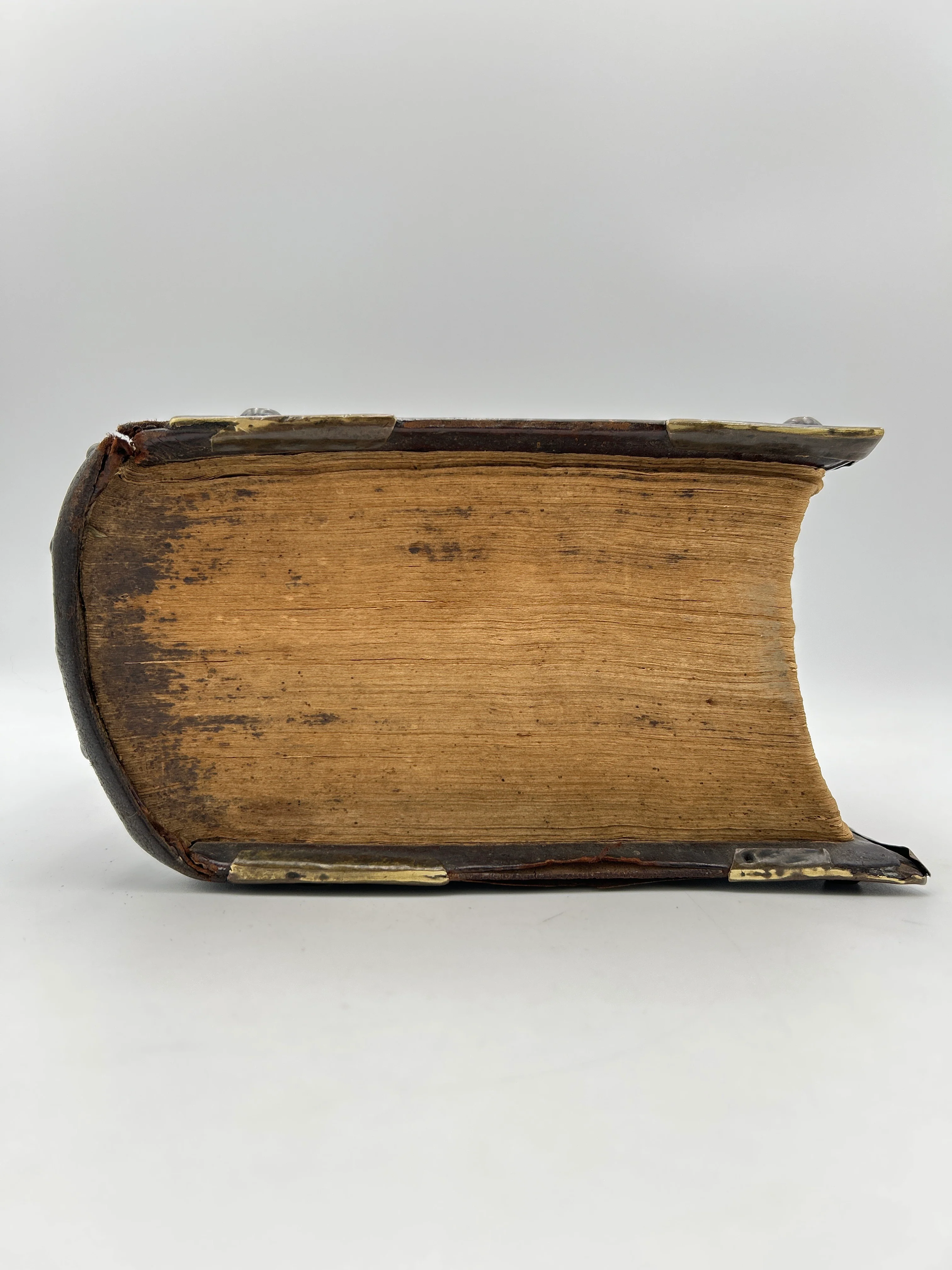
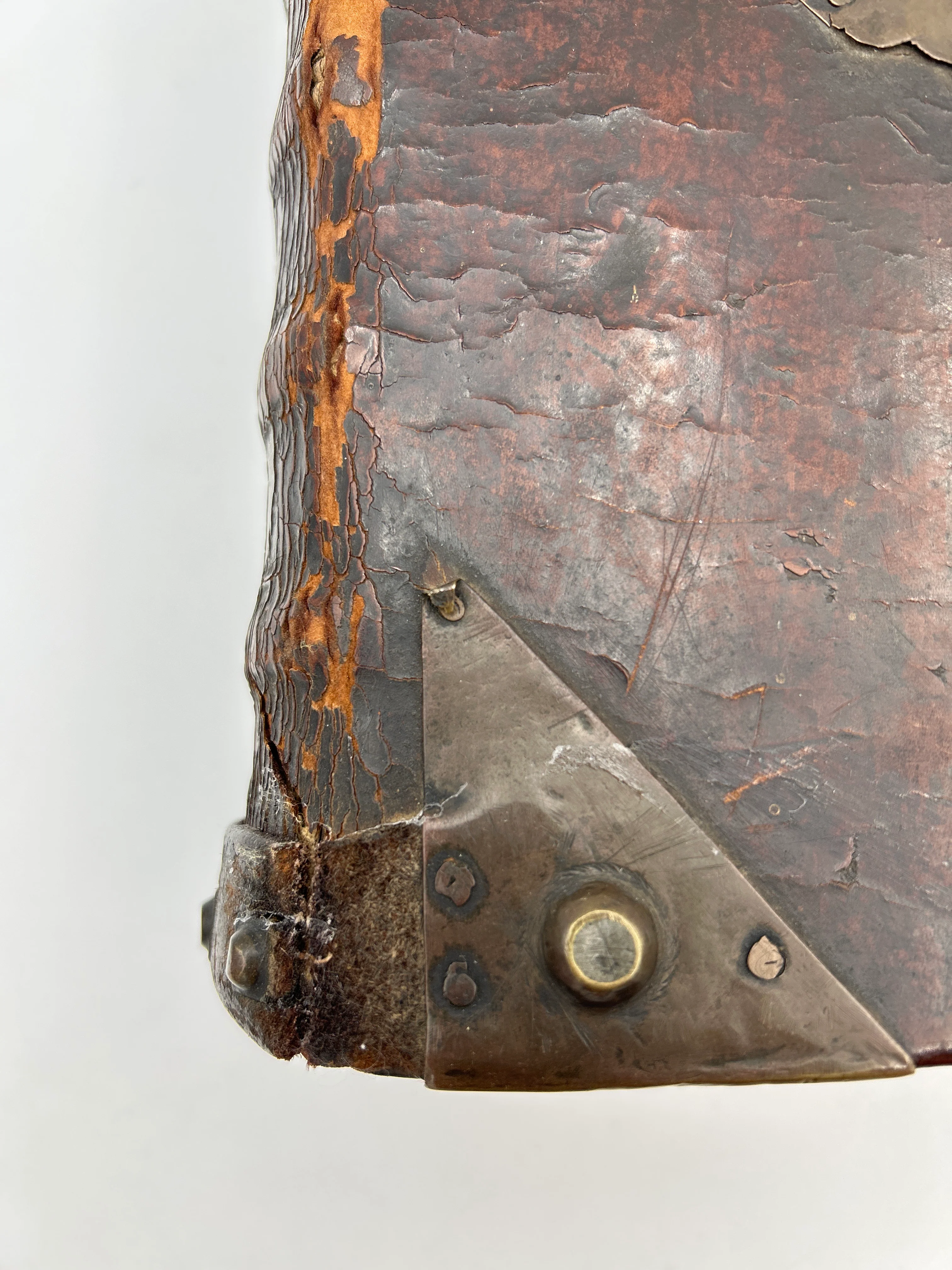
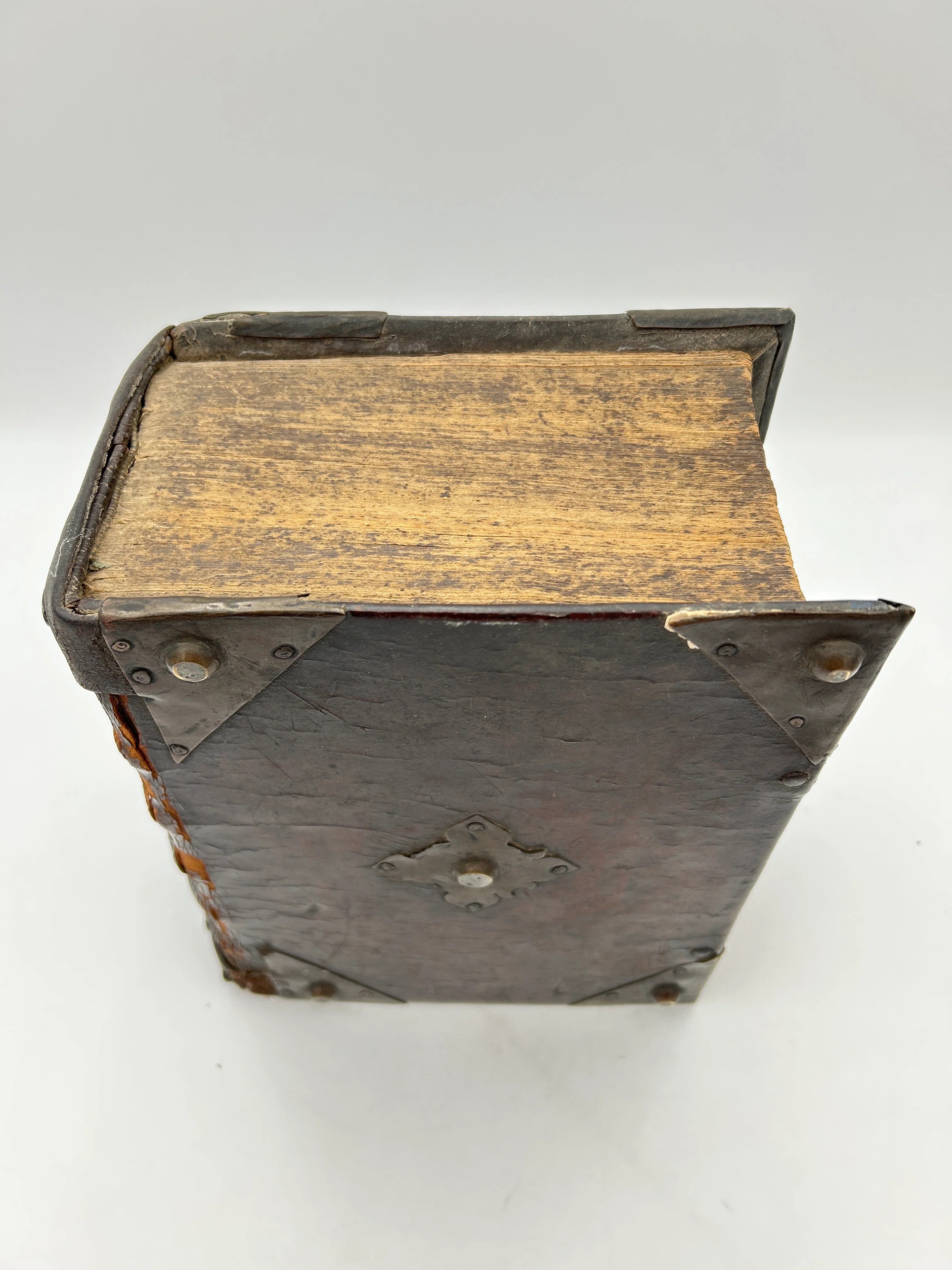
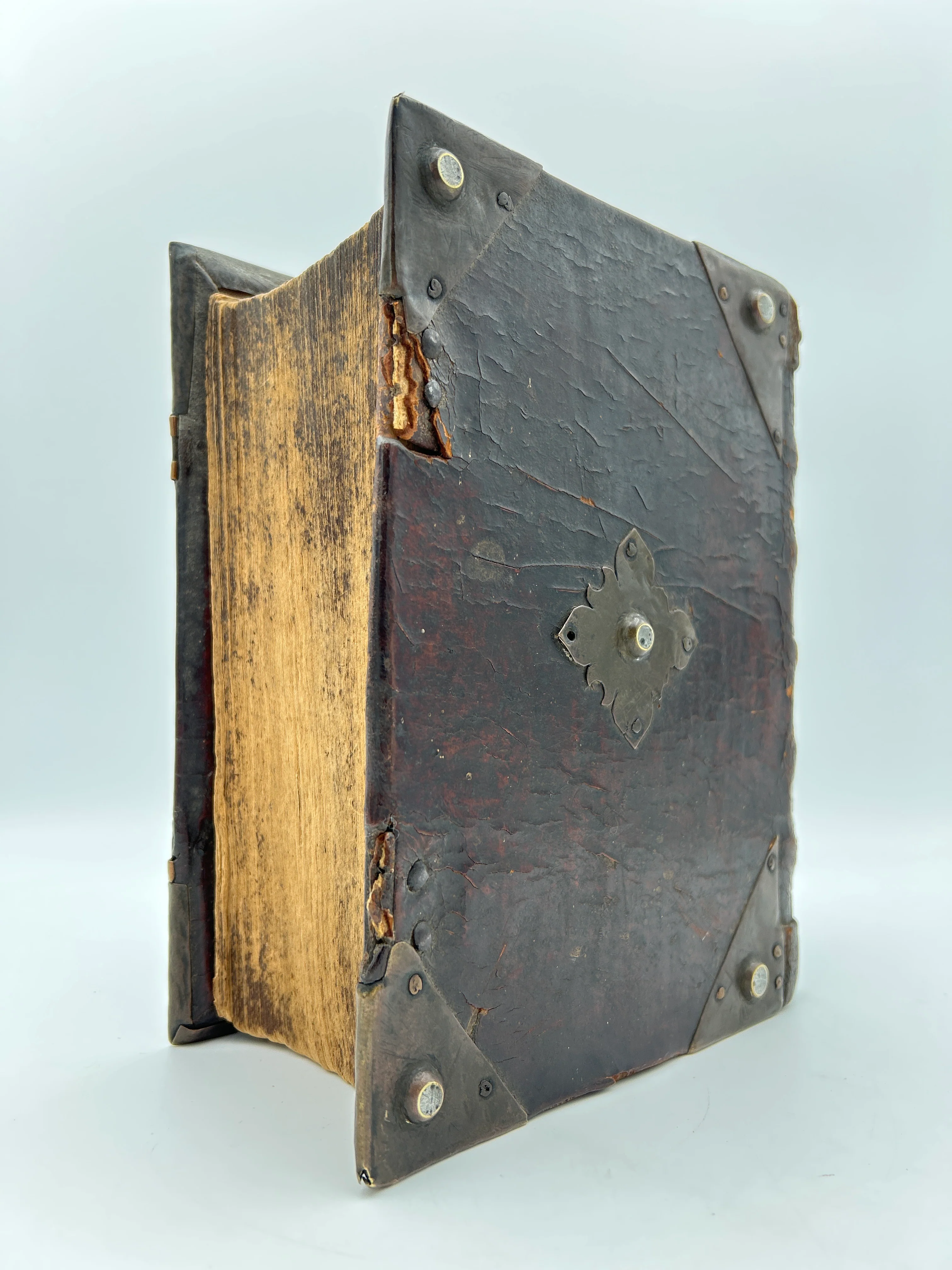
Brown leather covered wooden boards original with brass corners and emblem in center of boards. Five raised bands. Cracking to leather over spine. Missing original brass clasps. Red and black lettering. Browning to edges and minimal foxing throughout. Some detaching of upper board but remains fully intact. Good condition overall.
Dimensions: 10 1/2 x 8 x 4 1/2 inches
Details & Craftsmanship
Every detail has been carefully considered to bring you the perfect product.
Details & Craftsmanship
Every detail has been carefully considered to bring you the perfect product.
Details & Craftsmanship
Every detail has been carefully considered to bring you the perfect product.
Details & Craftsmanship
Every detail has been carefully considered to bring you the perfect product.
Details & Craftsmanship
Every detail has been carefully considered to bring you the perfect product.
Details & Craftsmanship
Every detail has been carefully considered to bring you the perfect product.
Details & Craftsmanship
Every detail has been carefully considered to bring you the perfect product.
Details & Craftsmanship
Every detail has been carefully considered to bring you the perfect product.
Description
6B Holy Bible translated from the Martin Luther. Germantown: Christopher Saur, 1743 In German.
Notes
Christopher Saur (1693–1758) was a German-born printer and publisher who emigrated to Pennsylvania in the early 18th century, settling in Germantown near Philadelphia. Trained in the printing trade in Germany, he established one of the first German-language presses in North America, producing religious texts, hymnals, and the landmark Saur Bible for the growing German-speaking immigrant population. Beyond printing, Saur was deeply involved in his community, supporting education, literacy, and the preservation of German language and culture in the colonies. His work made him a pivotal figure in early American printing, bridging European traditions with the spiritual and cultural needs of colonial German settlers.
The Saur (or Sauer) German Bible was the first Bible printed in a European language in North America, produced by Christopher Saur (Sauer) in Germantown, Pennsylvania, in 1743, with later editions in 1763 and 1776. It was printed for German-speaking immigrants—especially Mennonites, Amish, Brethren, and other Anabaptist communities—who had settled in colonial Pennsylvania and still relied heavily on the German language for worship and daily life. Saur’s Bible was based on Martin Luther’s German translation, the standard German Bible of the time, but it was printed locally to make Scripture affordable and accessible without relying on expensive imports from Europe.
The importance of the Saur Bible lies in both translation and cultural history. Luther’s German translation had already transformed Christianity by putting Scripture into the everyday language of ordinary people, and Saur’s printing extended that revolution to the New World. By producing a German Bible in America, Saur helped preserve religious identity, literacy, and theological independence among immigrant communities. The Saur Bible also symbolizes early American ideals of religious freedom, freedom of the press, and vernacular access to Scripture, making it a landmark not only in biblical translation history but in American publishing and history as well.
Description
Brown leather covered wooden boards original with brass corners and emblem in center of boards. Five raised bands. Cracking to leather over spine. Missing original brass clasps. Red and black lettering. Browning to edges and minimal foxing throughout. Some detaching of upper board but remains fully intact. Good condition overall.
Dimensions: 10 1/2 x 8 x 4 1/2 inches