Original: $995.00
-65%$995.00
$348.25The Story
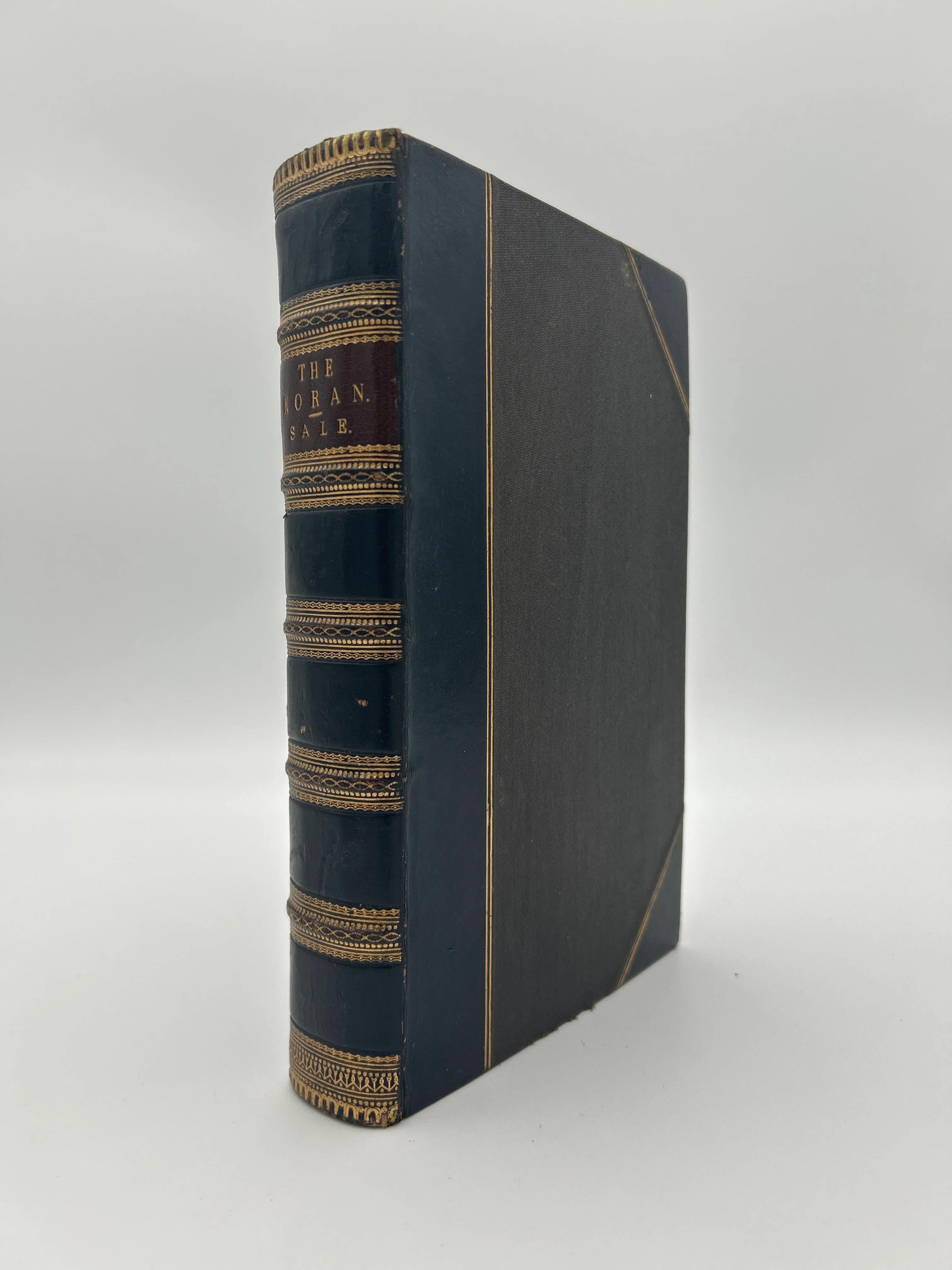
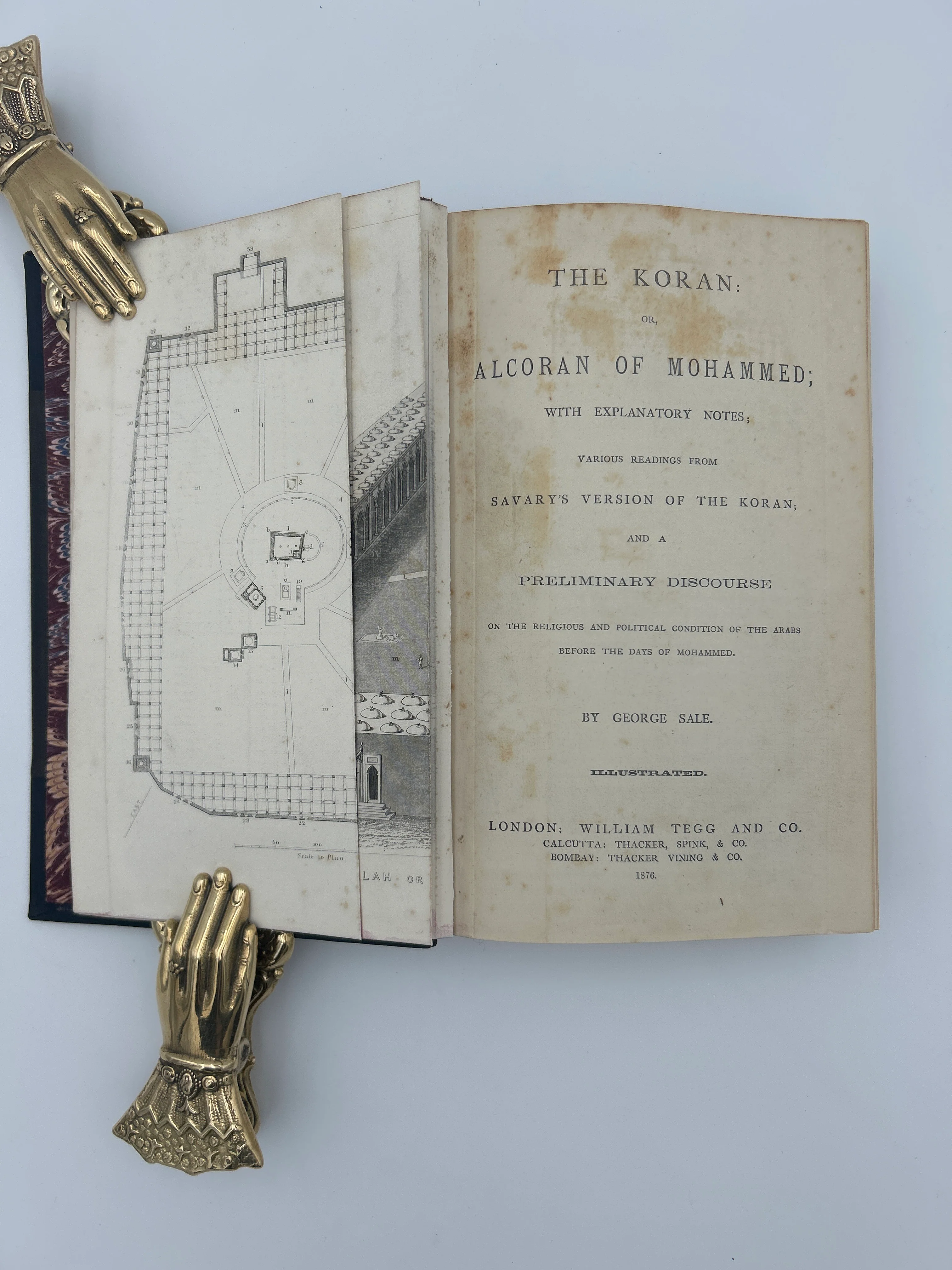
6B The Koran or, Alcoran of Mohammed. George Sale. London: William Tegg and Co., 1876. In English.
Notes
The history of the Holy Qur’an begins in the early 7th century CE with the revelations received by the Prophet Muhammad in Arabia, which Muslims believe were conveyed to him over roughly twenty-three years through the angel Gabriel. These revelations were initially memorized and recited orally, while also being written down on various materials by scribes during Muhammad’s lifetime. After his death in 632 CE, concern over preserving the text led to its compilation into a single written collection during the caliphate of Abu Bakr, and then to the establishment of a standardized text under the third caliph, Uthman ibn Affan, around the mid-7th century. Copies of this authorized text were distributed across the expanding Islamic world, helping ensure remarkable textual consistency. Over the centuries, the Qur’an has been carefully transmitted through both manuscript copying and oral recitation, with developments in calligraphy, illumination, and later printing reflecting its central religious and cultural importance, while the Arabic text itself has remained fundamentally stable from its earliest standardization.
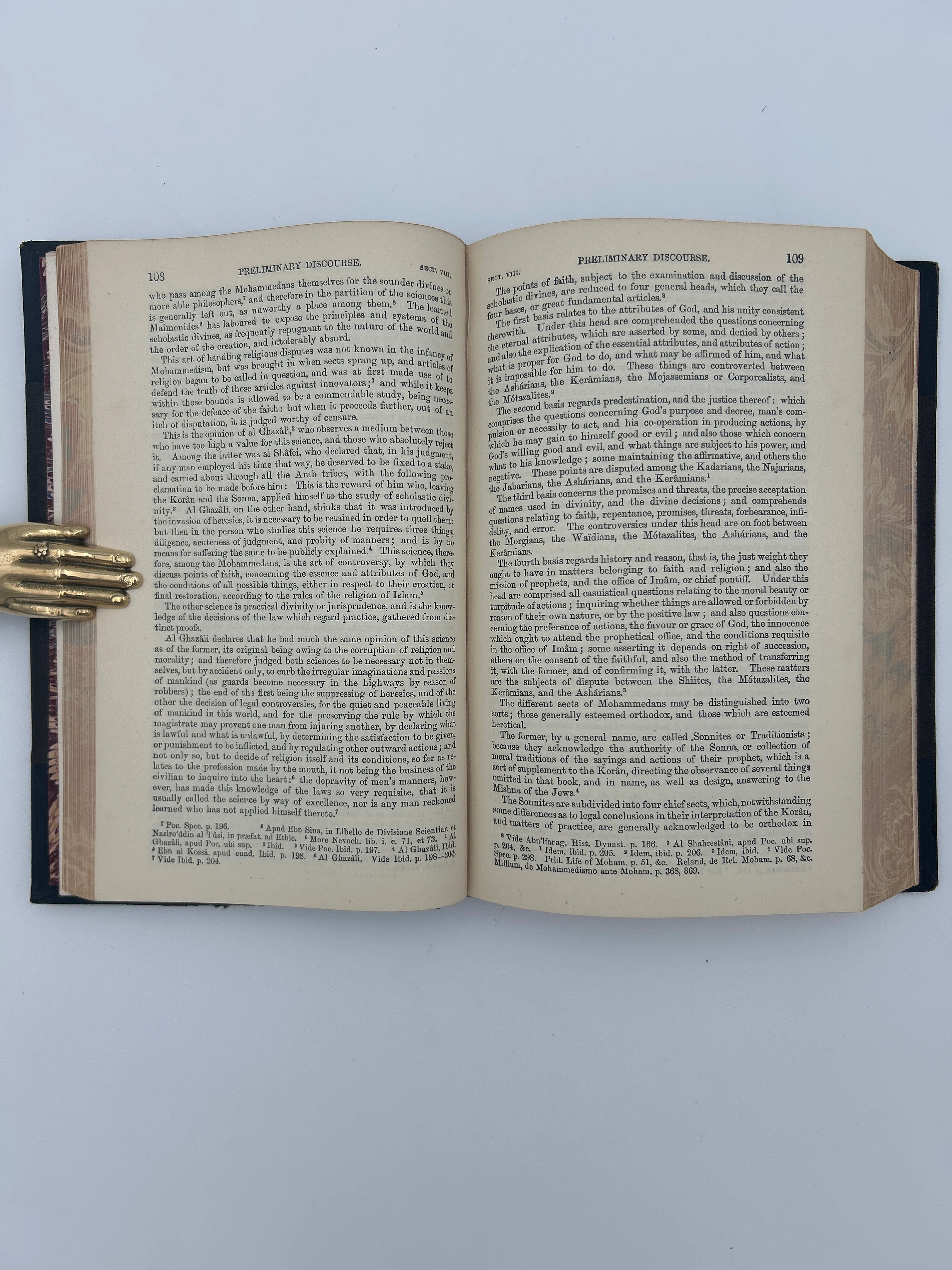
This edition includes readings from Savary’s version of the Koran which refers to the influential French translation of the Qur’an made by the orientalist Claude‑Étienne Savary first published in 1783. This is a rendering of the Arabic text into French Le Coran with extensive notes and a preface that included an abridged life of Muhammad based on respected Oriental sources. Savary’s work was part of a broader wave of European translations that followed earlier, less accurate French versions (such as that by Du Ryer in 1647) and preceded later translators like Kasimirski in the 19th century; his translation became widely reprinted and used in scholarly and popular editions because it was considered more reliable and informative for a Western audience. Savary’s translation also influenced later English editions, where his readings and illustrative notes were incorporated alongside George Sale’s well‑known English translation in the 19th century, helping shape Western understanding of the Qur’anic text and its context.
“Qur’an” is the modern, academically preferred transliteration from Arabic, reflecting the original pronunciation, while “Koran” is an older European spelling that became common in English. Both refer to the same sacred text; the difference is purely in spelling, not content.
Description
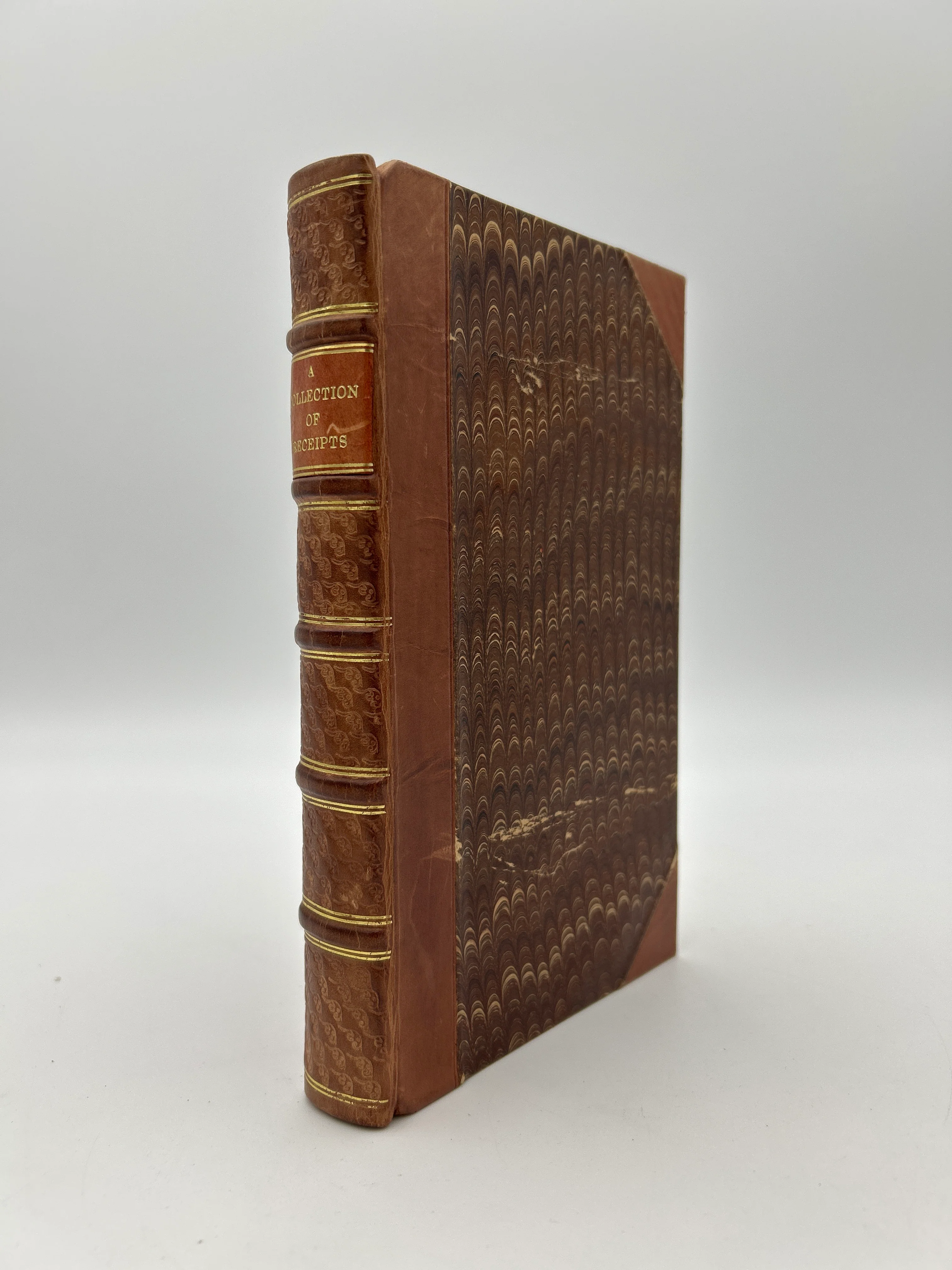
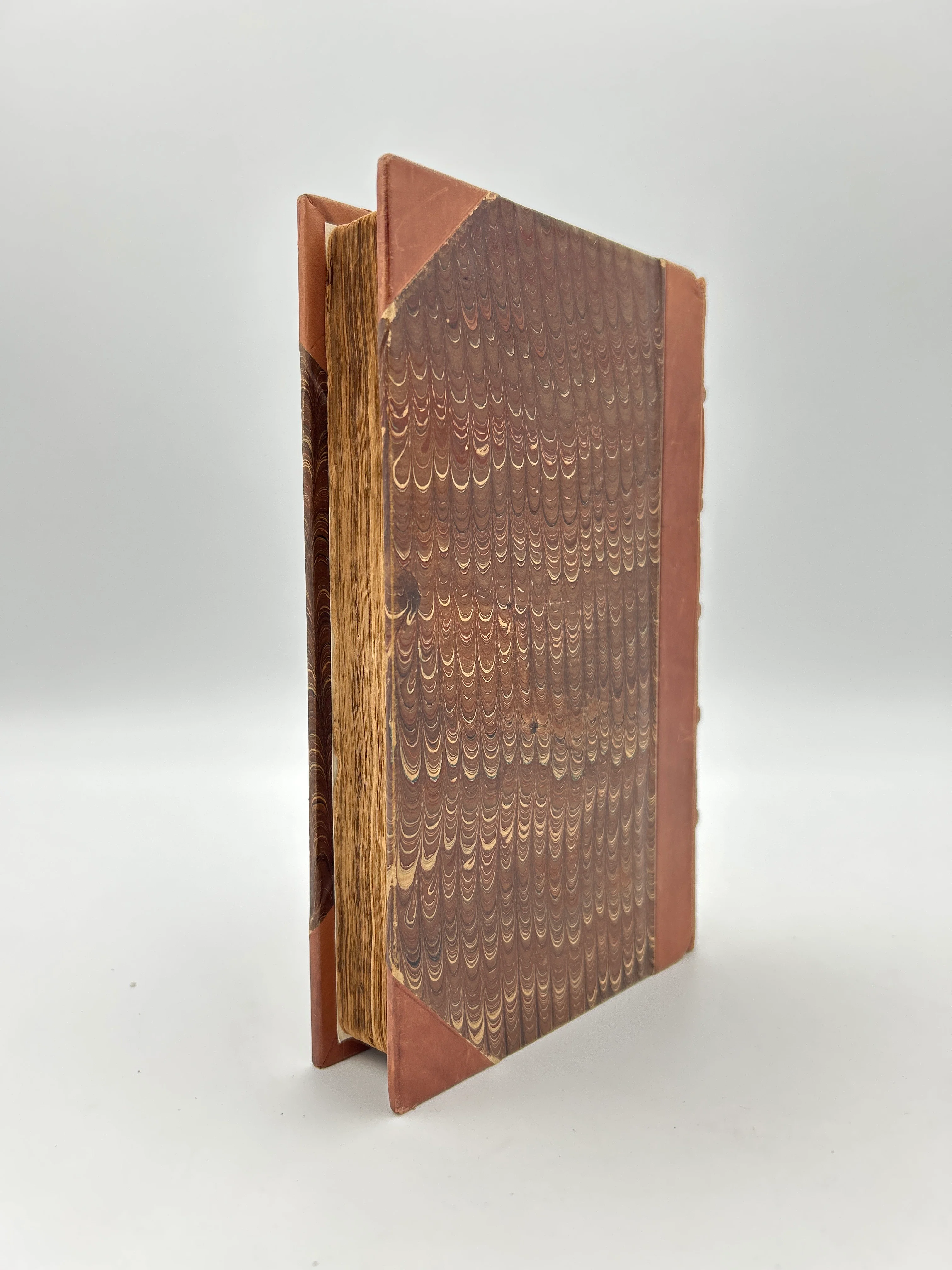
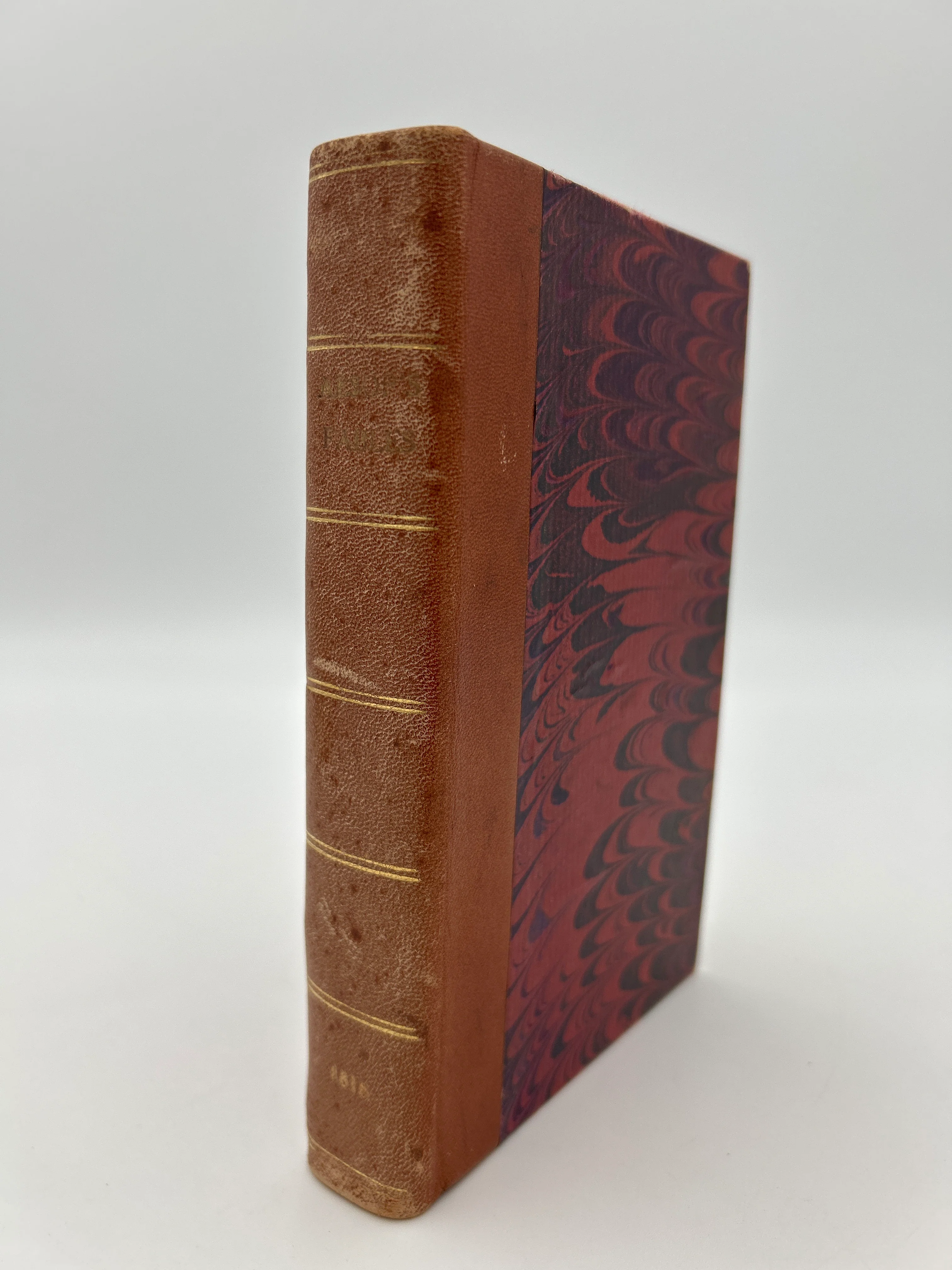
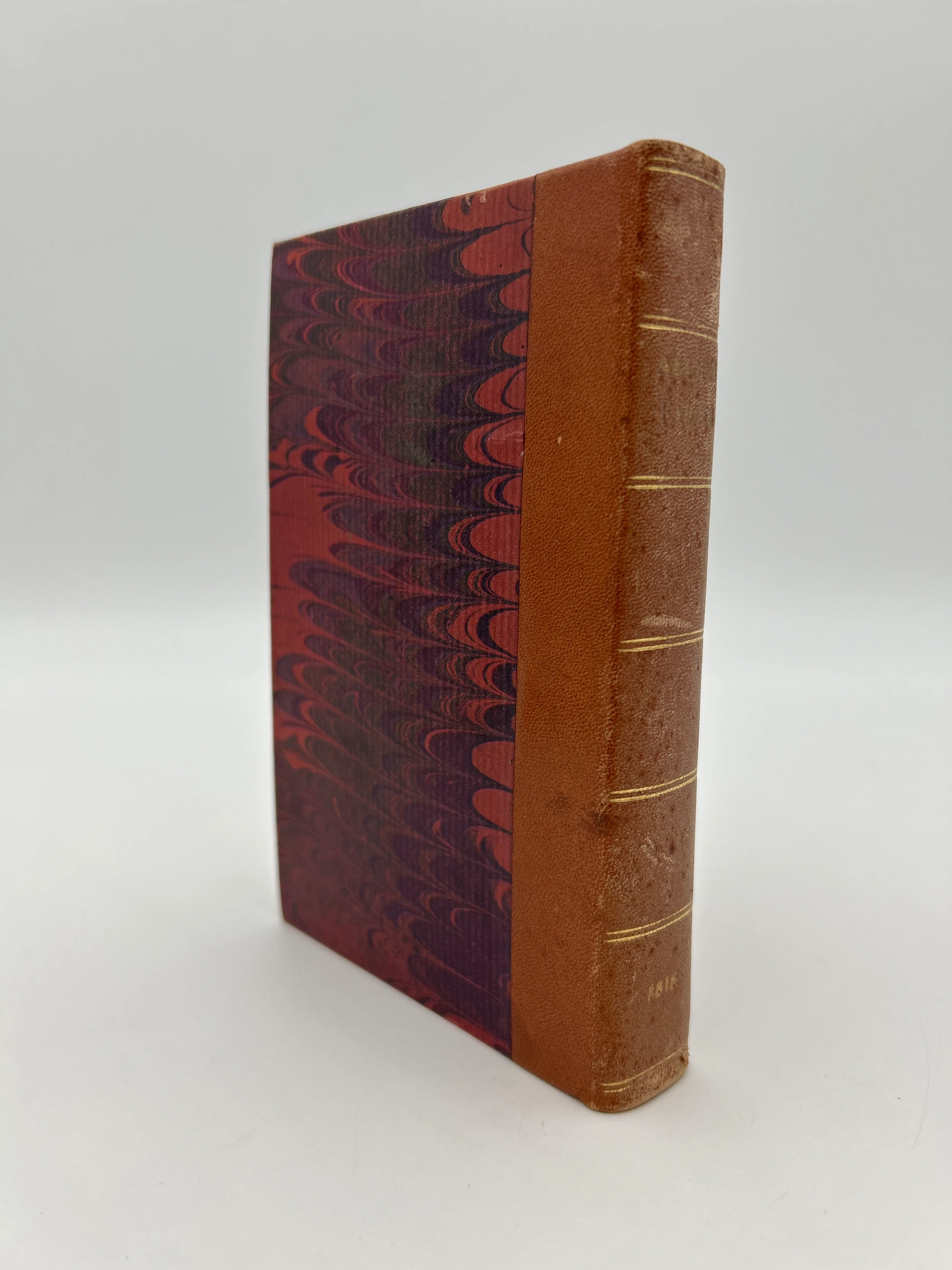
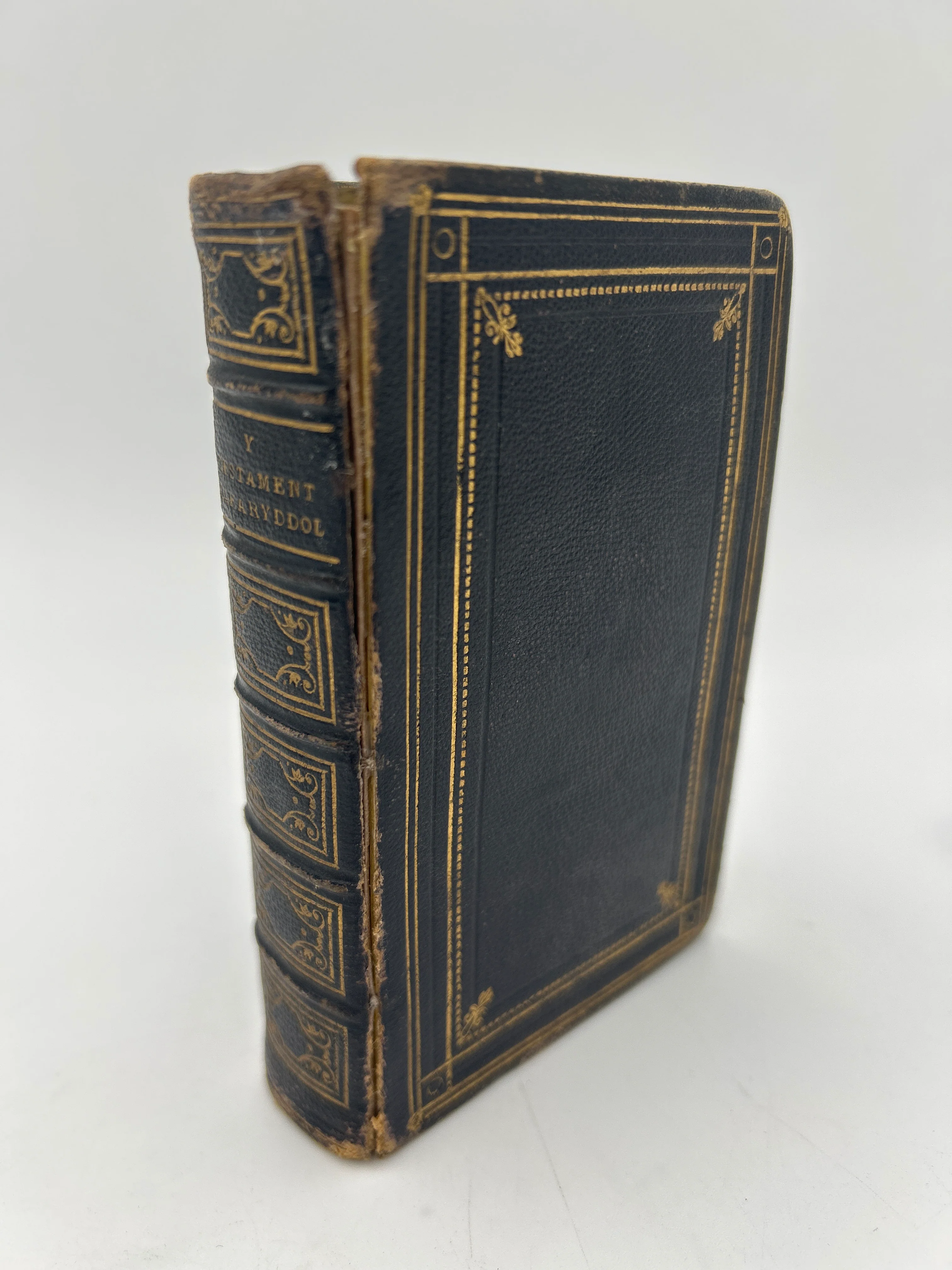
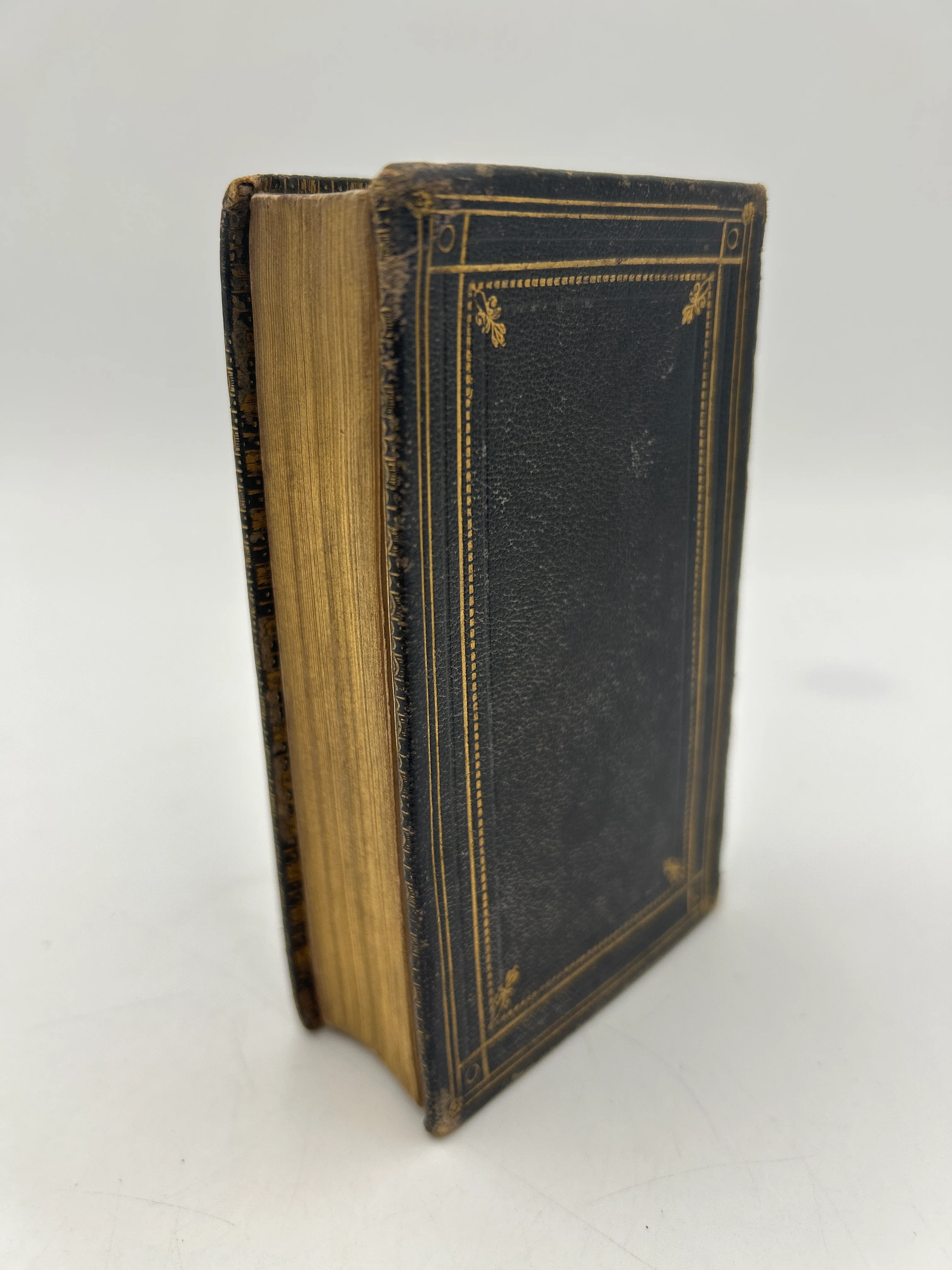
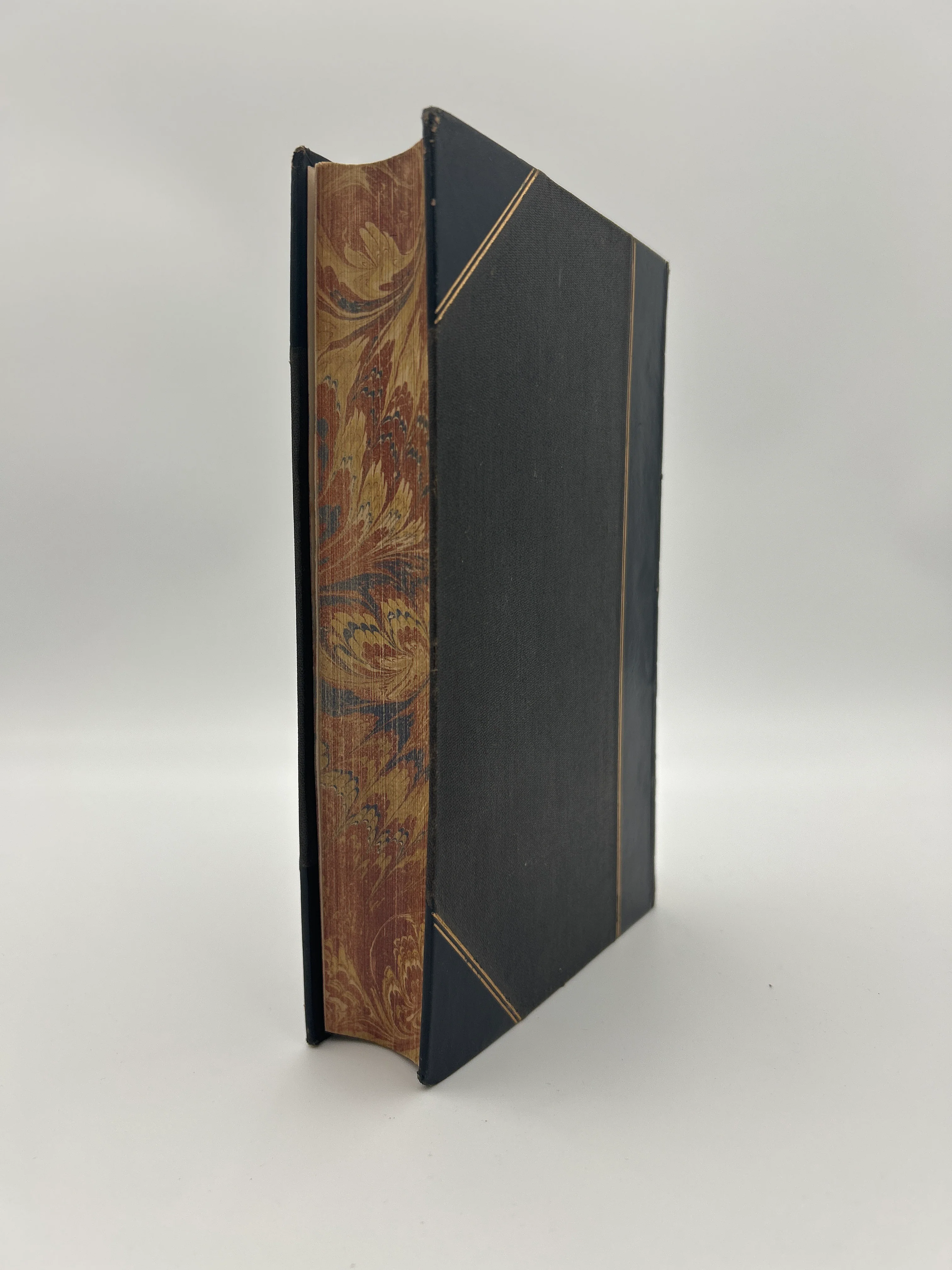
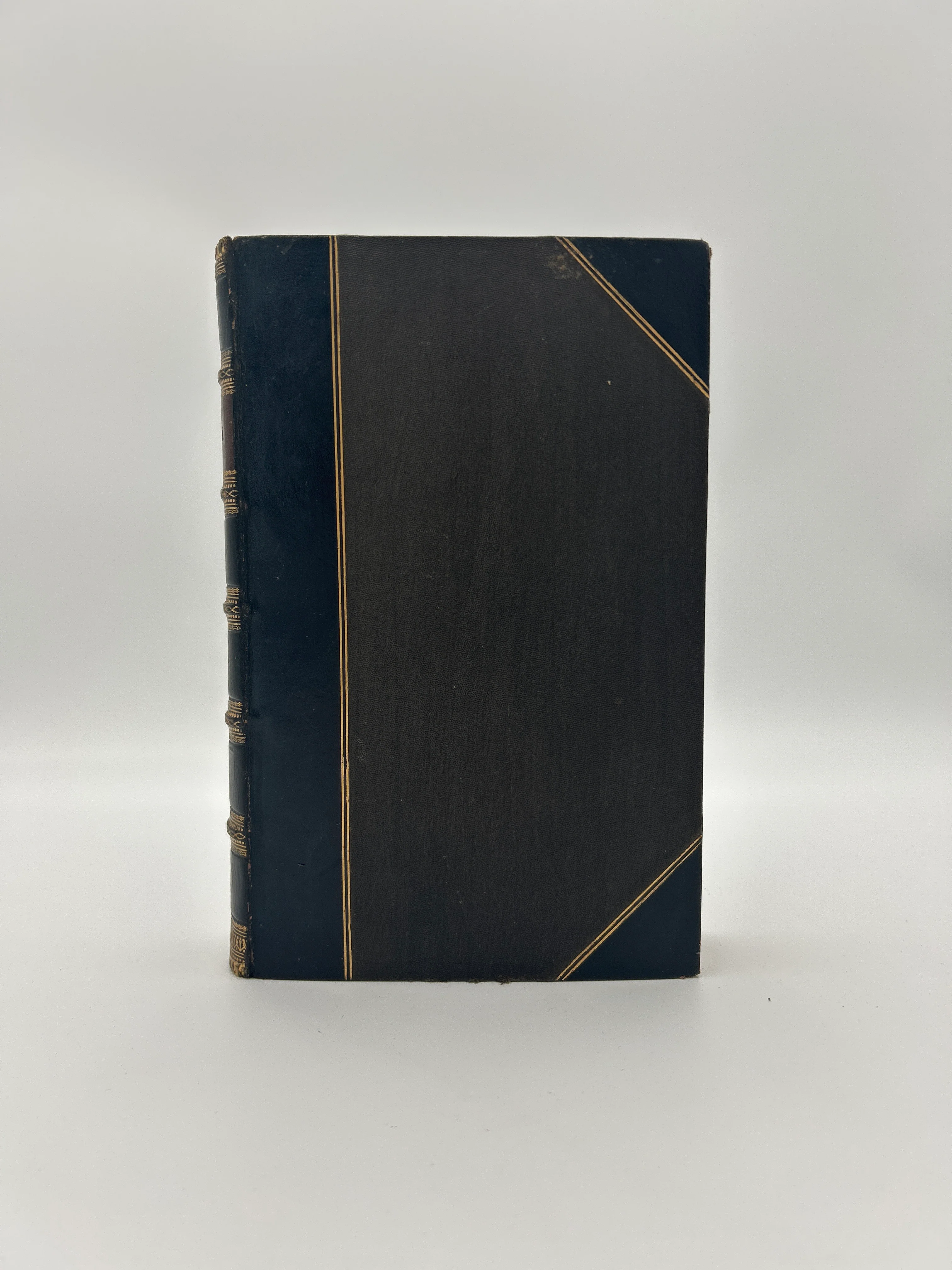
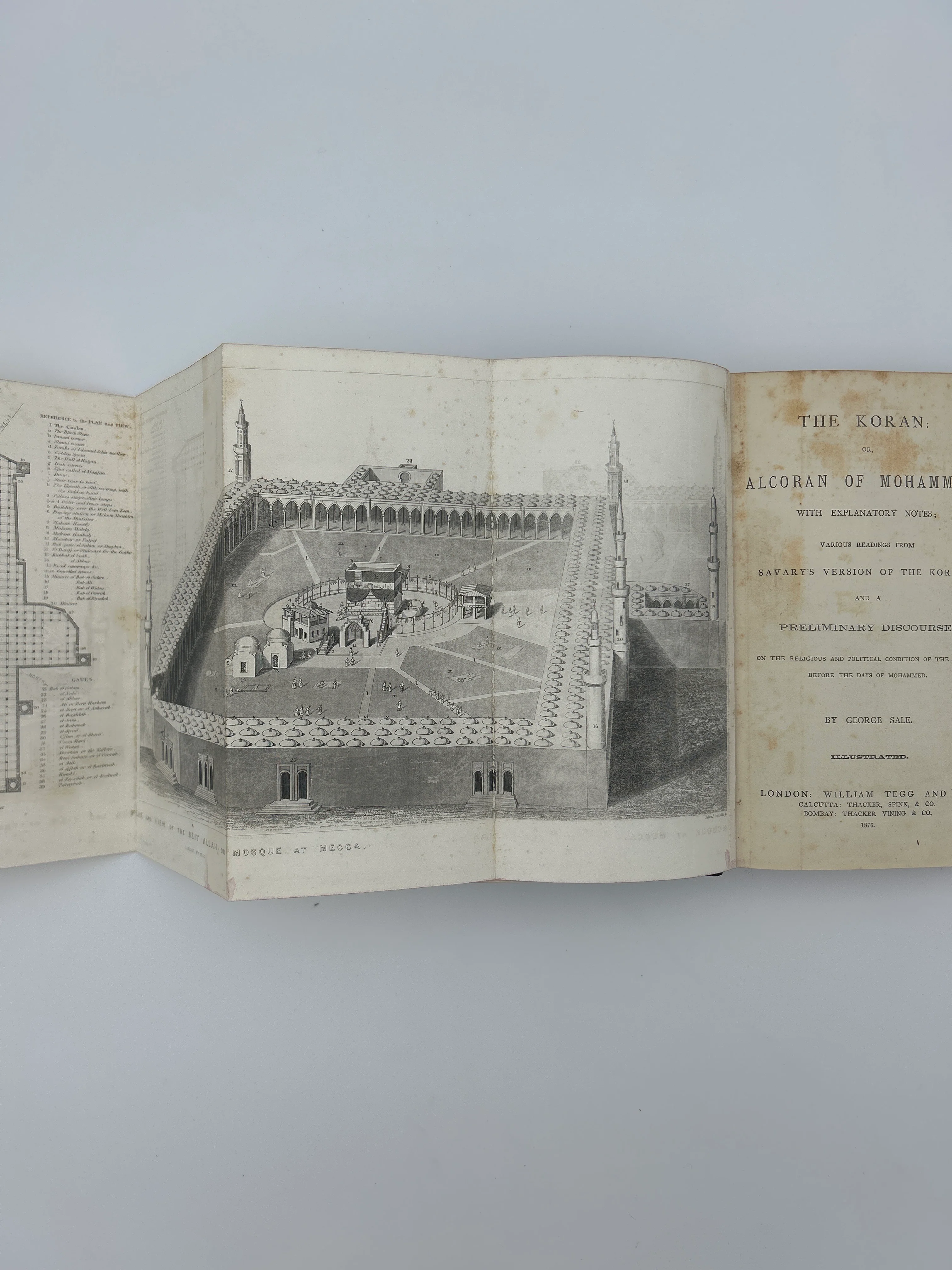
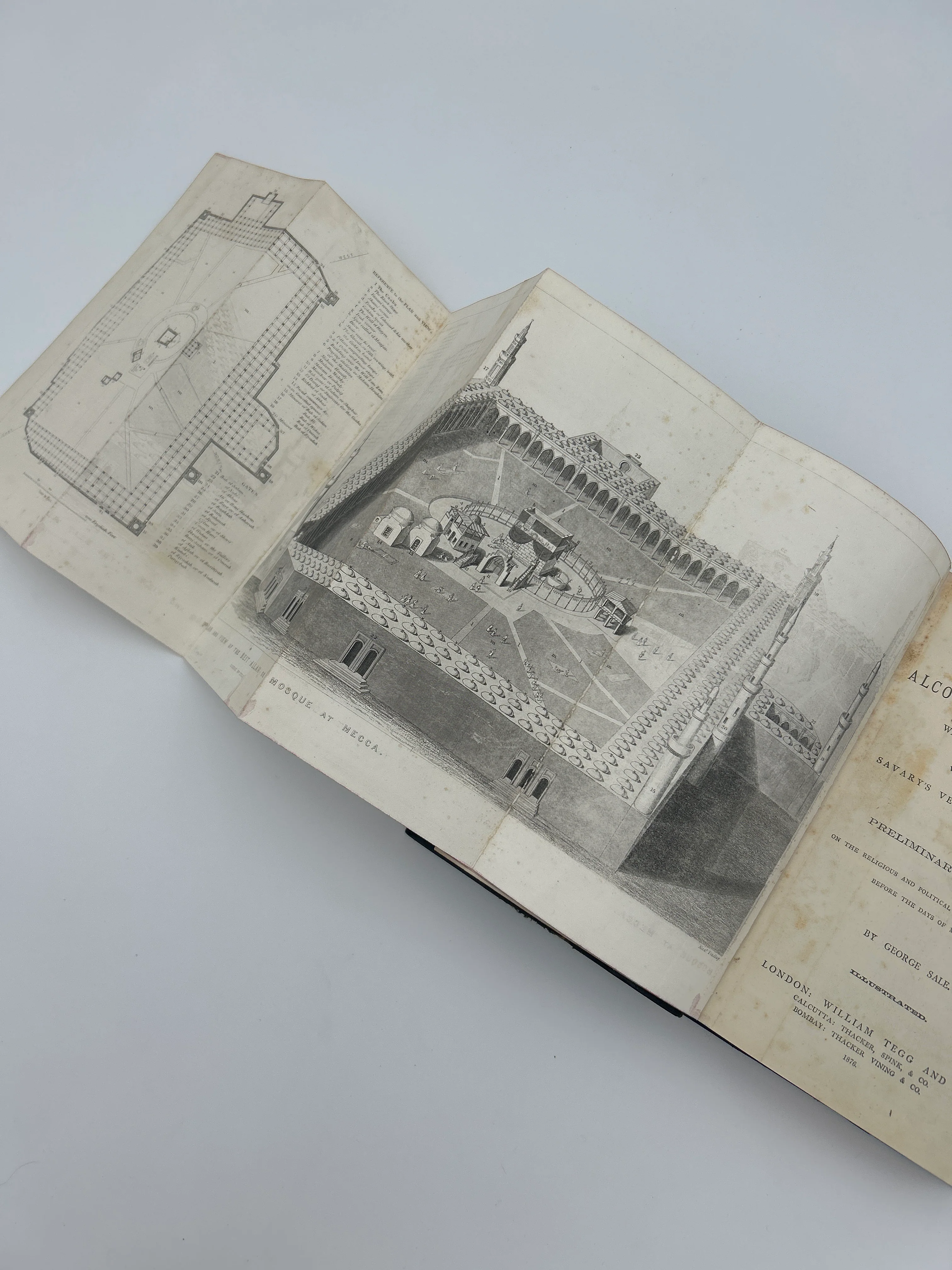
Beautiful fabric and leather binding, five raised bands on spine with The Koran Sale gold tooled on burgundy band, gold embossing on front, back and spine, marbling around three edges, fold out map in front reads, "Plan and view of the Beit Allah or Mosque at Mecca", some foxing on title page
Details & Craftsmanship
Every detail has been carefully considered to bring you the perfect product.
Details & Craftsmanship
Every detail has been carefully considered to bring you the perfect product.
Details & Craftsmanship
Every detail has been carefully considered to bring you the perfect product.
Details & Craftsmanship
Every detail has been carefully considered to bring you the perfect product.
Details & Craftsmanship
Every detail has been carefully considered to bring you the perfect product.
Details & Craftsmanship
Every detail has been carefully considered to bring you the perfect product.
Description
6B The Koran or, Alcoran of Mohammed. George Sale. London: William Tegg and Co., 1876. In English.
Notes
The history of the Holy Qur’an begins in the early 7th century CE with the revelations received by the Prophet Muhammad in Arabia, which Muslims believe were conveyed to him over roughly twenty-three years through the angel Gabriel. These revelations were initially memorized and recited orally, while also being written down on various materials by scribes during Muhammad’s lifetime. After his death in 632 CE, concern over preserving the text led to its compilation into a single written collection during the caliphate of Abu Bakr, and then to the establishment of a standardized text under the third caliph, Uthman ibn Affan, around the mid-7th century. Copies of this authorized text were distributed across the expanding Islamic world, helping ensure remarkable textual consistency. Over the centuries, the Qur’an has been carefully transmitted through both manuscript copying and oral recitation, with developments in calligraphy, illumination, and later printing reflecting its central religious and cultural importance, while the Arabic text itself has remained fundamentally stable from its earliest standardization.
This edition includes readings from Savary’s version of the Koran which refers to the influential French translation of the Qur’an made by the orientalist Claude‑Étienne Savary first published in 1783. This is a rendering of the Arabic text into French Le Coran with extensive notes and a preface that included an abridged life of Muhammad based on respected Oriental sources. Savary’s work was part of a broader wave of European translations that followed earlier, less accurate French versions (such as that by Du Ryer in 1647) and preceded later translators like Kasimirski in the 19th century; his translation became widely reprinted and used in scholarly and popular editions because it was considered more reliable and informative for a Western audience. Savary’s translation also influenced later English editions, where his readings and illustrative notes were incorporated alongside George Sale’s well‑known English translation in the 19th century, helping shape Western understanding of the Qur’anic text and its context.
“Qur’an” is the modern, academically preferred transliteration from Arabic, reflecting the original pronunciation, while “Koran” is an older European spelling that became common in English. Both refer to the same sacred text; the difference is purely in spelling, not content.
Description
Beautiful fabric and leather binding, five raised bands on spine with The Koran Sale gold tooled on burgundy band, gold embossing on front, back and spine, marbling around three edges, fold out map in front reads, "Plan and view of the Beit Allah or Mosque at Mecca", some foxing on title page