Original: $395.00
-65%$395.00
$138.25The Story
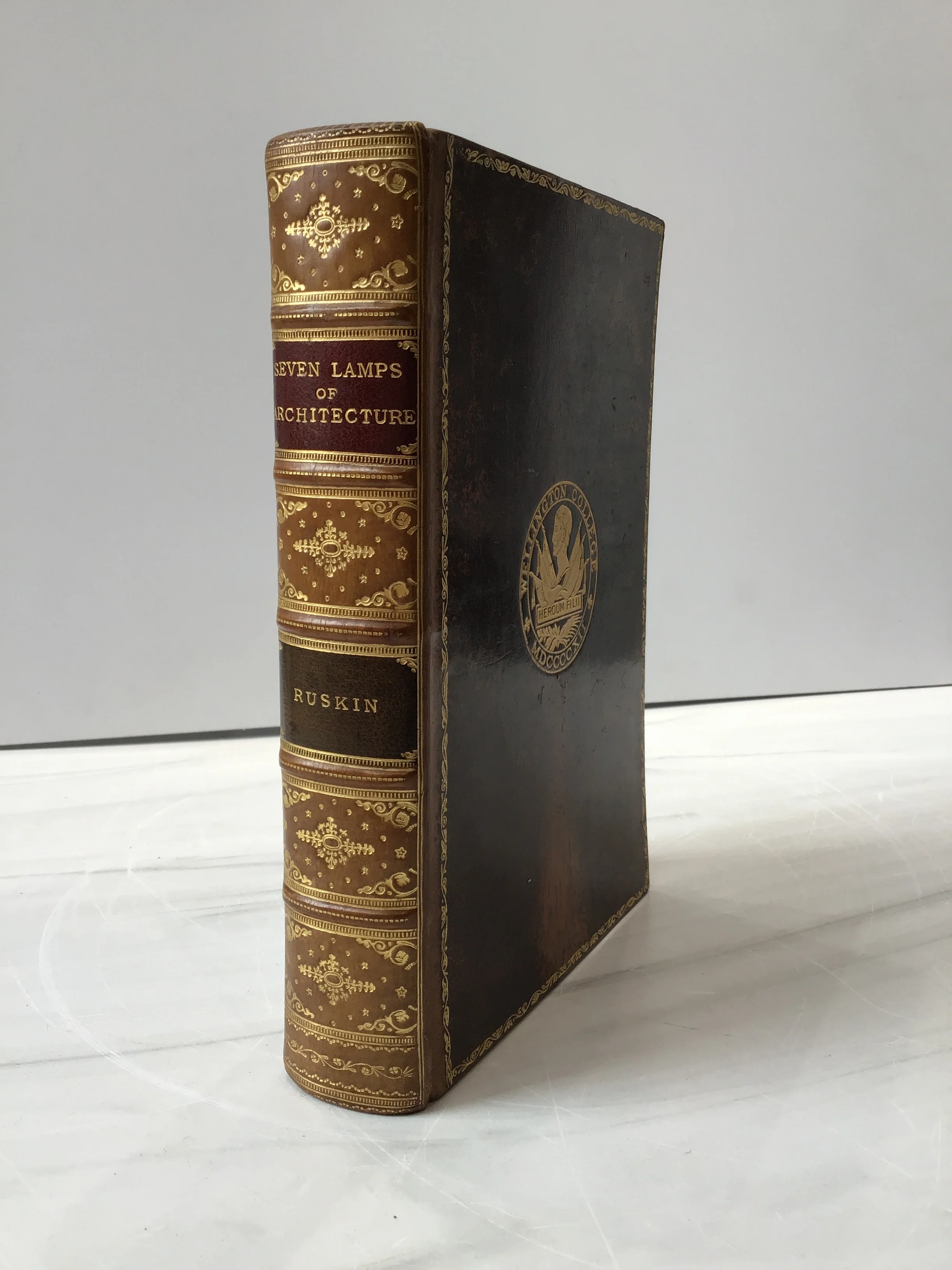
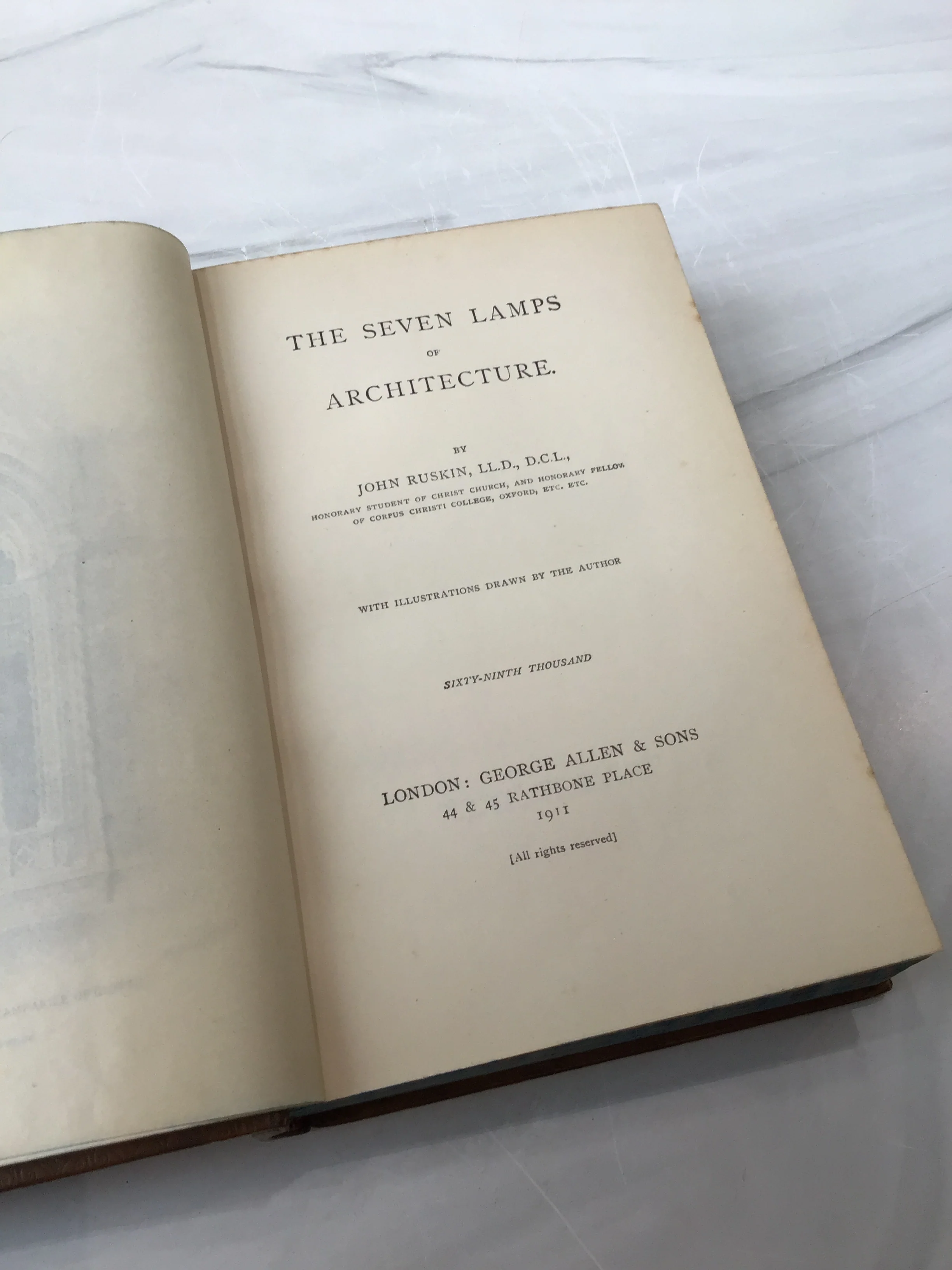
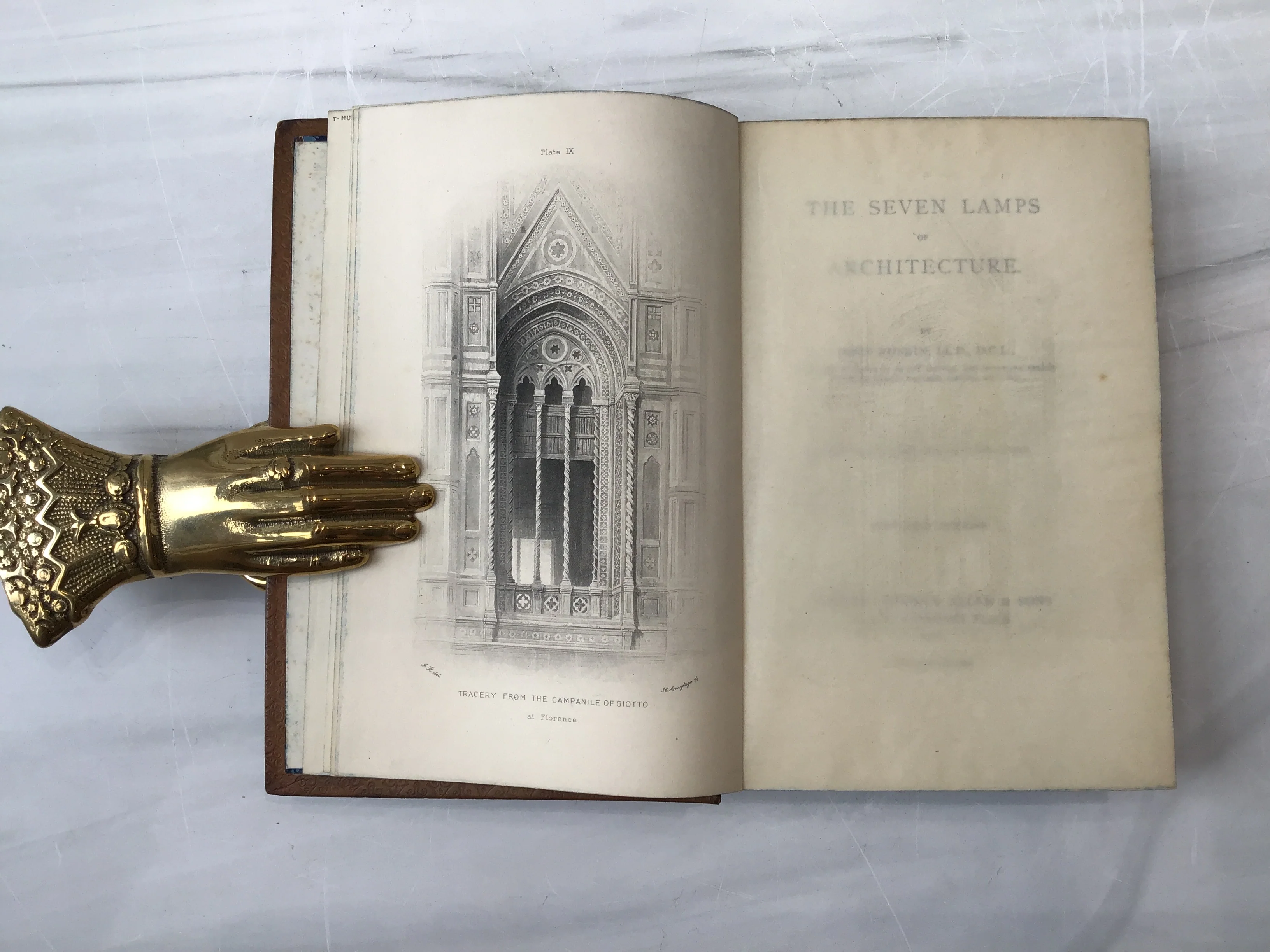
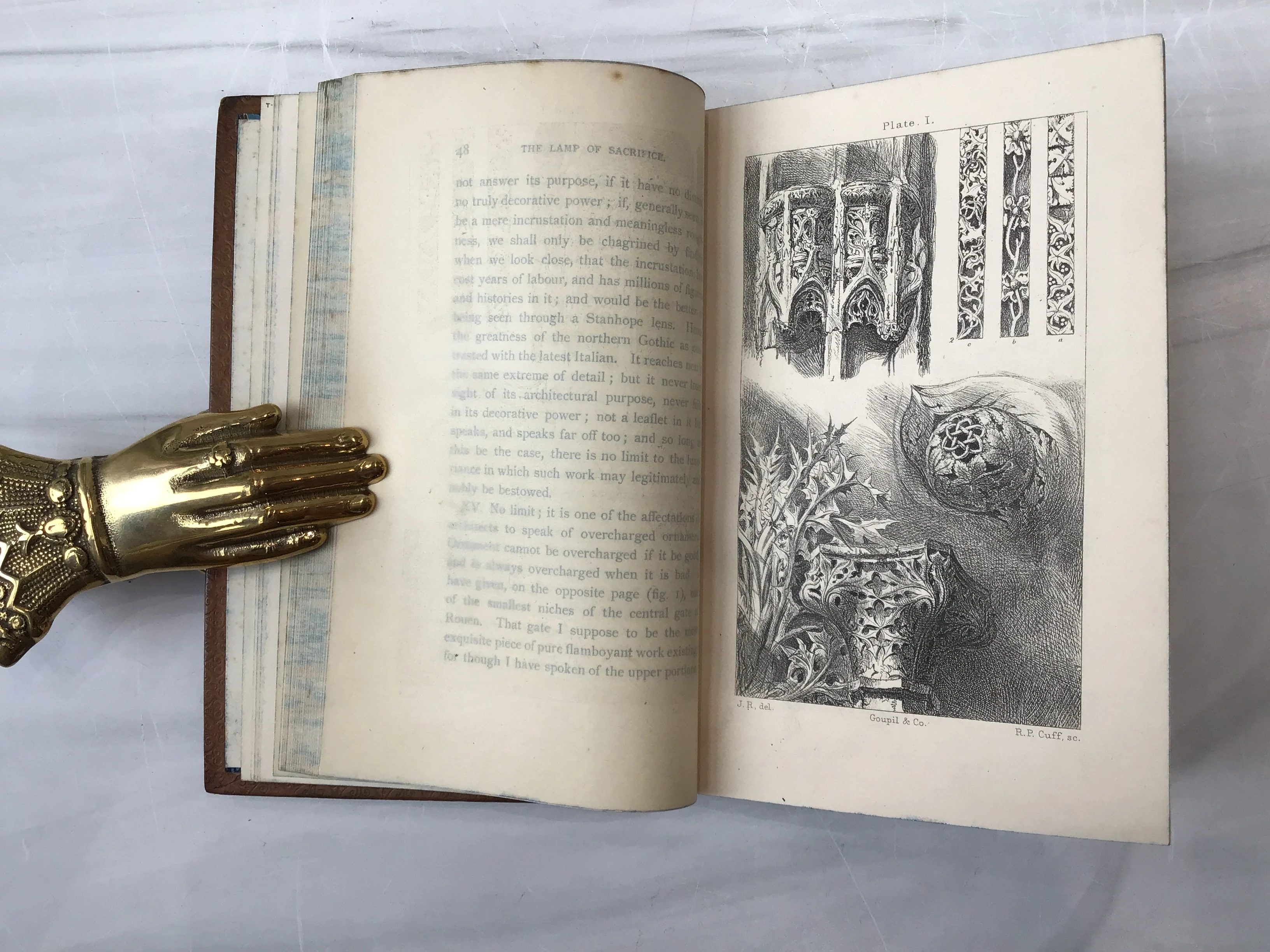
6H, George Allen & Sons. Illustrations drawn by the author. London 1911
Notes
The Seven Lamps of Architecture (1849) is a passionate and influential book by John Ruskin, one of the 19th century’s most important art critics and thinkers. Rather than being a technical manual, it’s a moral and philosophical meditation on what architecture ought to be—and what it reveals about the values of the society that creates it.
Ruskin organizes the book around seven “lamps,” or guiding principles:
-
Sacrifice – Great architecture is an offering, not merely something useful. Ruskin believed buildings should reflect devotion, care, and generosity of spirit, especially in religious structures.
-
Truth – Materials and structure should be honest. No fake stone, no painted imitations, no disguising how a building actually stands.
-
Power – Architecture should convey strength and permanence, expressing humanity’s relationship with nature and time.
-
Beauty – True beauty comes from nature and craftsmanship, not mechanical repetition. Ornament should grow organically from form.
-
Life – Handcrafted work matters. Ruskin fiercely opposed mass production, arguing that the imperfections of human labor give buildings soul.
-
Memory – Buildings connect generations. Architecture should honor history and preserve cultural identity rather than erase it.
-
Obedience – Architects should respect established traditions and styles instead of chasing novelty for its own sake.
Description
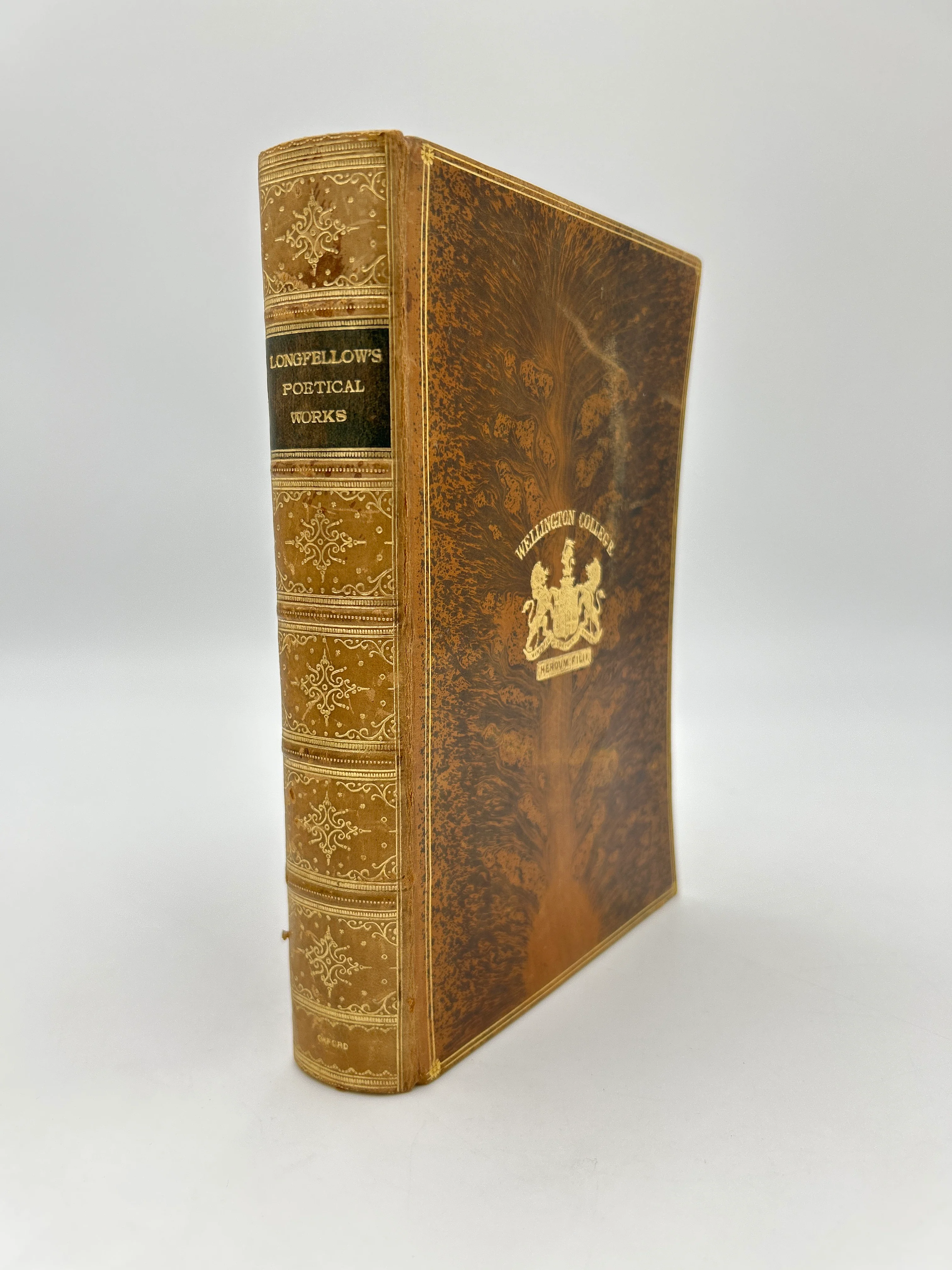
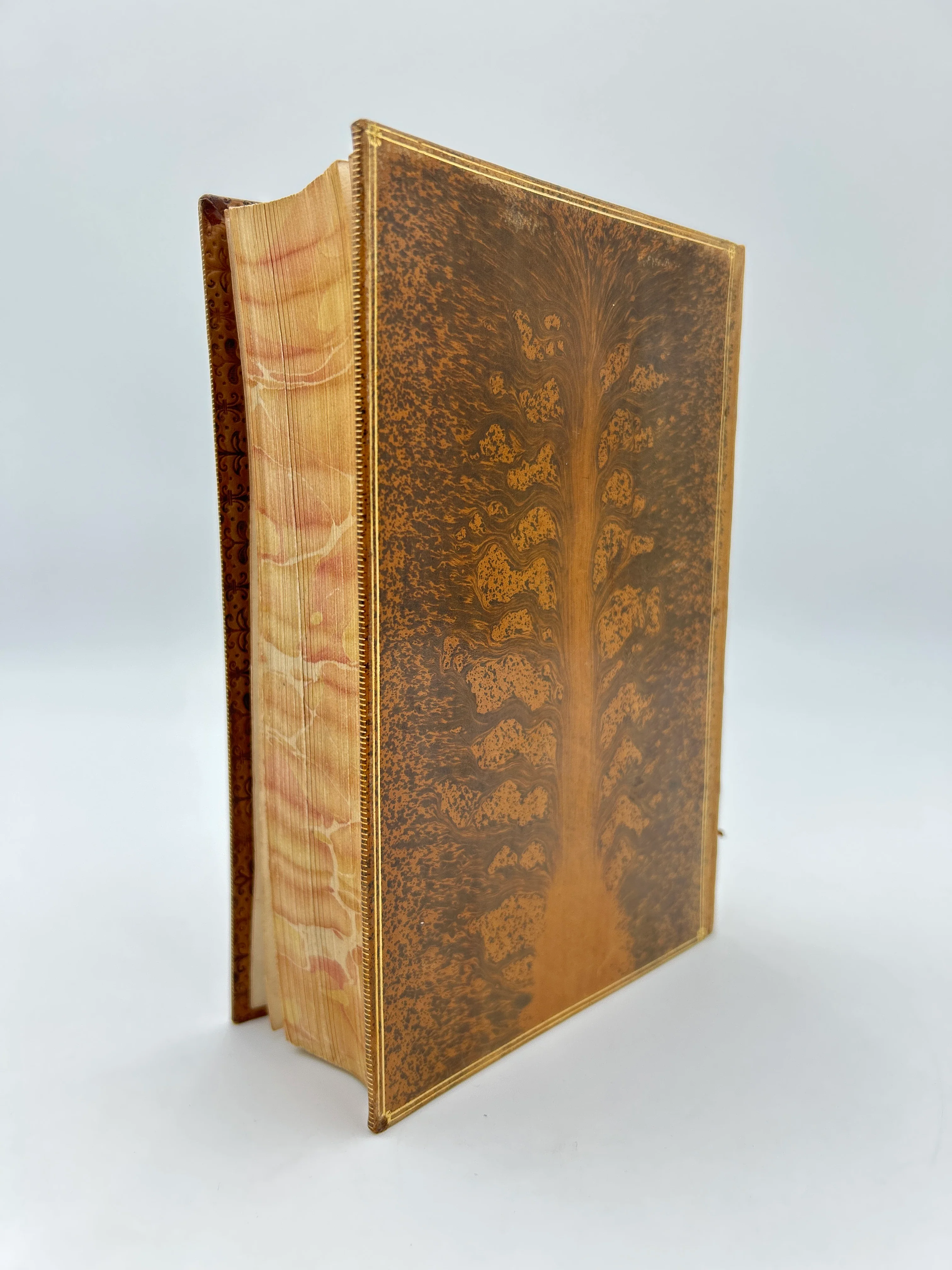
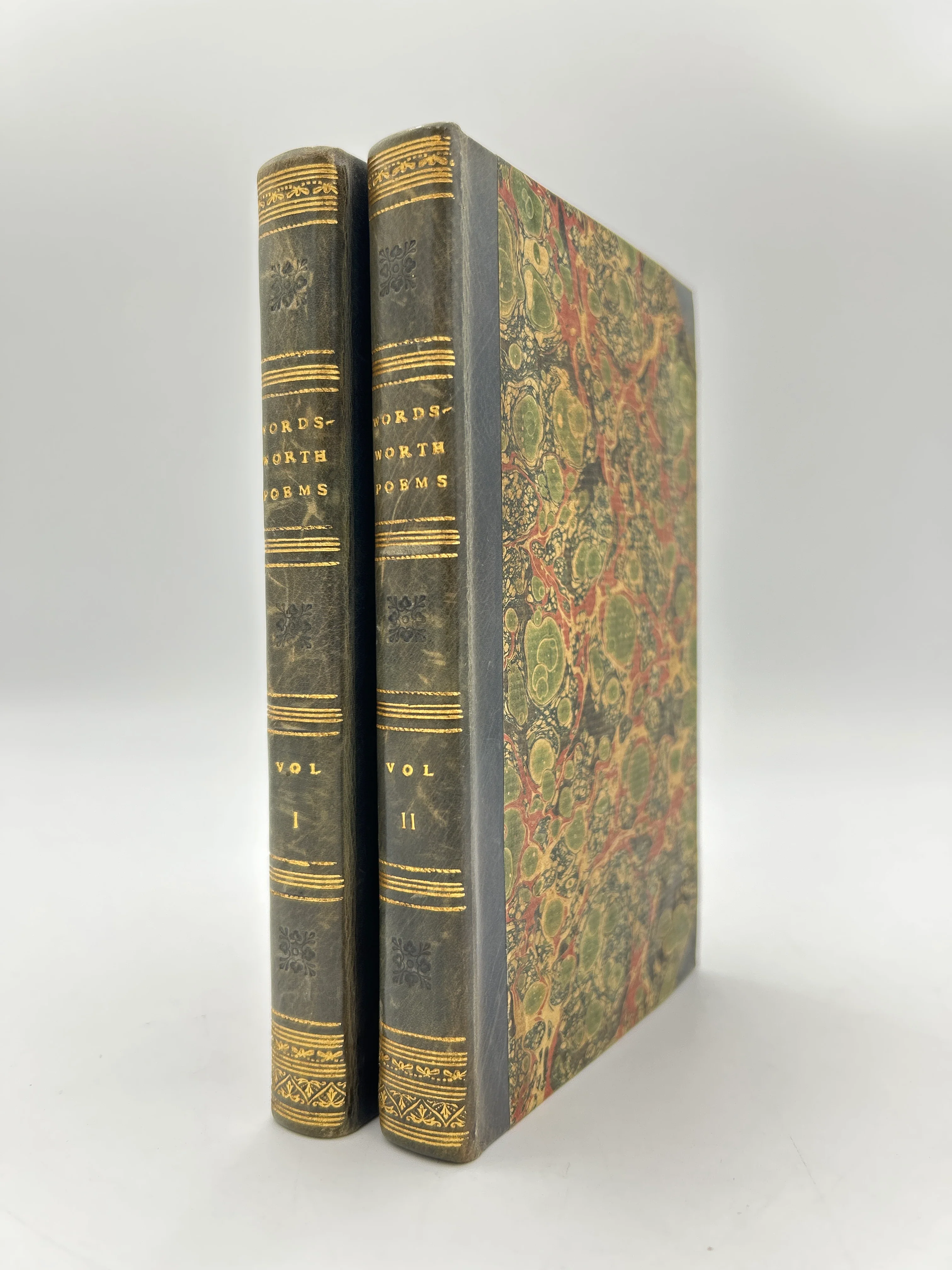
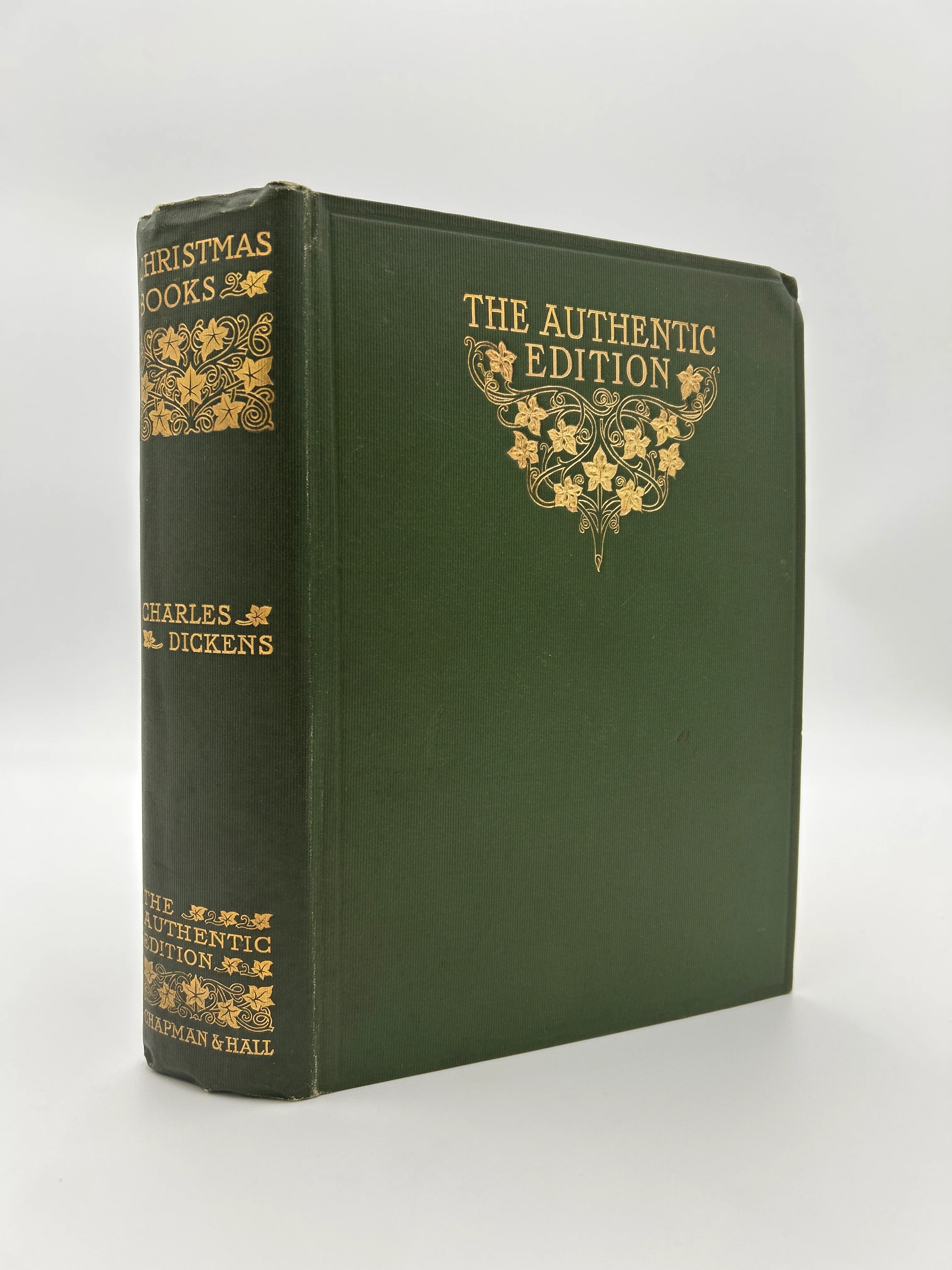
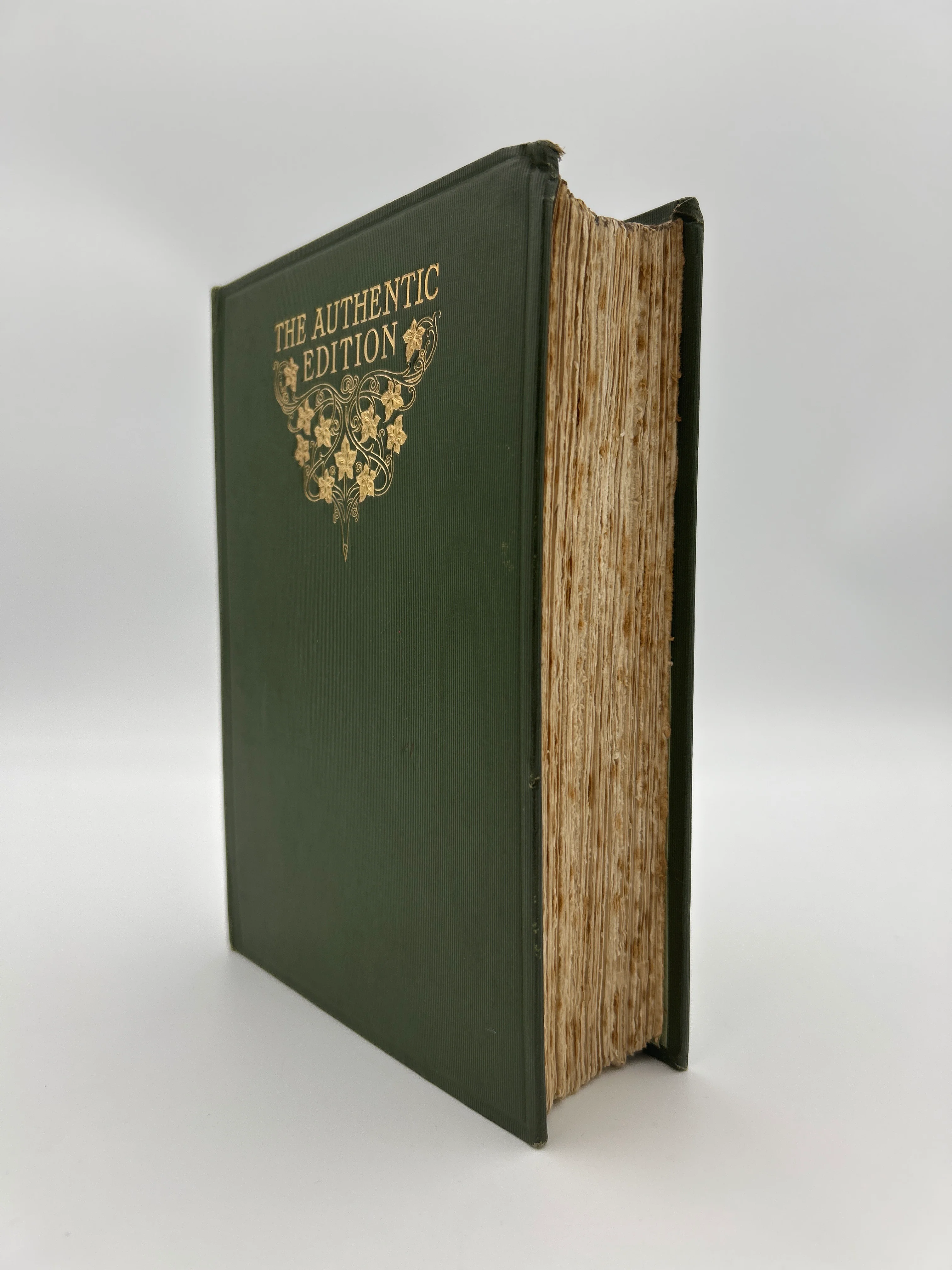
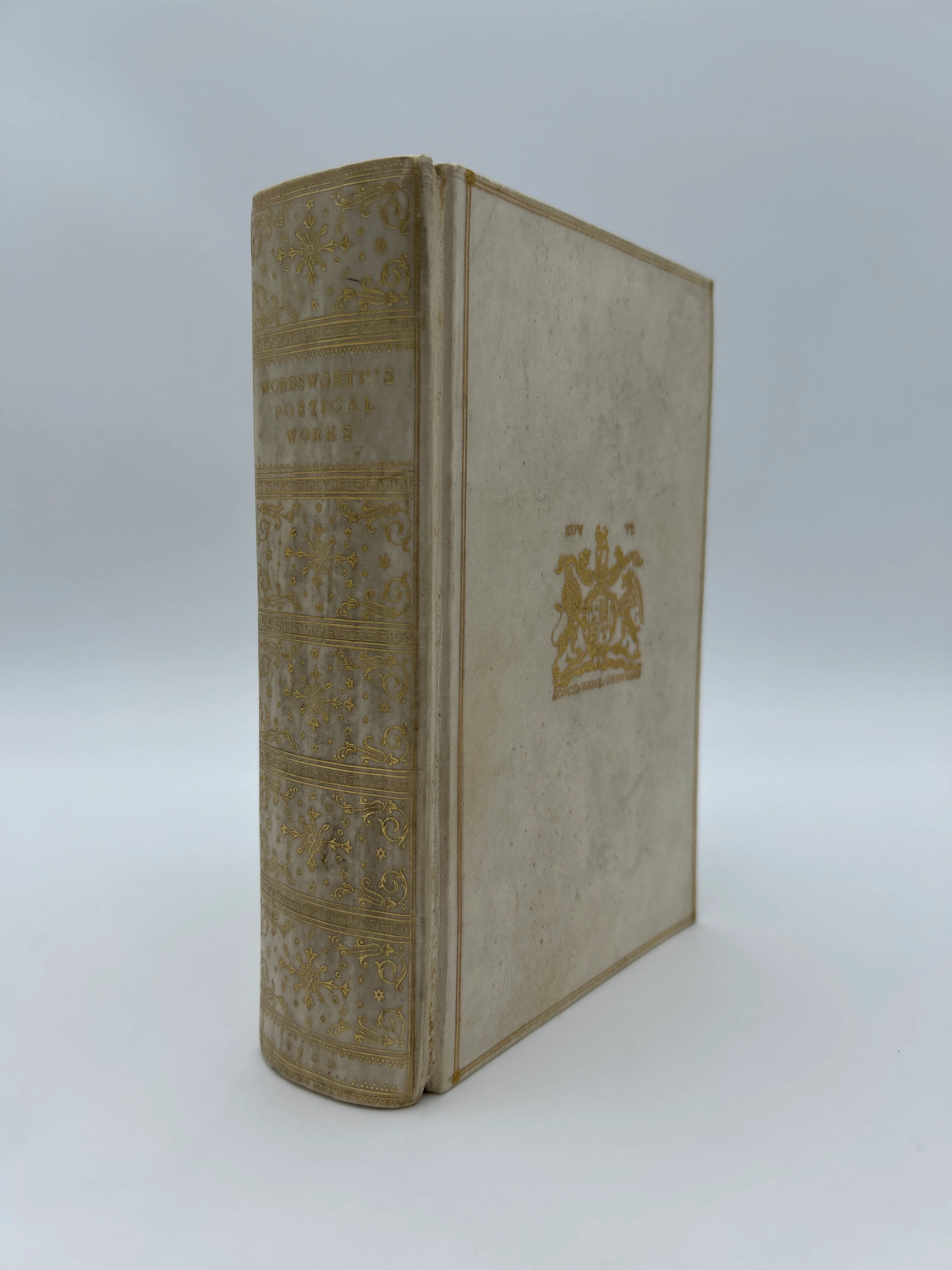
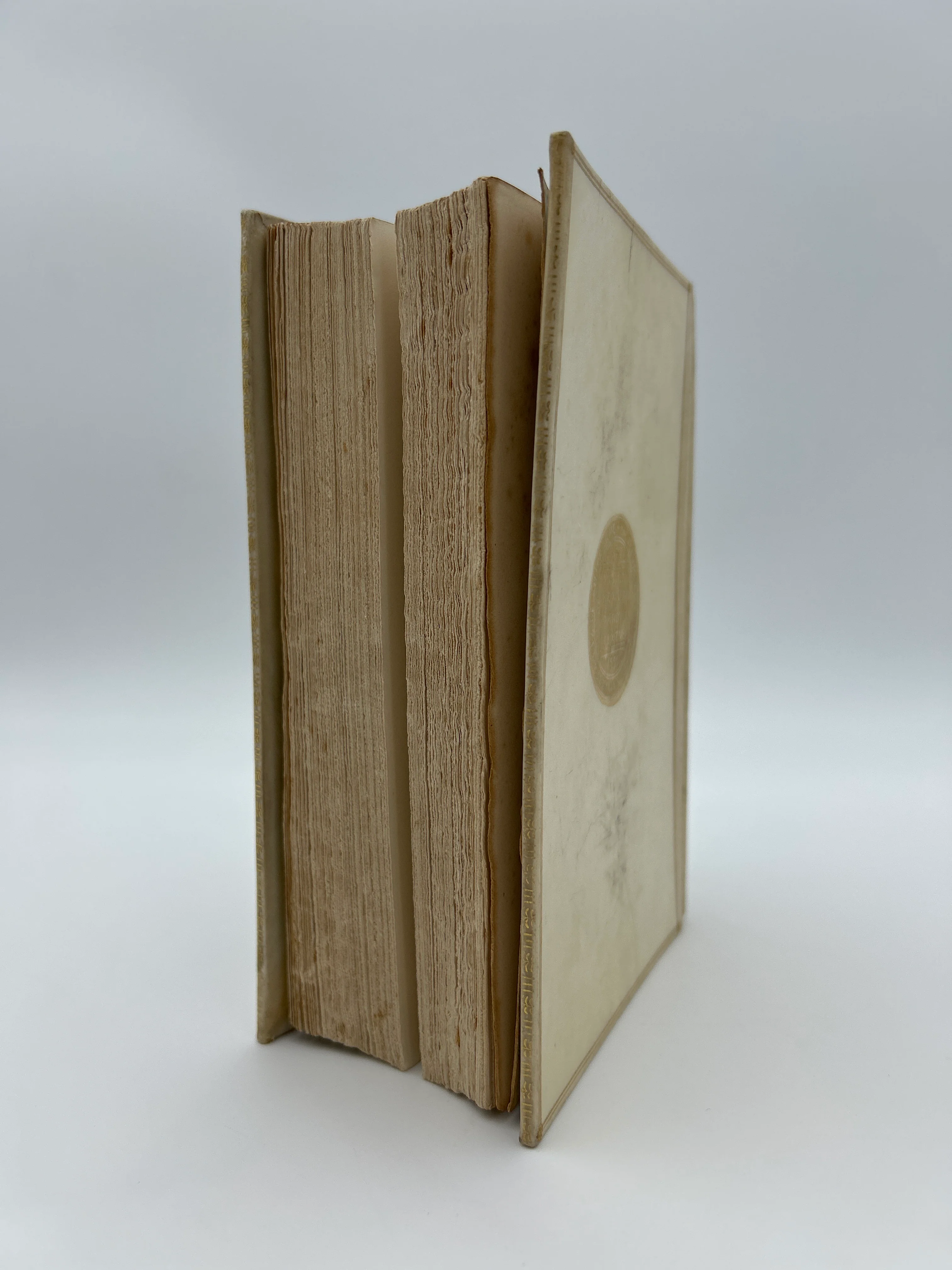
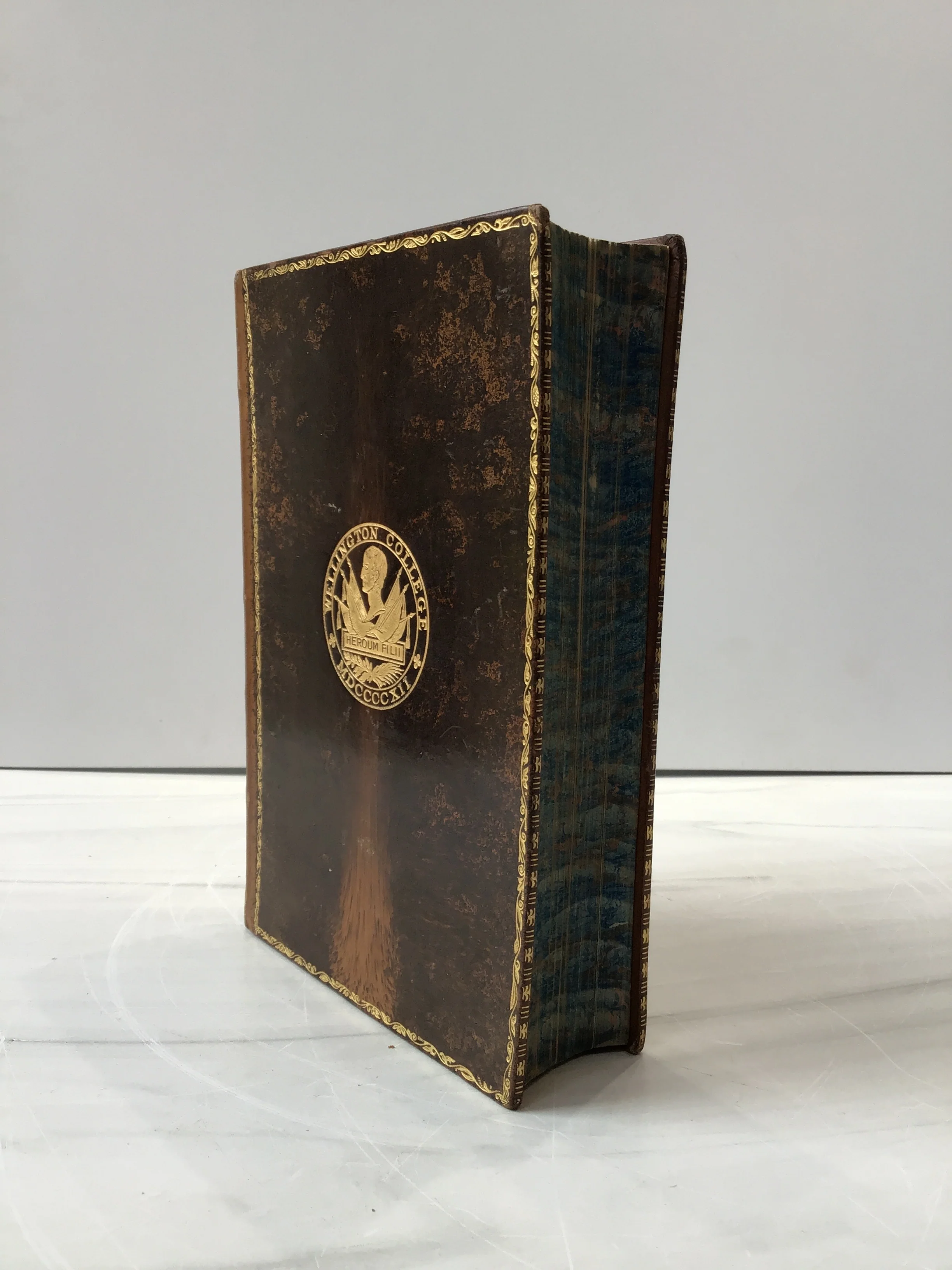
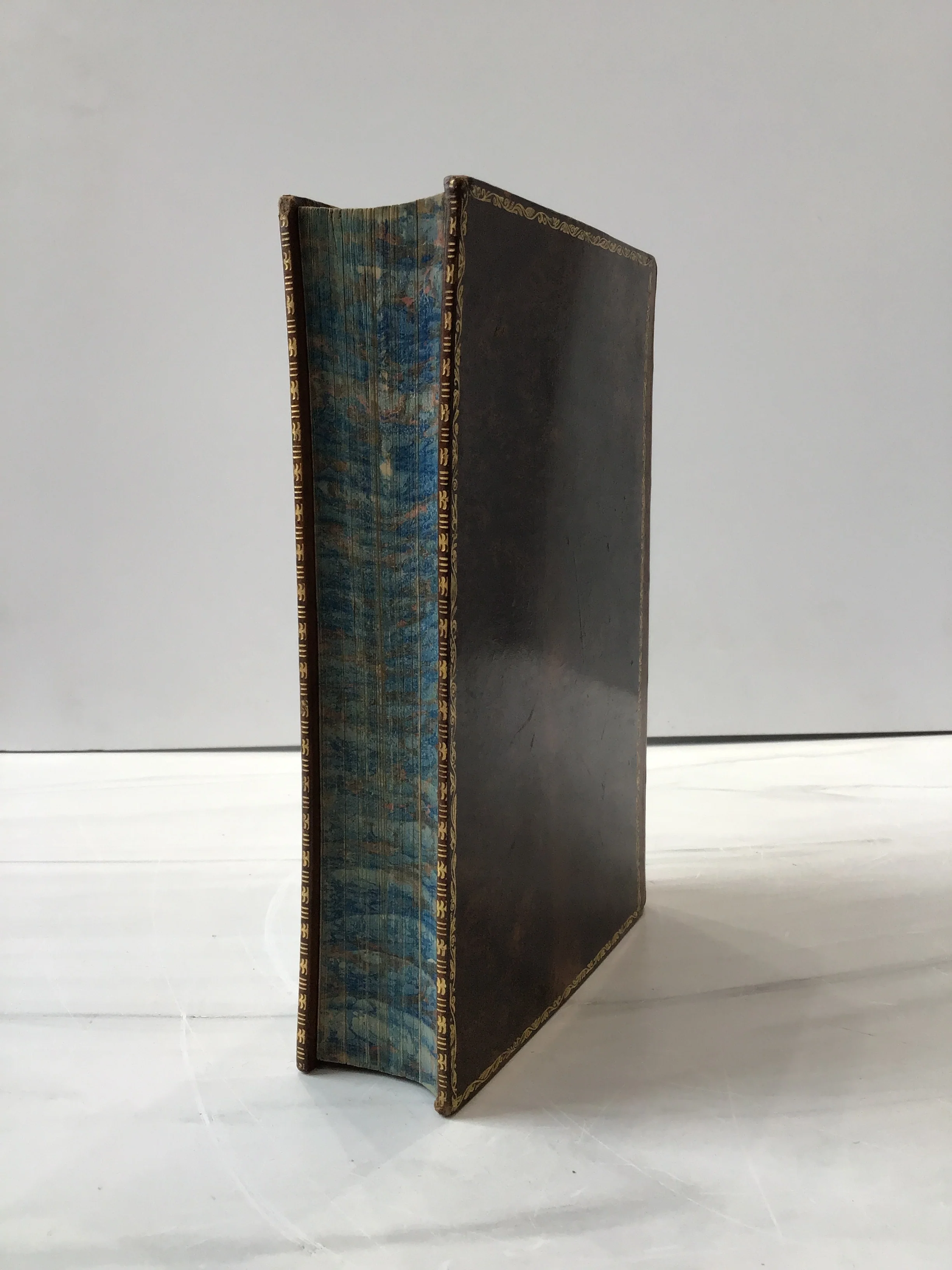
Beautiful marbled binding, gold embellished outline around front and back, five raised bands on spine, burgundy and brown book title and author on spine
Details & Craftsmanship
Every detail has been carefully considered to bring you the perfect product.
Details & Craftsmanship
Every detail has been carefully considered to bring you the perfect product.
Details & Craftsmanship
Every detail has been carefully considered to bring you the perfect product.
Details & Craftsmanship
Every detail has been carefully considered to bring you the perfect product.
Details & Craftsmanship
Every detail has been carefully considered to bring you the perfect product.
Description
6H, George Allen & Sons. Illustrations drawn by the author. London 1911
Notes
The Seven Lamps of Architecture (1849) is a passionate and influential book by John Ruskin, one of the 19th century’s most important art critics and thinkers. Rather than being a technical manual, it’s a moral and philosophical meditation on what architecture ought to be—and what it reveals about the values of the society that creates it.
Ruskin organizes the book around seven “lamps,” or guiding principles:
-
Sacrifice – Great architecture is an offering, not merely something useful. Ruskin believed buildings should reflect devotion, care, and generosity of spirit, especially in religious structures.
-
Truth – Materials and structure should be honest. No fake stone, no painted imitations, no disguising how a building actually stands.
-
Power – Architecture should convey strength and permanence, expressing humanity’s relationship with nature and time.
-
Beauty – True beauty comes from nature and craftsmanship, not mechanical repetition. Ornament should grow organically from form.
-
Life – Handcrafted work matters. Ruskin fiercely opposed mass production, arguing that the imperfections of human labor give buildings soul.
-
Memory – Buildings connect generations. Architecture should honor history and preserve cultural identity rather than erase it.
-
Obedience – Architects should respect established traditions and styles instead of chasing novelty for its own sake.
Description
Beautiful marbled binding, gold embellished outline around front and back, five raised bands on spine, burgundy and brown book title and author on spine