Original: $1,500.00
-65%$1,500.00
$525.00The Story
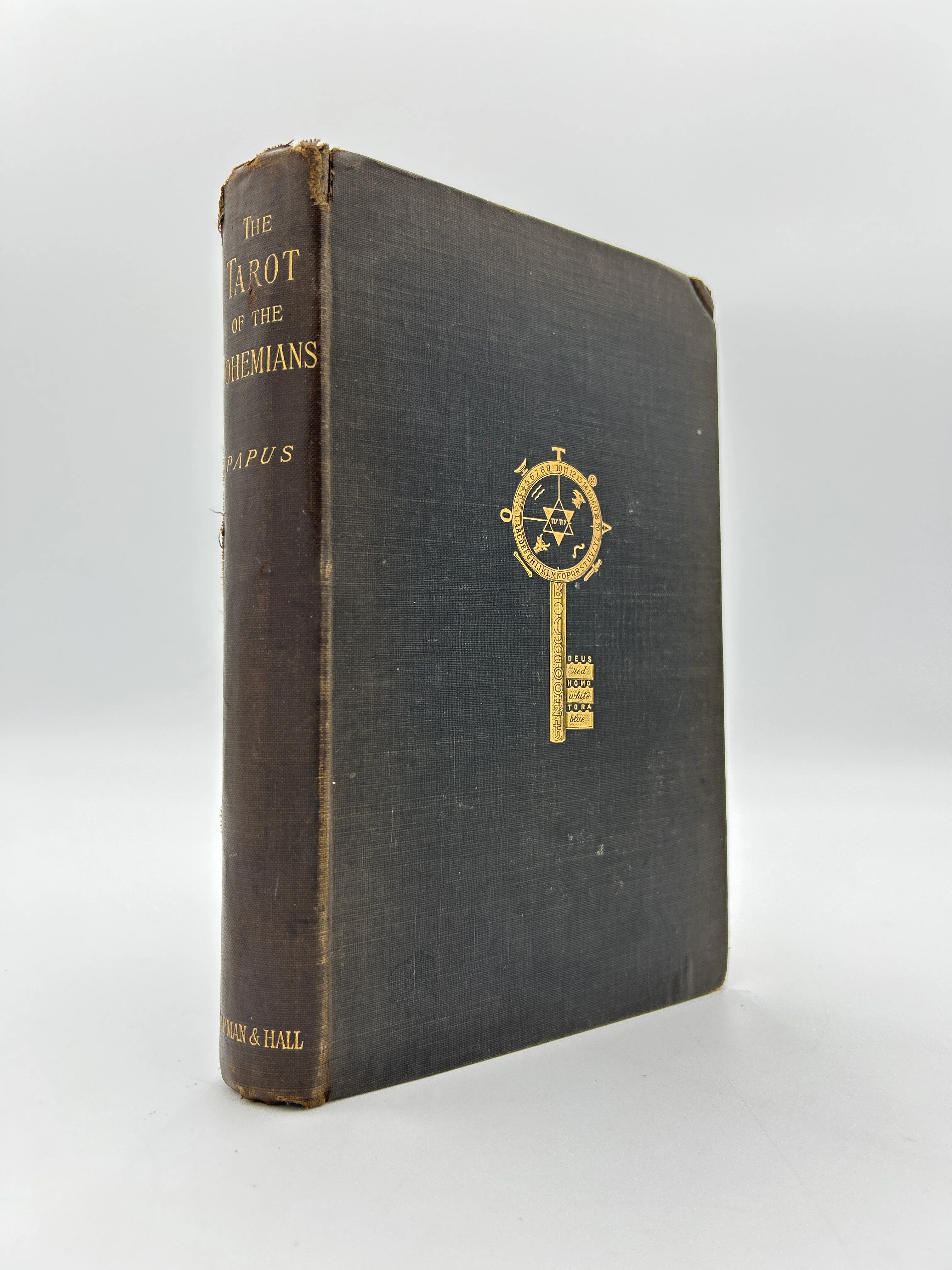
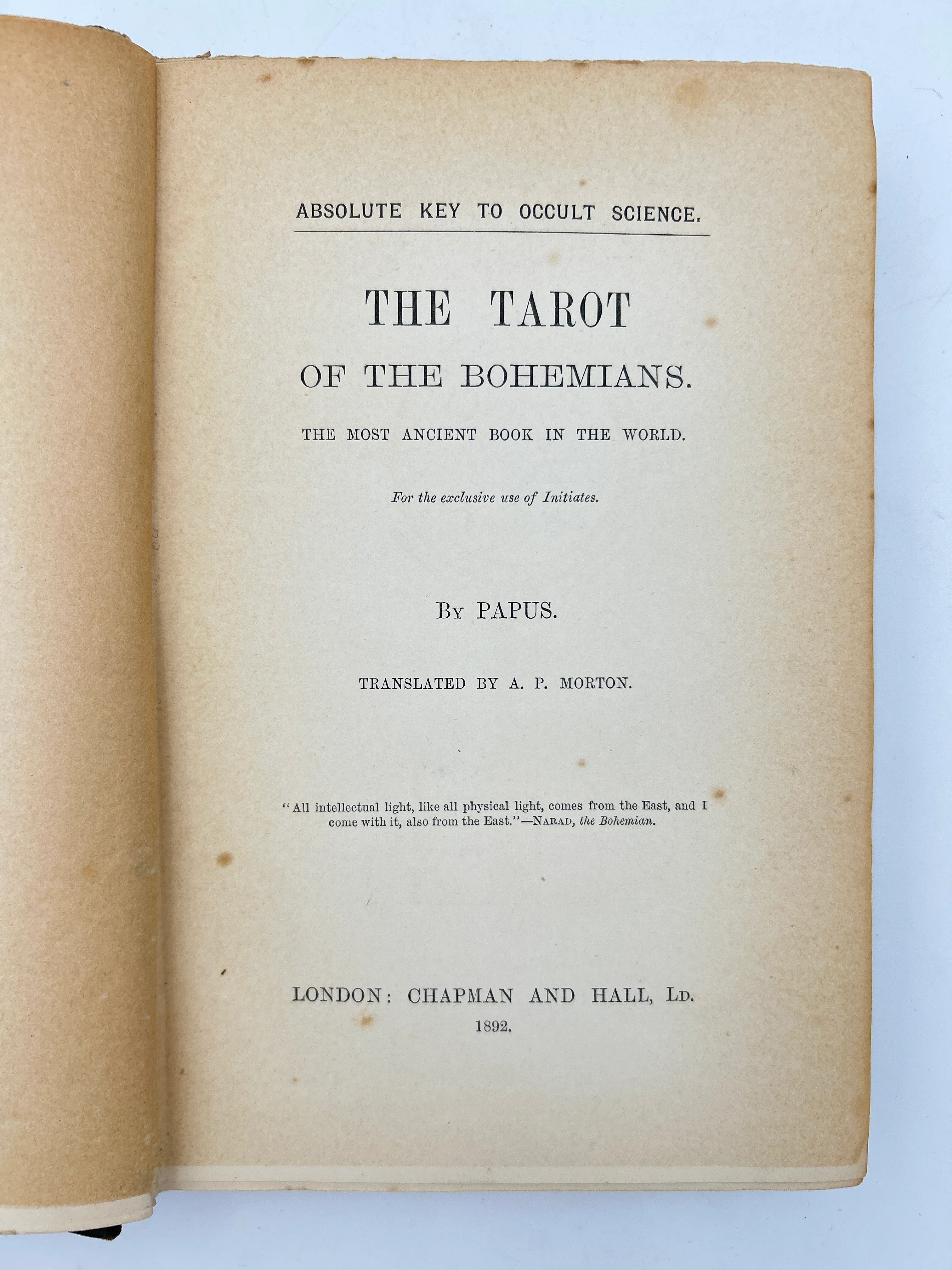
6b Papus. Translated by A. P. Morton. Absolute Key to Occult Science: The Tarot of the Bohemians. London; Chapman and Hall, 1892. First Edition
Notes
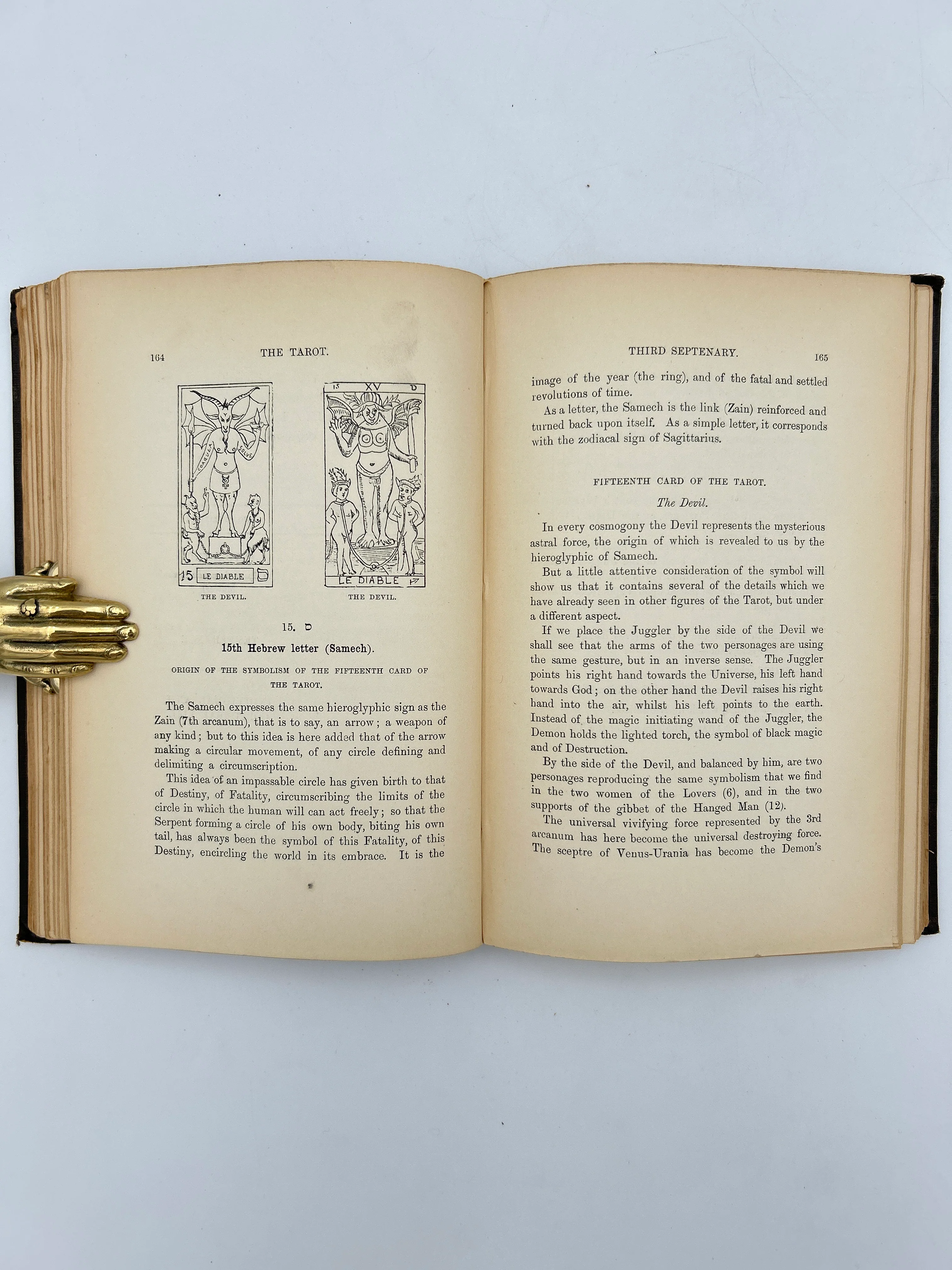
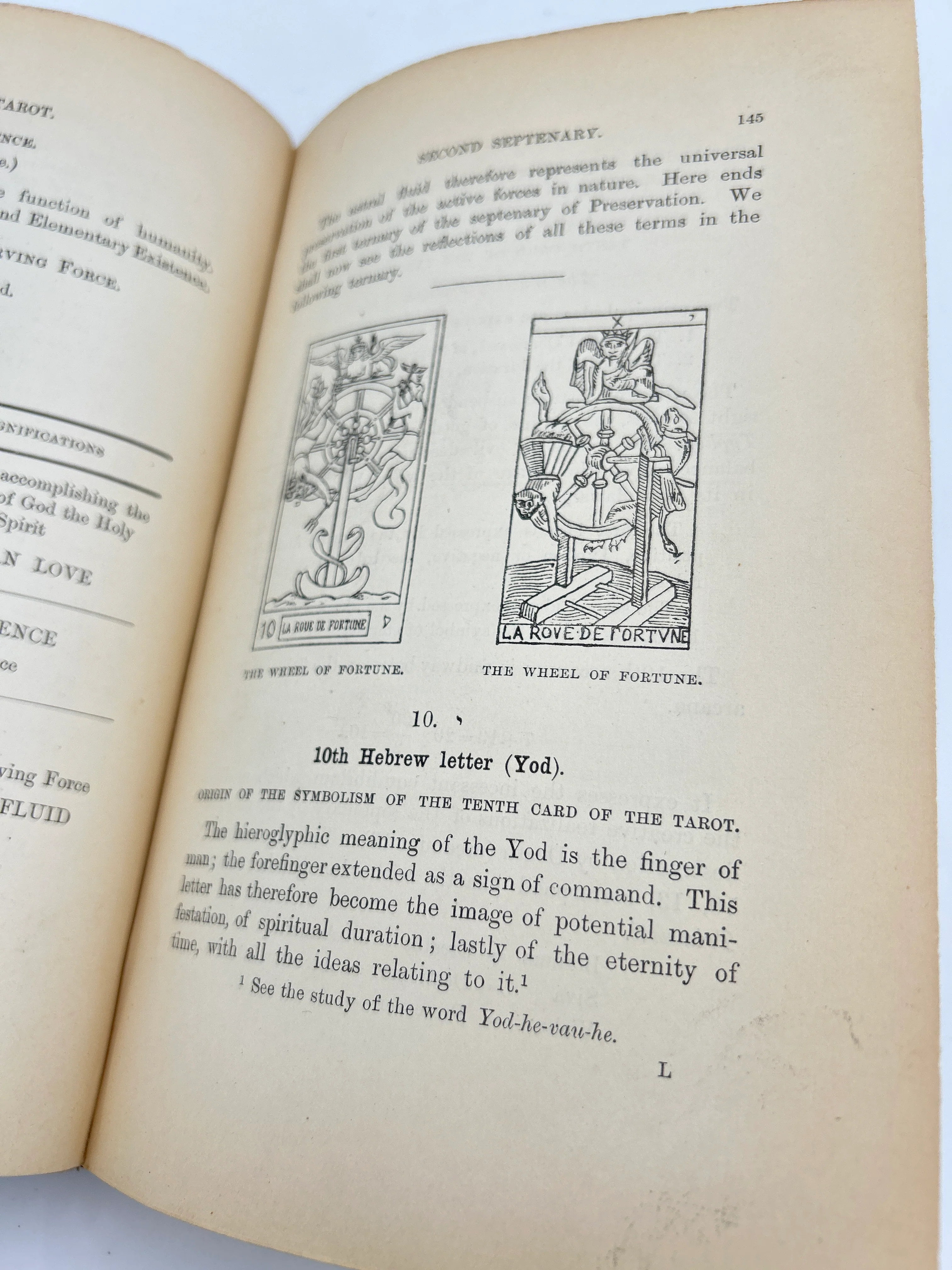
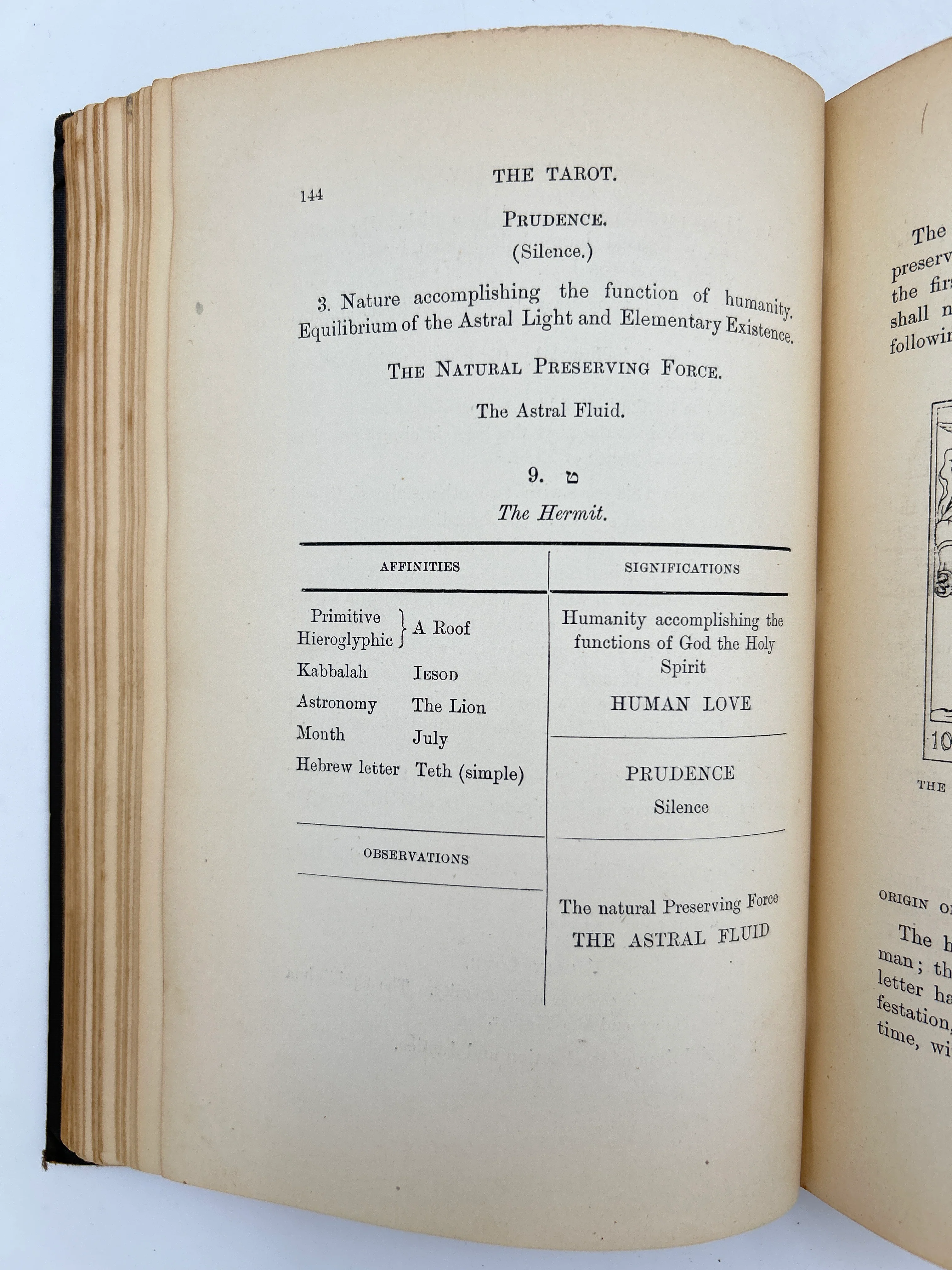
The Tarot of the Bohemians: The Absolute Key to Occult Science (1892) by Papus (the pseudonym of French occultist Gérard Encausse) is one of the foundational works of modern Western esotericism. It presents the Tarot not merely as a tool for fortune-telling but as a symbolic key to all mystical traditions, blending elements of Kabbalah, numerology, astrology, and Hermetic philosophy. Papus interprets each card of the Major and Minor Arcana as a stage in the evolution of the soul and the structure of the universe, claiming the Tarot encodes ancient wisdom once known to Egyptian priests and transmitted through the “Bohemians” (Romani people). The book serves as both a manual of Tarot symbolism and a metaphysical treatise, intended for serious spiritual initiates seeking to understand the divine order of existence through occult study.
Published in Paris in 1892, The Tarot of the Bohemians emerged during the Occult Revival of late 19th-century France—a period when secret societies and mystic orders like the Hermetic Order of the Golden Dawn flourished. Papus, a physician and influential member of the French occult movement, aimed to systematize esoteric knowledge and make the Tarot a legitimate tool of spiritual science. His book drew heavily from earlier occultists such as Éliphas Lévi and became one of the first texts to present the Tarot as a universal language of symbolism rather than mere divination. It profoundly shaped modern interpretations of Tarot in both mystical and psychological contexts, influencing later thinkers like A.E. Waite and Aleister Crowley.
Description
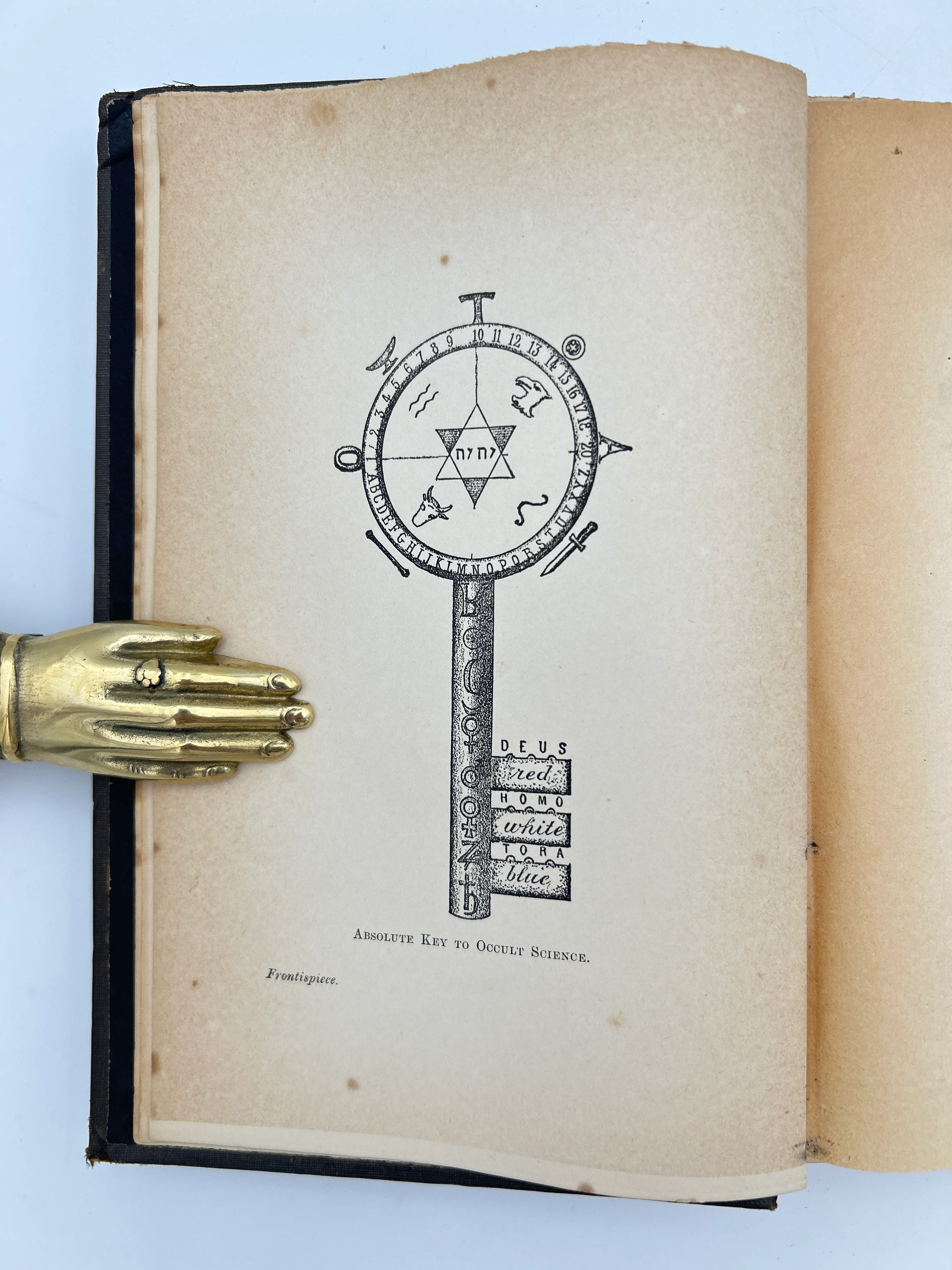
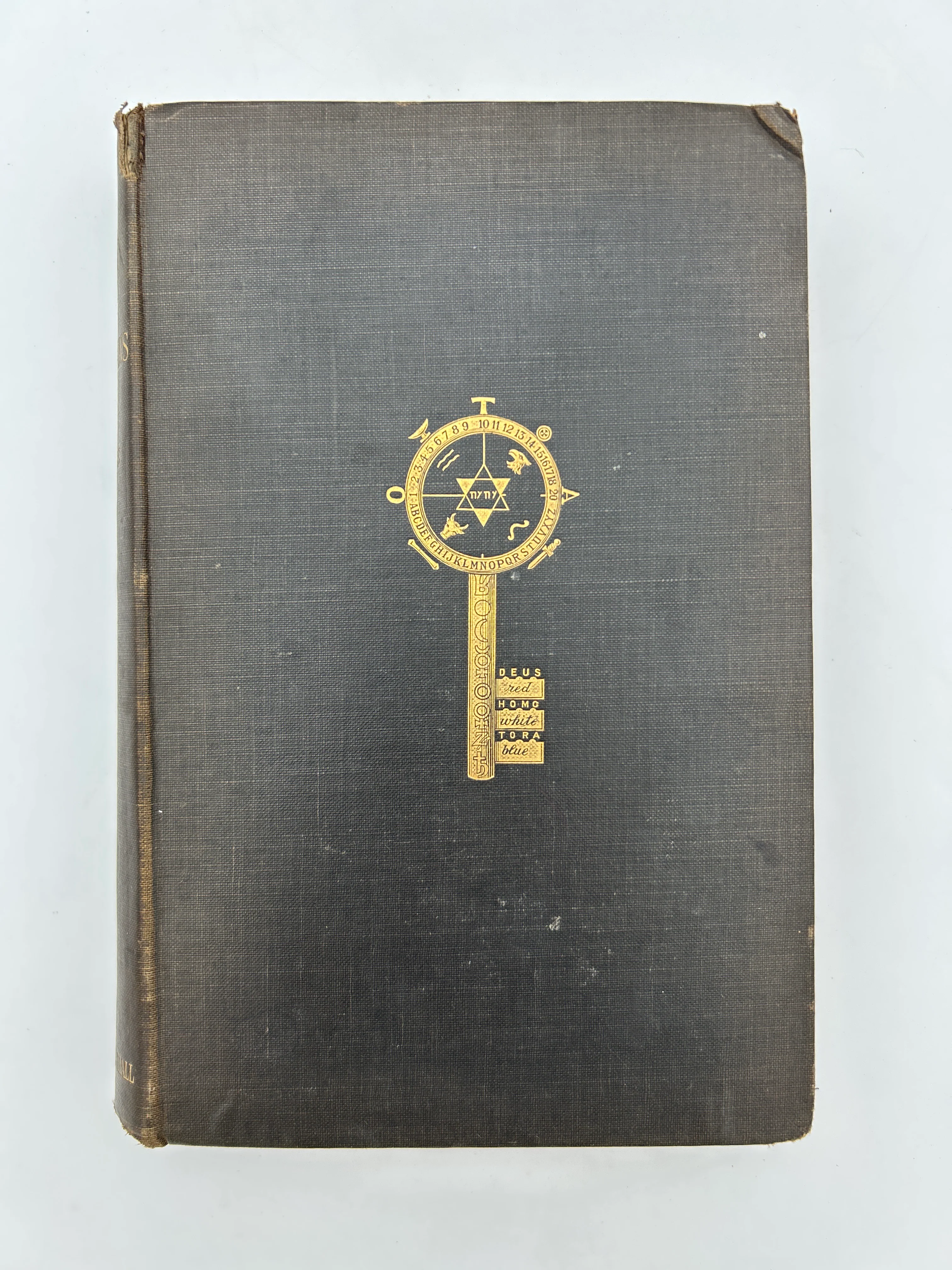
Brown cloth binding with gilt key design on upper board and lettering to the spine. Images and diagrams throughout. Slit to both edges of spine with slight fraying to extremities. Bumped corners. Blue ink inscriptions on first blank pages. Good condition overall.
Details & Craftsmanship
Every detail has been carefully considered to bring you the perfect product.
Details & Craftsmanship
Every detail has been carefully considered to bring you the perfect product.
Details & Craftsmanship
Every detail has been carefully considered to bring you the perfect product.
Details & Craftsmanship
Every detail has been carefully considered to bring you the perfect product.
Details & Craftsmanship
Every detail has been carefully considered to bring you the perfect product.
Details & Craftsmanship
Every detail has been carefully considered to bring you the perfect product.
Description
6b Papus. Translated by A. P. Morton. Absolute Key to Occult Science: The Tarot of the Bohemians. London; Chapman and Hall, 1892. First Edition
Notes
The Tarot of the Bohemians: The Absolute Key to Occult Science (1892) by Papus (the pseudonym of French occultist Gérard Encausse) is one of the foundational works of modern Western esotericism. It presents the Tarot not merely as a tool for fortune-telling but as a symbolic key to all mystical traditions, blending elements of Kabbalah, numerology, astrology, and Hermetic philosophy. Papus interprets each card of the Major and Minor Arcana as a stage in the evolution of the soul and the structure of the universe, claiming the Tarot encodes ancient wisdom once known to Egyptian priests and transmitted through the “Bohemians” (Romani people). The book serves as both a manual of Tarot symbolism and a metaphysical treatise, intended for serious spiritual initiates seeking to understand the divine order of existence through occult study.
Published in Paris in 1892, The Tarot of the Bohemians emerged during the Occult Revival of late 19th-century France—a period when secret societies and mystic orders like the Hermetic Order of the Golden Dawn flourished. Papus, a physician and influential member of the French occult movement, aimed to systematize esoteric knowledge and make the Tarot a legitimate tool of spiritual science. His book drew heavily from earlier occultists such as Éliphas Lévi and became one of the first texts to present the Tarot as a universal language of symbolism rather than mere divination. It profoundly shaped modern interpretations of Tarot in both mystical and psychological contexts, influencing later thinkers like A.E. Waite and Aleister Crowley.
Description
Brown cloth binding with gilt key design on upper board and lettering to the spine. Images and diagrams throughout. Slit to both edges of spine with slight fraying to extremities. Bumped corners. Blue ink inscriptions on first blank pages. Good condition overall.