

The Story
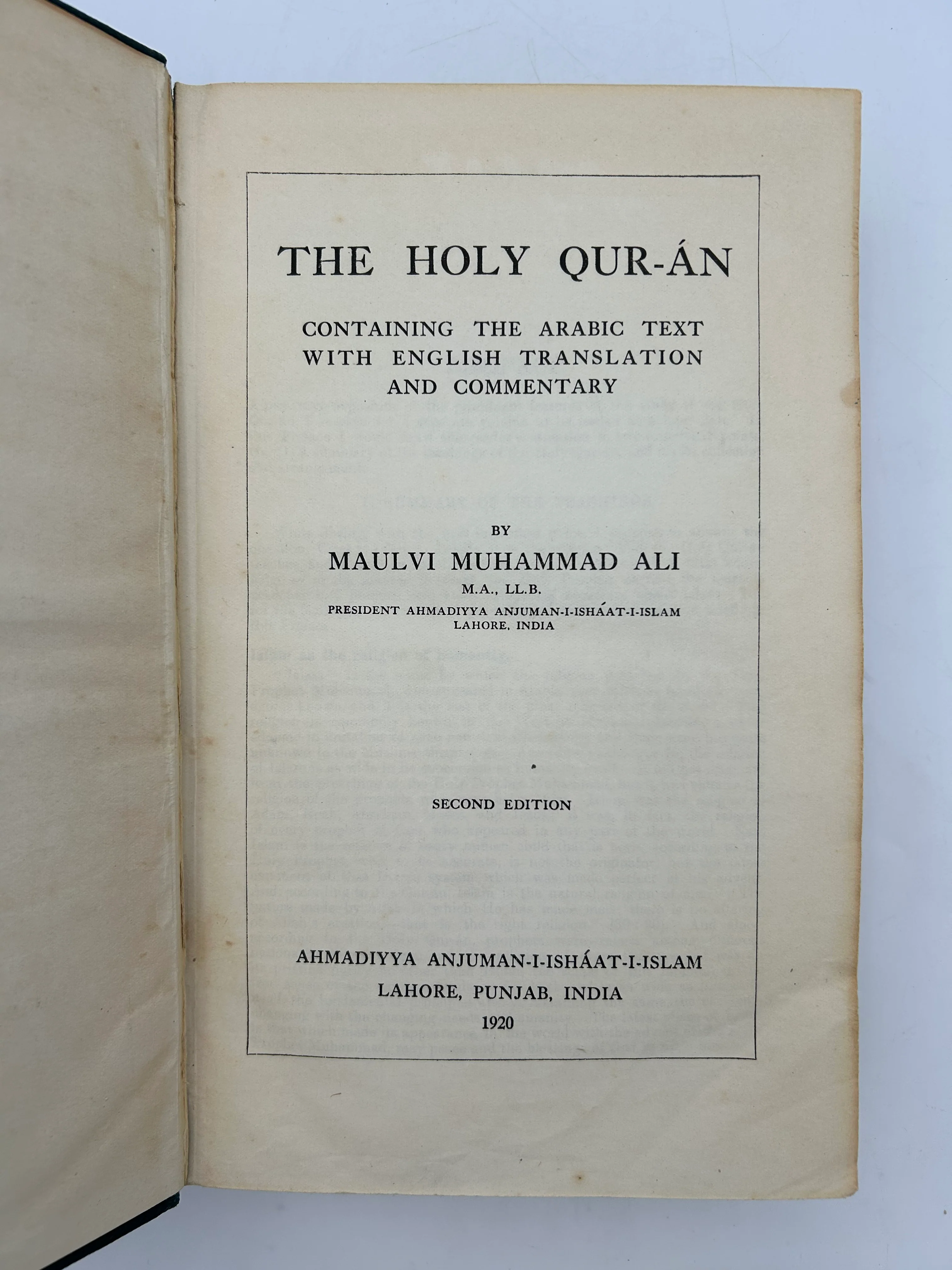
6B Containing the Arabic text with English translation and commentary by Maulvi Muhammad Ali. Punjabi, India, 1920.
Notes
The history of the Holy Qur’an begins in the early 7th century CE with the revelations received by the Prophet Muhammad in Arabia, which Muslims believe were conveyed to him over roughly twenty-three years through the angel Gabriel. These revelations were initially memorized and recited orally, while also being written down on various materials by scribes during Muhammad’s lifetime. After his death in 632 CE, concern over preserving the text led to its compilation into a single written collection during the caliphate of Abu Bakr, and then to the establishment of a standardized text under the third caliph, Uthman ibn Affan, around the mid-7th century. Copies of this authorized text were distributed across the expanding Islamic world, helping ensure remarkable textual consistency. Over the centuries, the Qur’an has been carefully transmitted through both manuscript copying and oral recitation, with developments in calligraphy, illumination, and later printing reflecting its central religious and cultural importance, while the Arabic text itself has remained fundamentally stable from its earliest standardization.
The Qur’an consists of 114 chapters called surahs, which vary widely in length, from a few verses to several pages, and are further divided into ayahs, or individual verses. The content is primarily spiritual, ethical, and legal, offering guidance on worship, morality, social justice, and personal conduct, while also recounting stories of earlier prophets and communities to illustrate divine lessons. The Qur’an addresses both the individual believer and the community, combining exhortation, narrative, law, and theological reflection. It is written in classical Arabic and is highly structured around rhetorical devices, rhythm, and parallelism, which aid memorization and oral recitation. While it is not arranged chronologically, the surahs are traditionally ordered roughly from longest to shortest, and its style emphasizes both the poetic beauty of the language and the authority of its divine message, making it central not only as a religious text but also as a linguistic and cultural cornerstone in the Islamic world.
Description
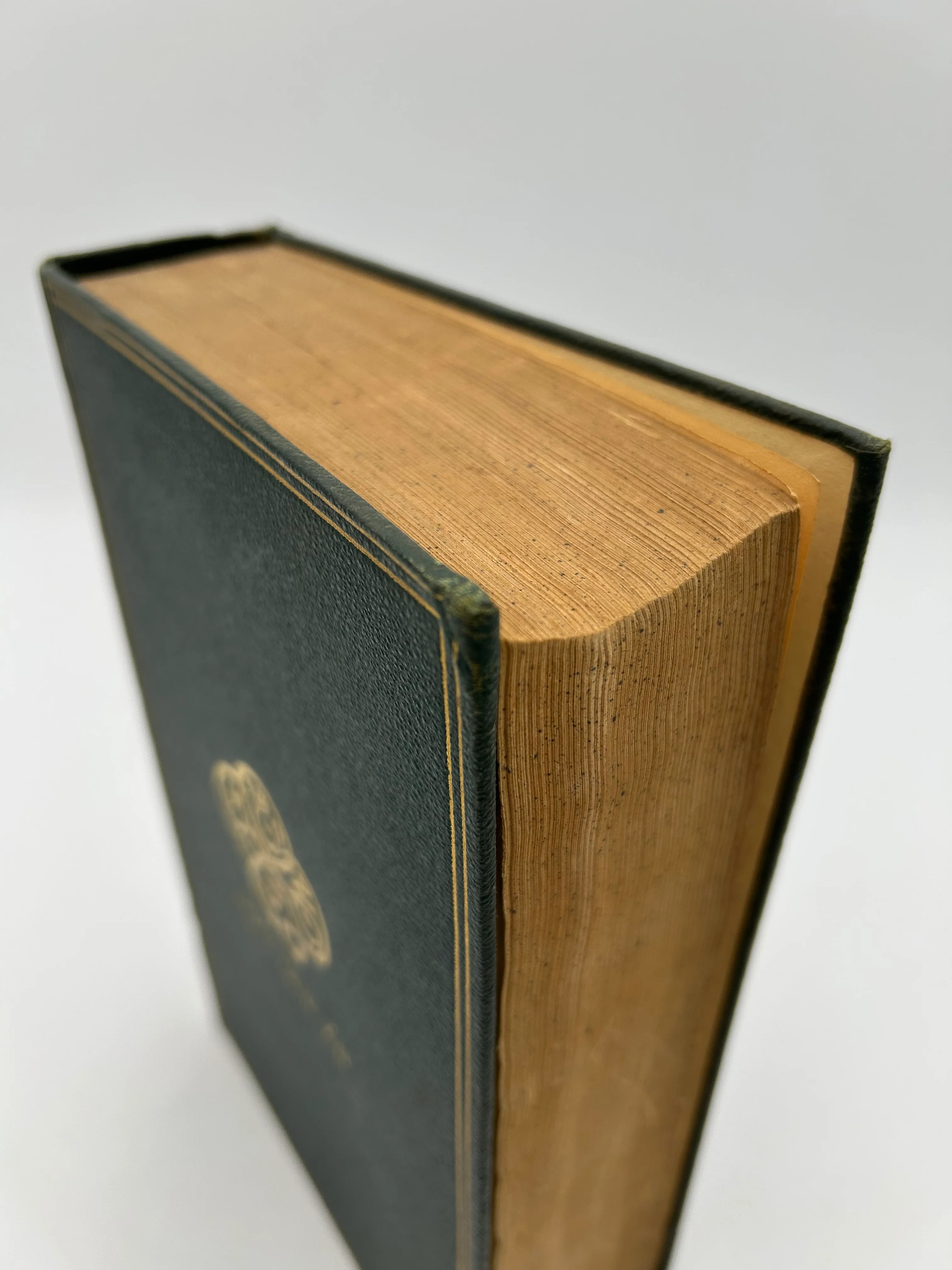
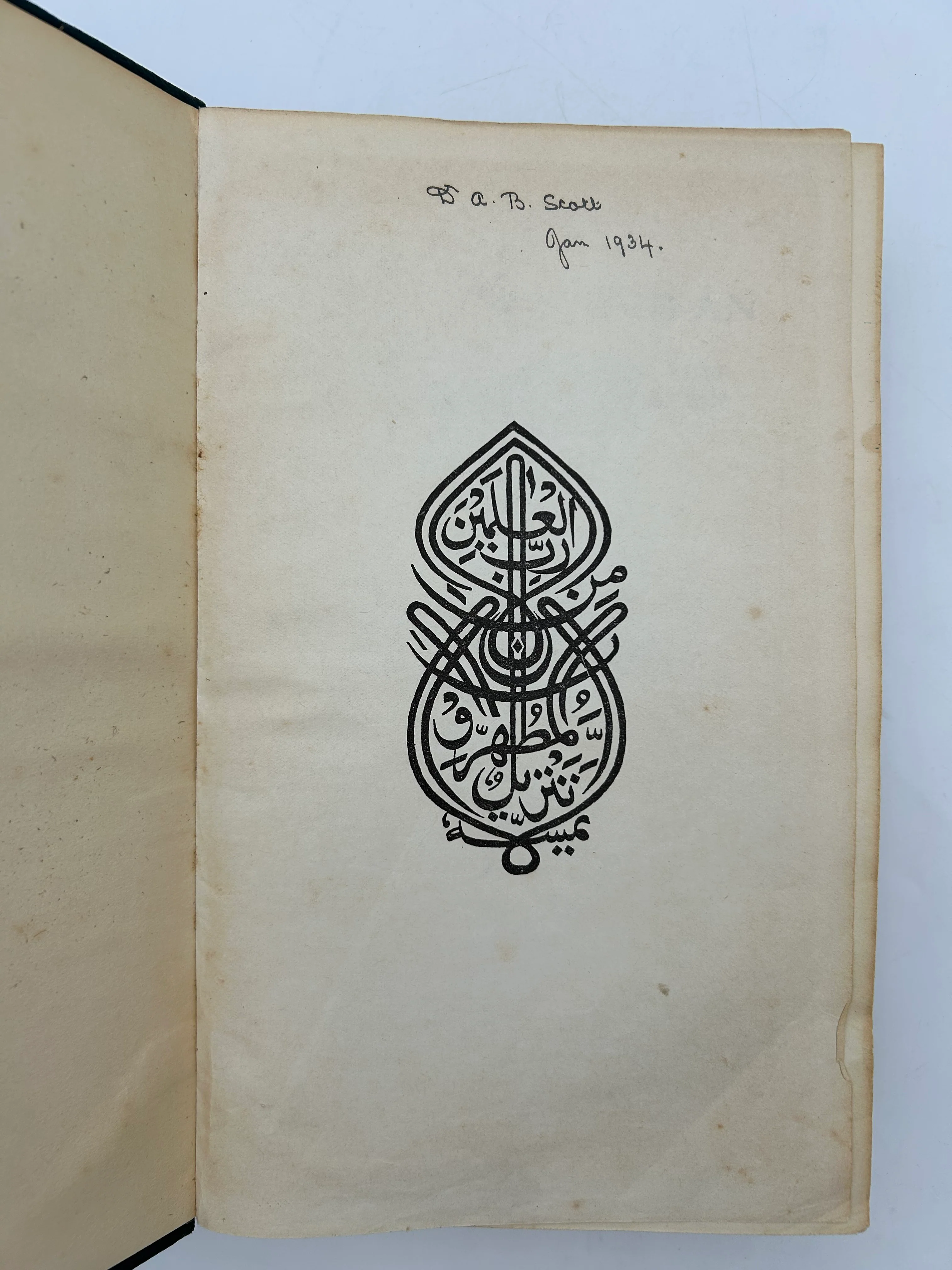
Emerald green hardback with gold tooling on front and spine, slight detaching on title page, otherwise good condition and intact.

Details & Craftsmanship
Every detail has been carefully considered to bring you the perfect product.
Details & Craftsmanship
Every detail has been carefully considered to bring you the perfect product.
Details & Craftsmanship
Every detail has been carefully considered to bring you the perfect product.
Details & Craftsmanship
Every detail has been carefully considered to bring you the perfect product.
Description
6B Containing the Arabic text with English translation and commentary by Maulvi Muhammad Ali. Punjabi, India, 1920.
Notes
The history of the Holy Qur’an begins in the early 7th century CE with the revelations received by the Prophet Muhammad in Arabia, which Muslims believe were conveyed to him over roughly twenty-three years through the angel Gabriel. These revelations were initially memorized and recited orally, while also being written down on various materials by scribes during Muhammad’s lifetime. After his death in 632 CE, concern over preserving the text led to its compilation into a single written collection during the caliphate of Abu Bakr, and then to the establishment of a standardized text under the third caliph, Uthman ibn Affan, around the mid-7th century. Copies of this authorized text were distributed across the expanding Islamic world, helping ensure remarkable textual consistency. Over the centuries, the Qur’an has been carefully transmitted through both manuscript copying and oral recitation, with developments in calligraphy, illumination, and later printing reflecting its central religious and cultural importance, while the Arabic text itself has remained fundamentally stable from its earliest standardization.
The Qur’an consists of 114 chapters called surahs, which vary widely in length, from a few verses to several pages, and are further divided into ayahs, or individual verses. The content is primarily spiritual, ethical, and legal, offering guidance on worship, morality, social justice, and personal conduct, while also recounting stories of earlier prophets and communities to illustrate divine lessons. The Qur’an addresses both the individual believer and the community, combining exhortation, narrative, law, and theological reflection. It is written in classical Arabic and is highly structured around rhetorical devices, rhythm, and parallelism, which aid memorization and oral recitation. While it is not arranged chronologically, the surahs are traditionally ordered roughly from longest to shortest, and its style emphasizes both the poetic beauty of the language and the authority of its divine message, making it central not only as a religious text but also as a linguistic and cultural cornerstone in the Islamic world.
Description
Emerald green hardback with gold tooling on front and spine, slight detaching on title page, otherwise good condition and intact.


