

The Story
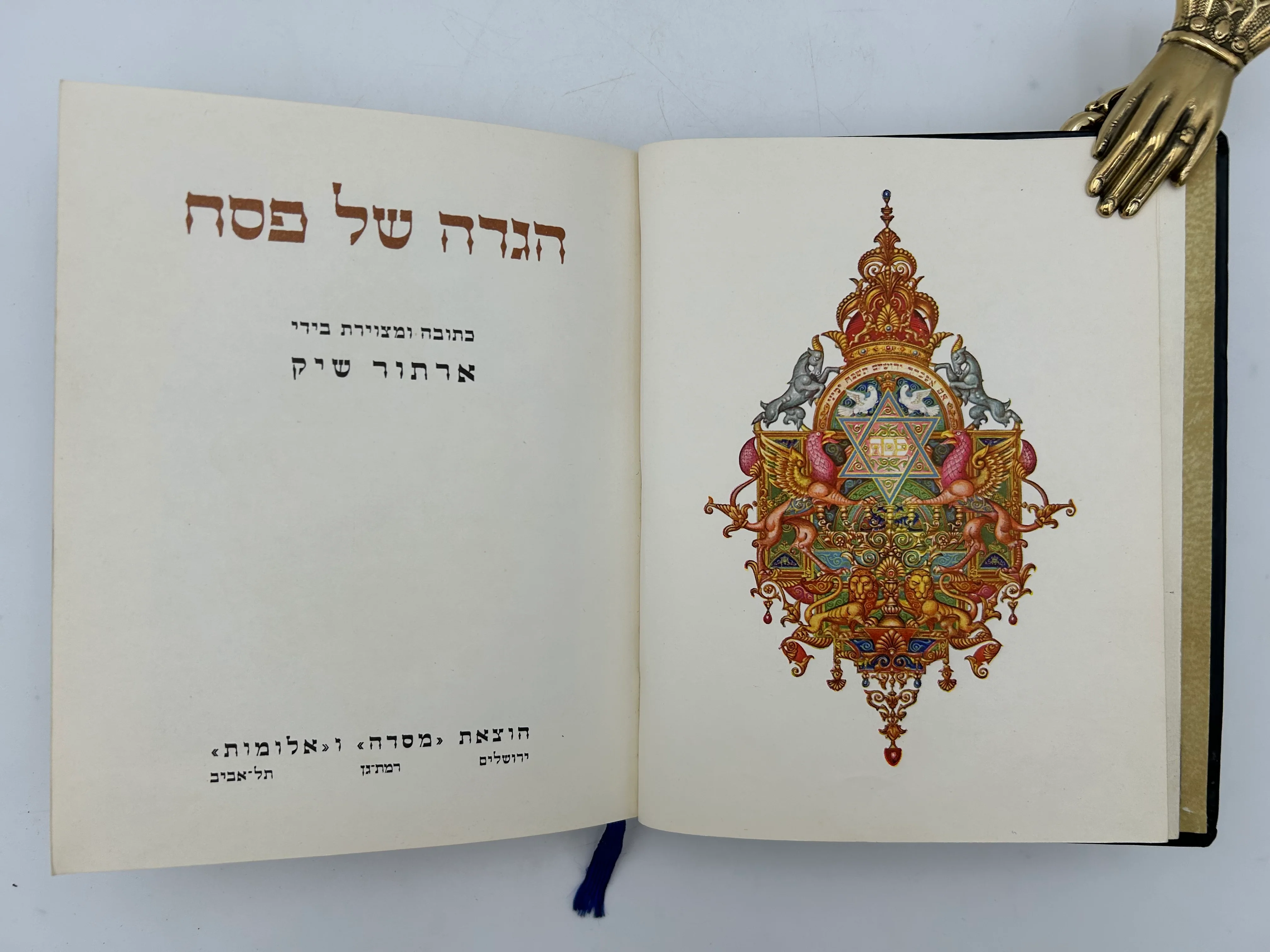
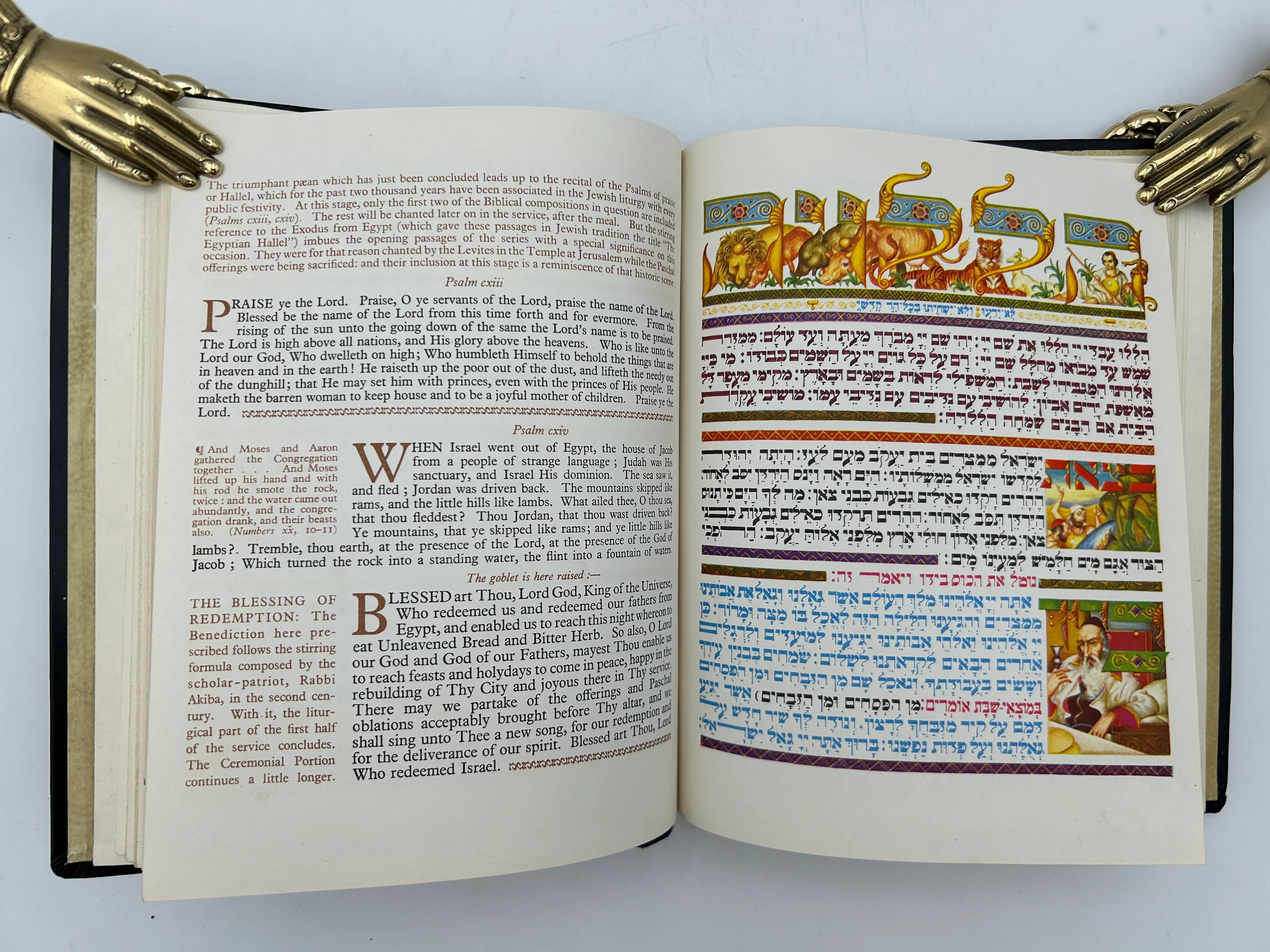
6B Executed by Arthur Szyk, Israel, ca 2009. Hebrew and English translations.
Notes
The Haggadah is a Jewish liturgical text that sets forth the ritual, prayers, and narrative of the Passover Seder, the ceremonial meal commemorating the Israelites’ exodus from Egypt. Its core function is to guide participants through the Seder, outlining the order of service, the symbolic foods on the Seder plate, the recitation of blessings, the telling of the Exodus story, and the singing of traditional songs. While the text has its roots in oral tradition, the earliest written Haggadot appeared in the medieval period, with manuscripts often richly illuminated, especially in Europe from the 13th century onward. Over time, printed editions proliferated, particularly after the invention of the printing press in the 15th century, with notable early printings in Prague (1526) and Venice (1520s–30s). Haggadot vary in style and commentary: some are simple guides for family use, while others are elaborate works with rabbinic commentary, ethical reflections, and artistic embellishments. The book not only preserves the ritual but also serves as a cultural and artistic expression, reflecting the Jewish community’s values, history, and devotion through the generations.
Description
Hebrew and English translations. Black puffy leather with silver illustrated plating on front cover. Great condiiton; some discoloration on leather. Beautiful, vibrant colored illustrations throughout.

Details & Craftsmanship
Every detail has been carefully considered to bring you the perfect product.
Details & Craftsmanship
Every detail has been carefully considered to bring you the perfect product.
Details & Craftsmanship
Every detail has been carefully considered to bring you the perfect product.
Description
6B Executed by Arthur Szyk, Israel, ca 2009. Hebrew and English translations.
Notes
The Haggadah is a Jewish liturgical text that sets forth the ritual, prayers, and narrative of the Passover Seder, the ceremonial meal commemorating the Israelites’ exodus from Egypt. Its core function is to guide participants through the Seder, outlining the order of service, the symbolic foods on the Seder plate, the recitation of blessings, the telling of the Exodus story, and the singing of traditional songs. While the text has its roots in oral tradition, the earliest written Haggadot appeared in the medieval period, with manuscripts often richly illuminated, especially in Europe from the 13th century onward. Over time, printed editions proliferated, particularly after the invention of the printing press in the 15th century, with notable early printings in Prague (1526) and Venice (1520s–30s). Haggadot vary in style and commentary: some are simple guides for family use, while others are elaborate works with rabbinic commentary, ethical reflections, and artistic embellishments. The book not only preserves the ritual but also serves as a cultural and artistic expression, reflecting the Jewish community’s values, history, and devotion through the generations.
Description
Hebrew and English translations. Black puffy leather with silver illustrated plating on front cover. Great condiiton; some discoloration on leather. Beautiful, vibrant colored illustrations throughout.


