Original: $850.00
-65%$850.00
$297.50The Story
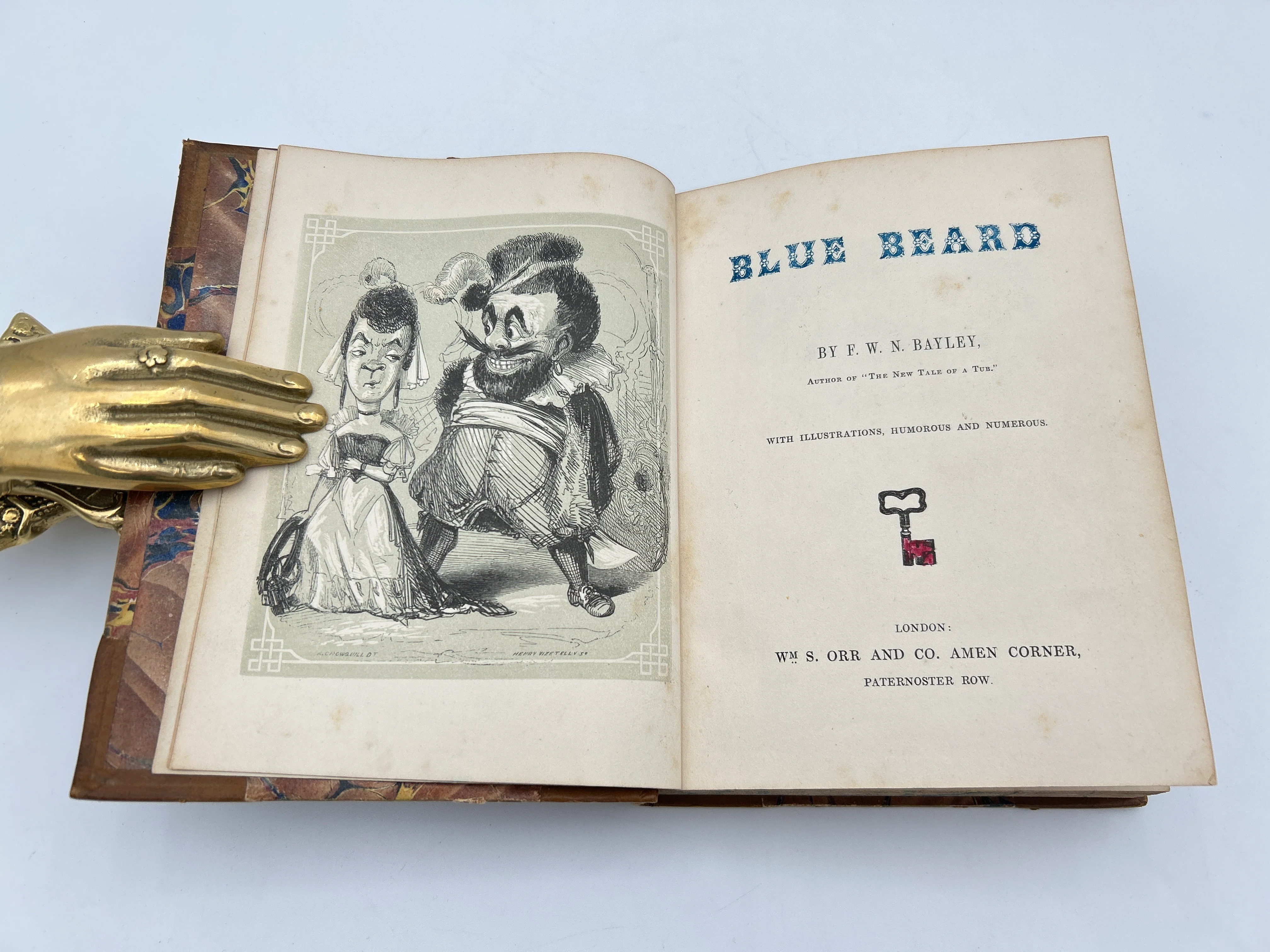
6C F.W.N. Bayley. London: Orr and Co., 1850.
Notes
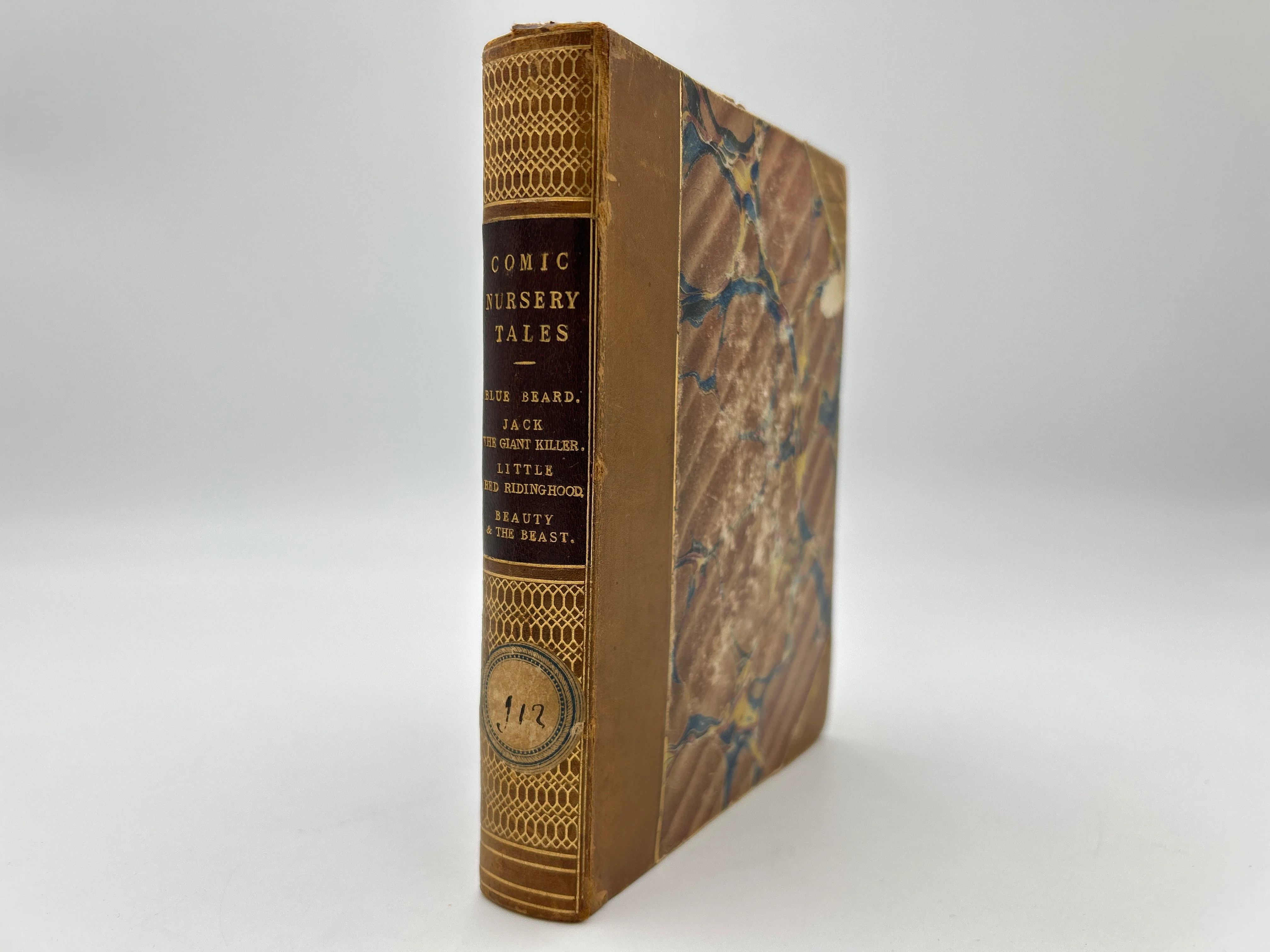
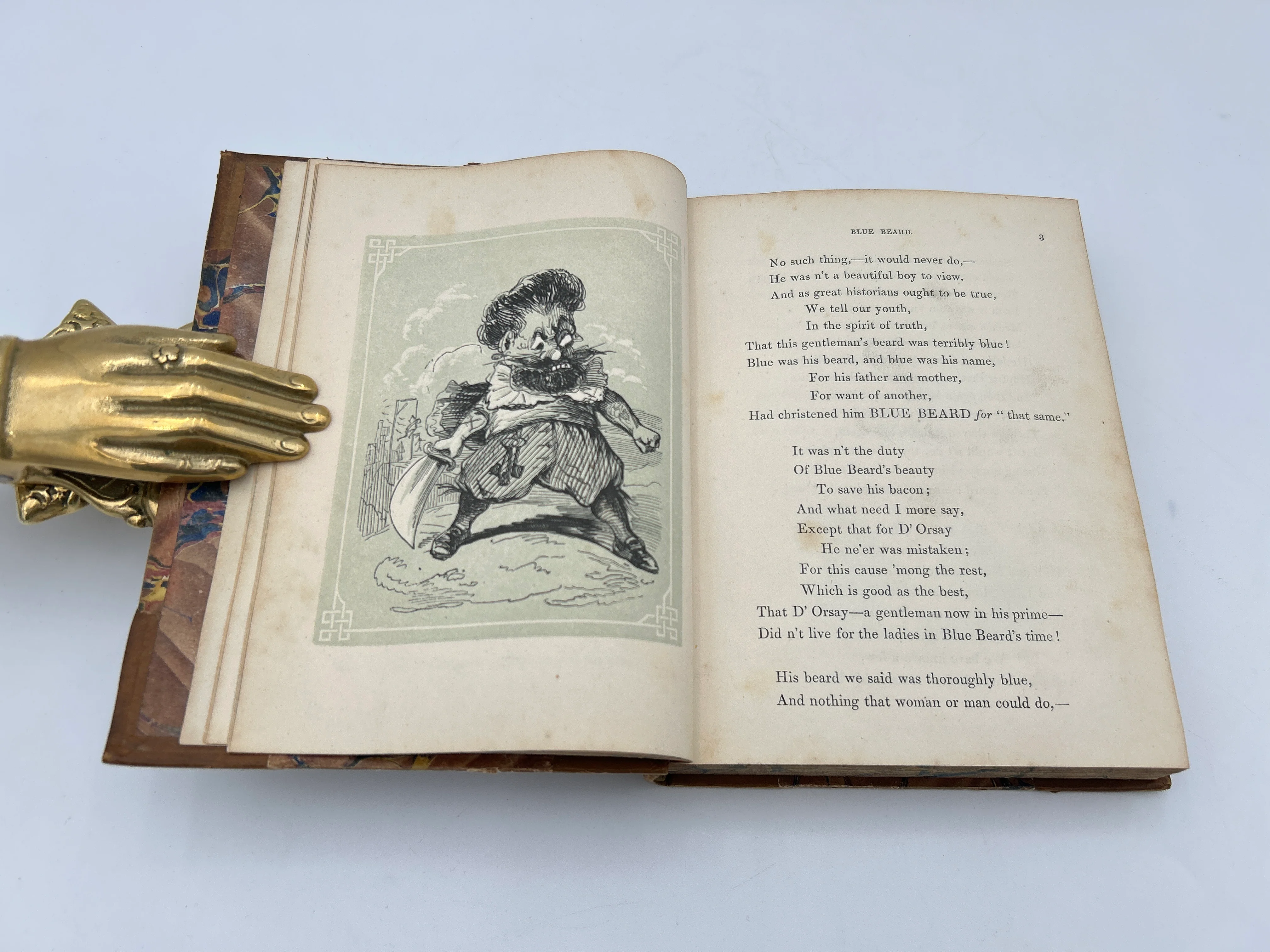
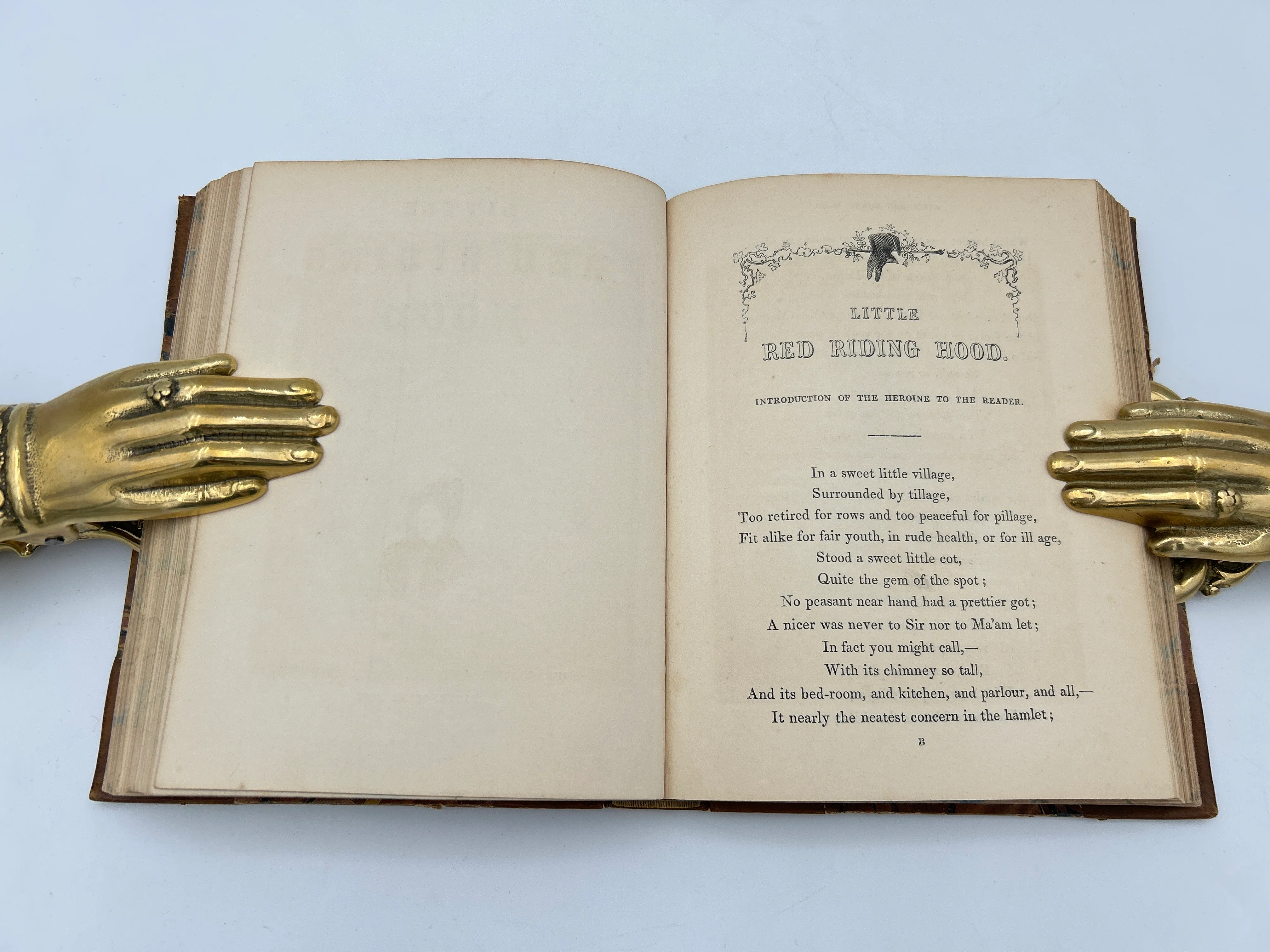
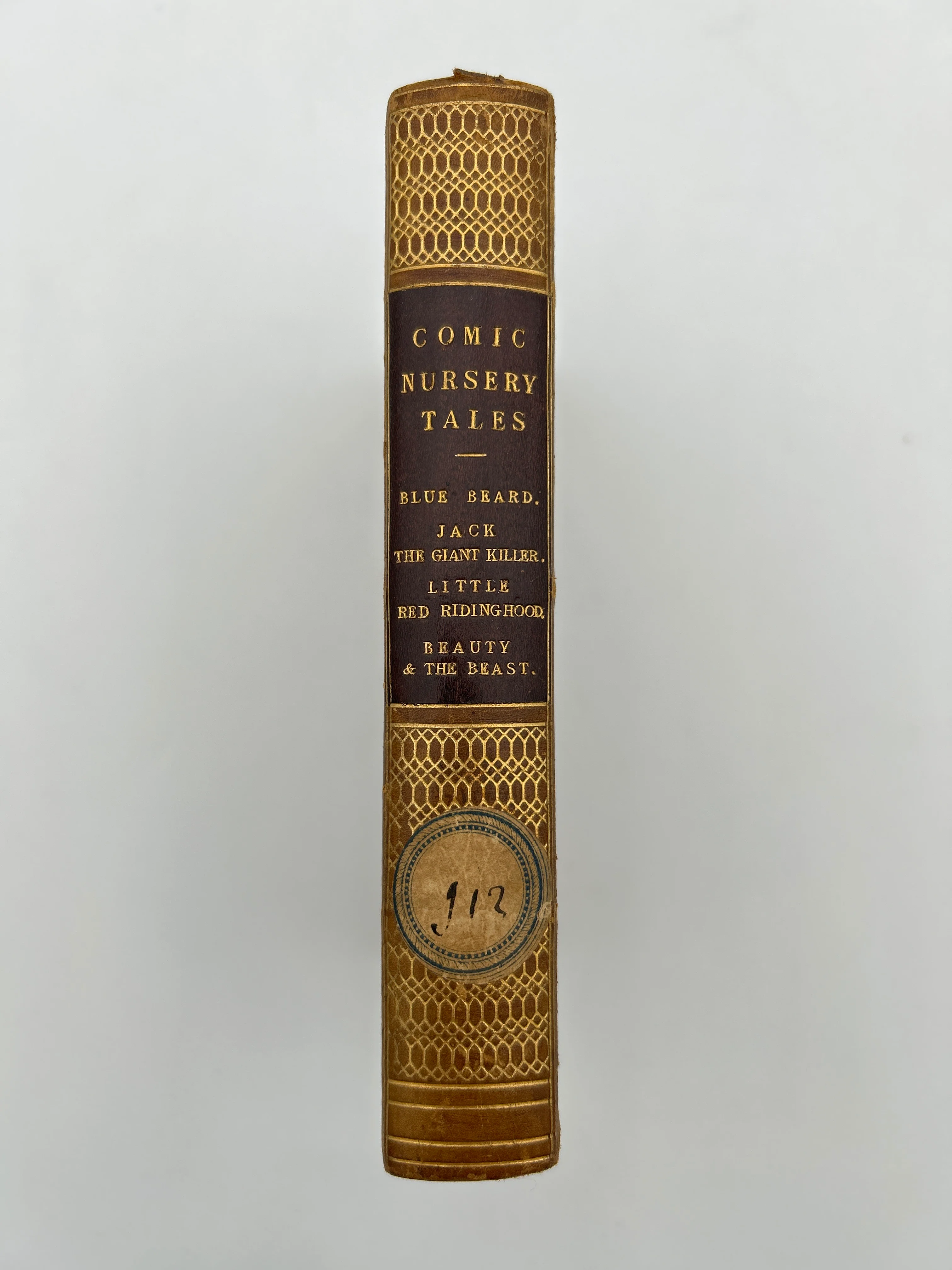
Comic Nursery Tales (published mid‑19th century) was a Victorian‑era collection of well‑known folk and fairy stories presented with a humorous twist and often accompanied by lively illustrations. The anthology, attributed to F.W.N. Bayley around 1850, included renditions of tales such as Blue Beard, Jack the Giant Killer, Little Red Riding Hood, and Beauty and the Beast rendered with a lighter, witty tone and visual appeal typical of children’s gift books of that period. These editions were bound with decorative covers and featured humorous plates and woodcut‑style artwork that both entertained and made the familiar stories new for Victorian readers, reflecting the era’s interest in making traditional narratives accessible and enjoyable for families and young audiences
Bluebeard first became widely known through Charles Perrault’s 1697 printed tale, rooted in older Breton and folklore about dangerous husbands and forbidden knowledge; illustrations over time emphasized exotic or “Orientalist” elements in his costume and setting.
Jack the Giant Killer belongs to English folklore, with legends of giant‑slaying heroes going back through Celtic and Arthurian material; its many printed versions expanded Jack’s adventures with trickery and bravery.
Little Red Riding Hood first appeared in print in Perrault’s 1697 French version, where the wolf eats Red and her grandmother and the story ends with a stark moral; later retellings by the Brothers Grimm and others softened the violence with a huntsman rescuing both and added the iconic red hood and cape.
Beauty and the Beast began as a long 1740 tale by Gabrielle‑Suzanne de Villeneuve with extensive backstory, then was condensed in Jeanne‑Marie Leprince de Beaumont’s 1756 version that became the more familiar classical form featuring Beauty’s sacrifice, the Beast’s enchantment, and eventual transformation; this version emphasized moral lessons about inner worth and virtue.
Over time, these tales evolved through oral tradition and print, with each retelling reflecting cultural values and sensibilities that shaped how generations understand these stories today.
Description
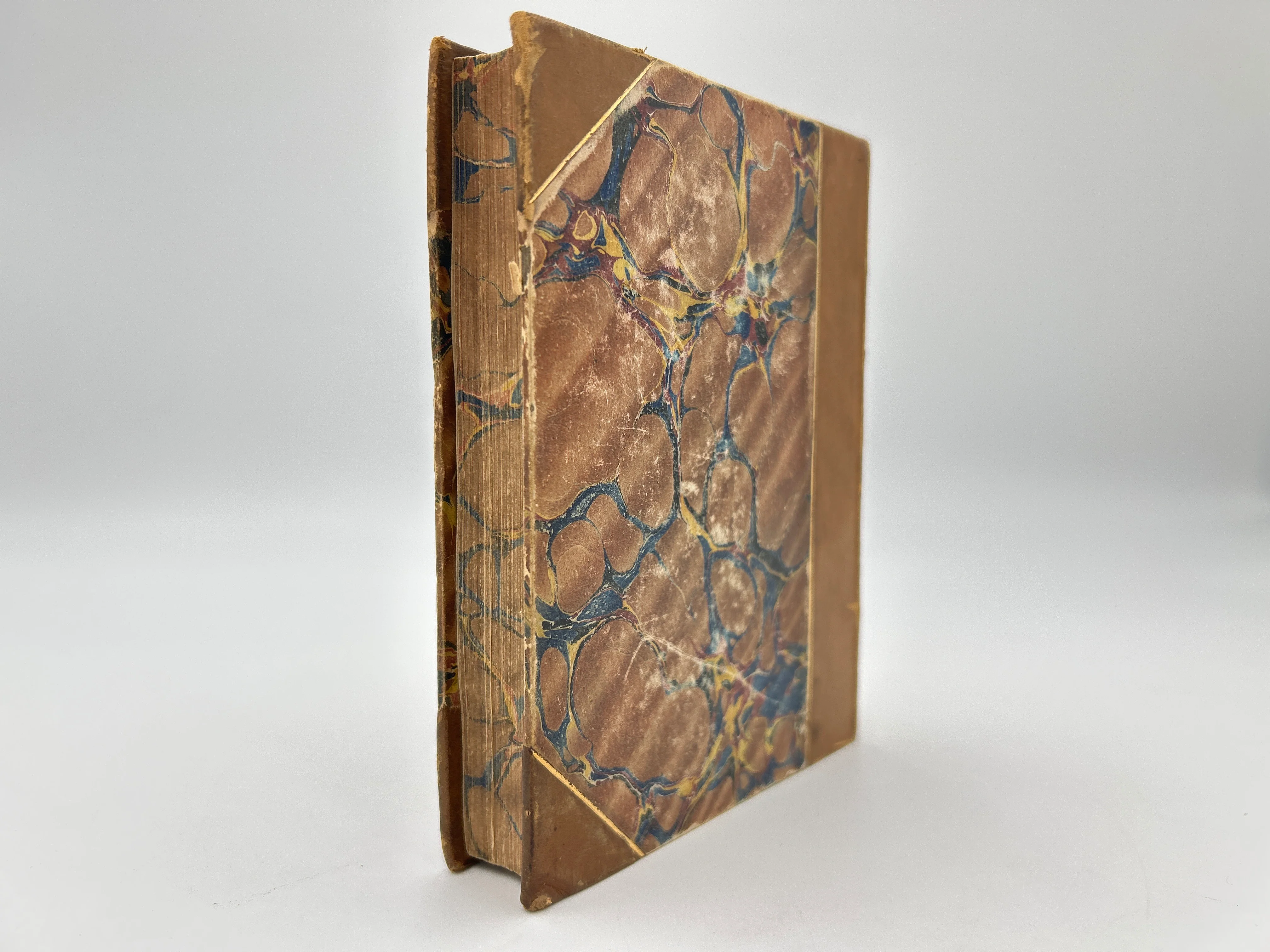
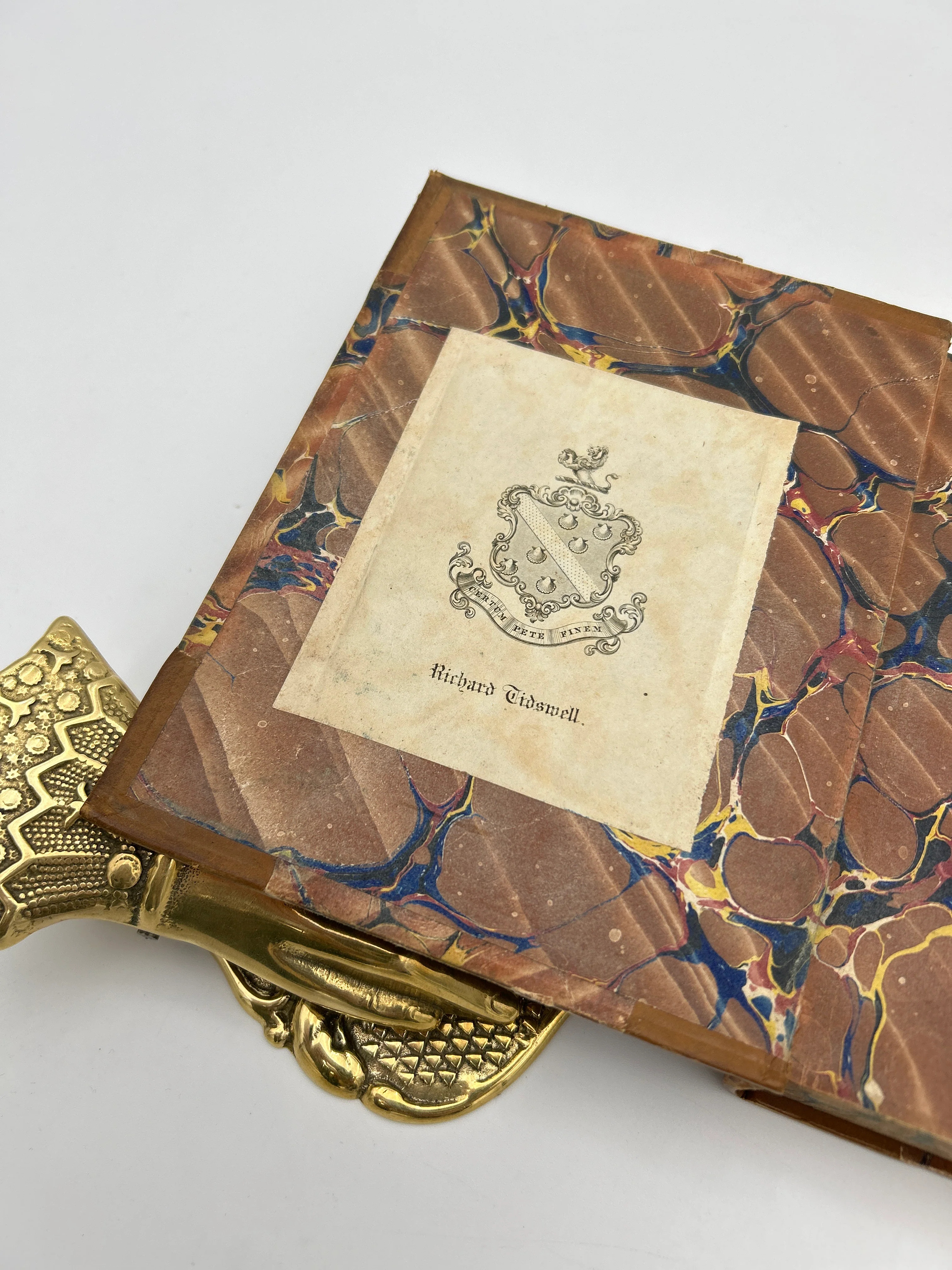
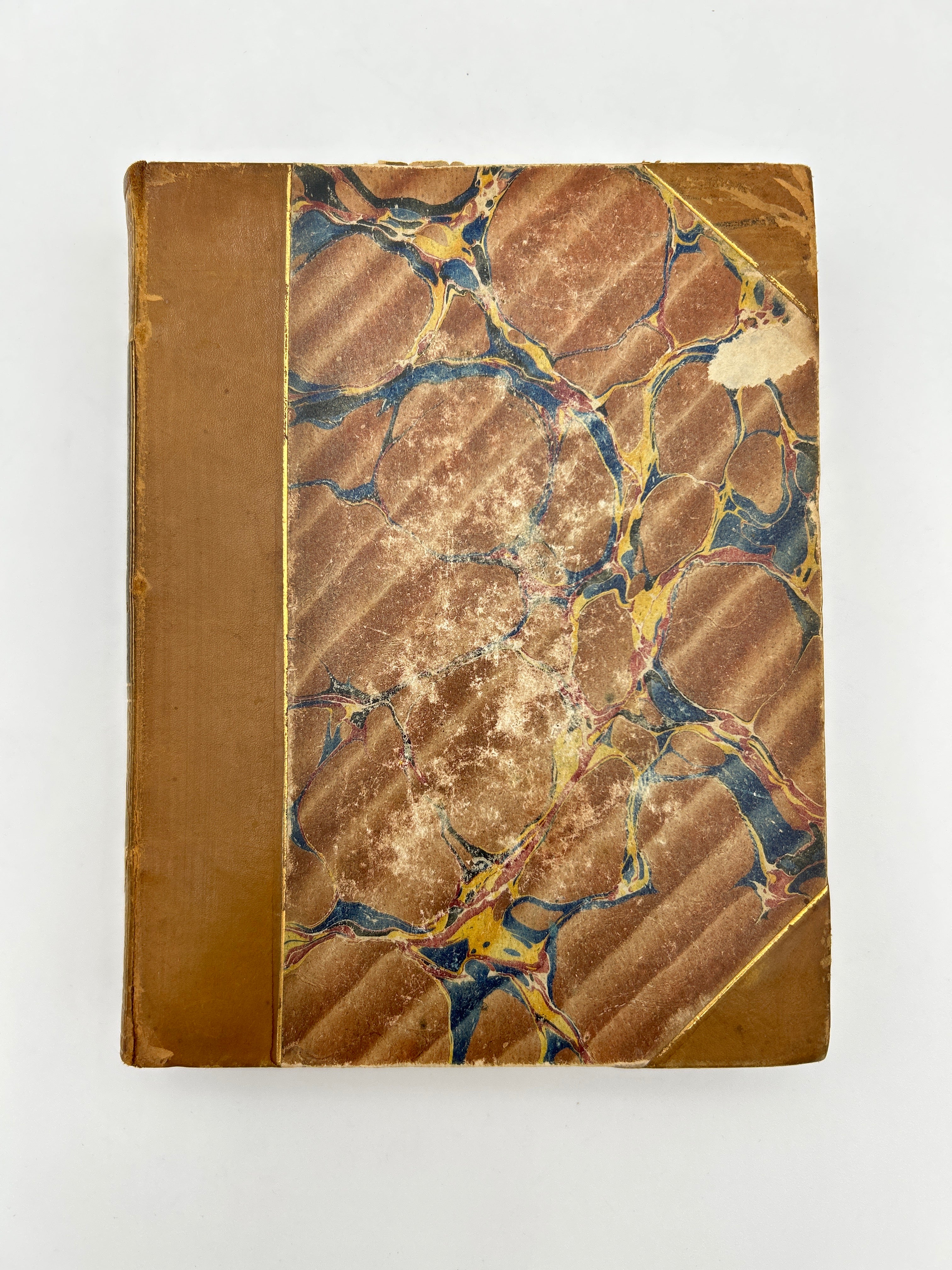
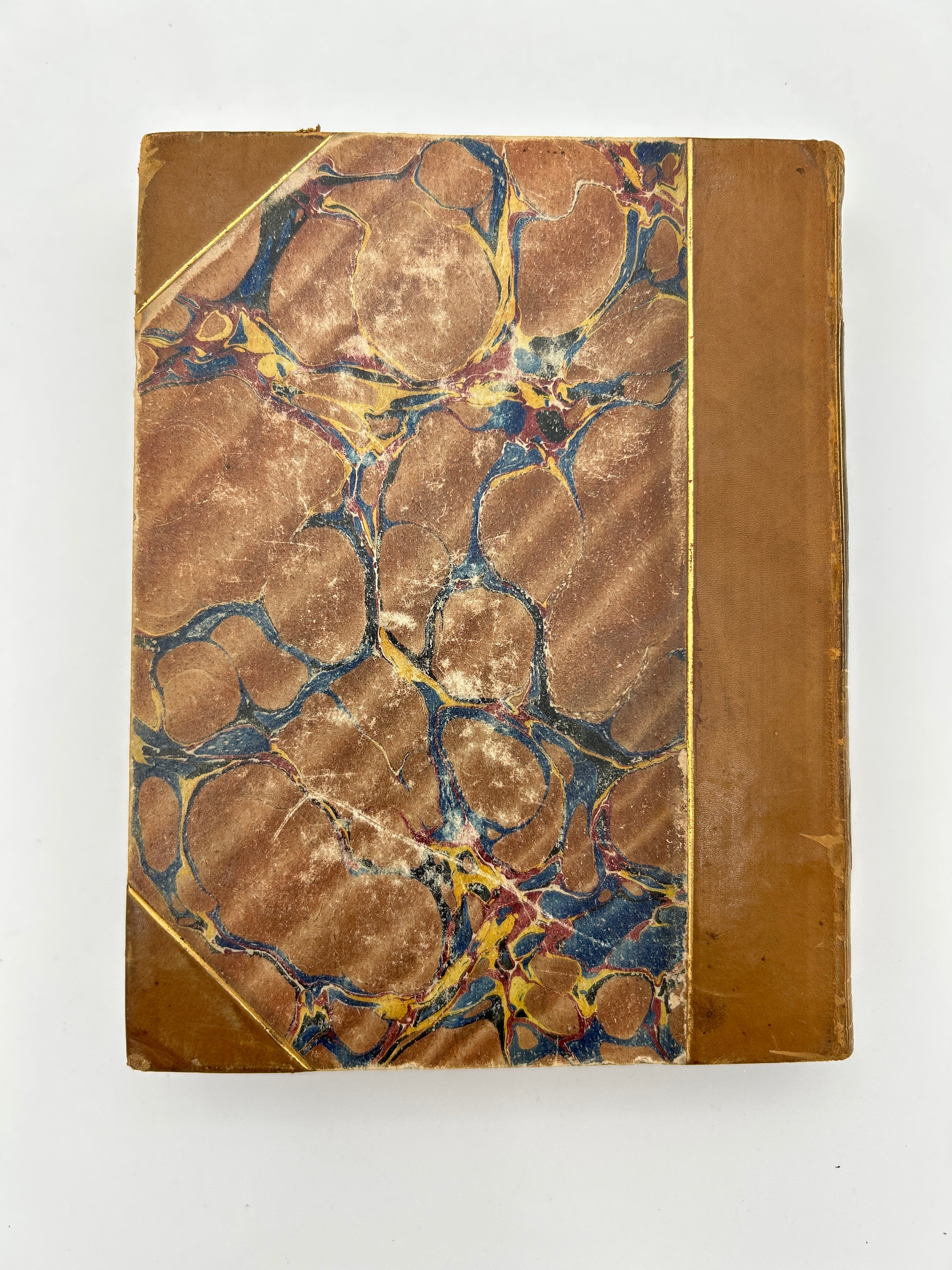
Three-quarter tan leather binding with marbled cover, gold tooling on spine, with Illustrations, Includes “Blue Beard,” “Jack the Giant Killer,” “Little Red Riding Hood,” and “Beauty and the Beast.” Marbled end papers, minimal foxing throughout. Rubbing to the bottom board edges. Very good condition overall.
Details & Craftsmanship
Every detail has been carefully considered to bring you the perfect product.
Details & Craftsmanship
Every detail has been carefully considered to bring you the perfect product.
Details & Craftsmanship
Every detail has been carefully considered to bring you the perfect product.
Details & Craftsmanship
Every detail has been carefully considered to bring you the perfect product.
Details & Craftsmanship
Every detail has been carefully considered to bring you the perfect product.
Details & Craftsmanship
Every detail has been carefully considered to bring you the perfect product.
Details & Craftsmanship
Every detail has been carefully considered to bring you the perfect product.
Details & Craftsmanship
Every detail has been carefully considered to bring you the perfect product.
Description
6C F.W.N. Bayley. London: Orr and Co., 1850.
Notes
Comic Nursery Tales (published mid‑19th century) was a Victorian‑era collection of well‑known folk and fairy stories presented with a humorous twist and often accompanied by lively illustrations. The anthology, attributed to F.W.N. Bayley around 1850, included renditions of tales such as Blue Beard, Jack the Giant Killer, Little Red Riding Hood, and Beauty and the Beast rendered with a lighter, witty tone and visual appeal typical of children’s gift books of that period. These editions were bound with decorative covers and featured humorous plates and woodcut‑style artwork that both entertained and made the familiar stories new for Victorian readers, reflecting the era’s interest in making traditional narratives accessible and enjoyable for families and young audiences
Bluebeard first became widely known through Charles Perrault’s 1697 printed tale, rooted in older Breton and folklore about dangerous husbands and forbidden knowledge; illustrations over time emphasized exotic or “Orientalist” elements in his costume and setting.
Jack the Giant Killer belongs to English folklore, with legends of giant‑slaying heroes going back through Celtic and Arthurian material; its many printed versions expanded Jack’s adventures with trickery and bravery.
Little Red Riding Hood first appeared in print in Perrault’s 1697 French version, where the wolf eats Red and her grandmother and the story ends with a stark moral; later retellings by the Brothers Grimm and others softened the violence with a huntsman rescuing both and added the iconic red hood and cape.
Beauty and the Beast began as a long 1740 tale by Gabrielle‑Suzanne de Villeneuve with extensive backstory, then was condensed in Jeanne‑Marie Leprince de Beaumont’s 1756 version that became the more familiar classical form featuring Beauty’s sacrifice, the Beast’s enchantment, and eventual transformation; this version emphasized moral lessons about inner worth and virtue.
Over time, these tales evolved through oral tradition and print, with each retelling reflecting cultural values and sensibilities that shaped how generations understand these stories today.
Description
Three-quarter tan leather binding with marbled cover, gold tooling on spine, with Illustrations, Includes “Blue Beard,” “Jack the Giant Killer,” “Little Red Riding Hood,” and “Beauty and the Beast.” Marbled end papers, minimal foxing throughout. Rubbing to the bottom board edges. Very good condition overall.