🚚 Free Worldwide Shipping on All Orders!Shop Now

$138.25
Original: $395.00
-65%The Bee-Man of Orn—
$395.00
$138.25The Story
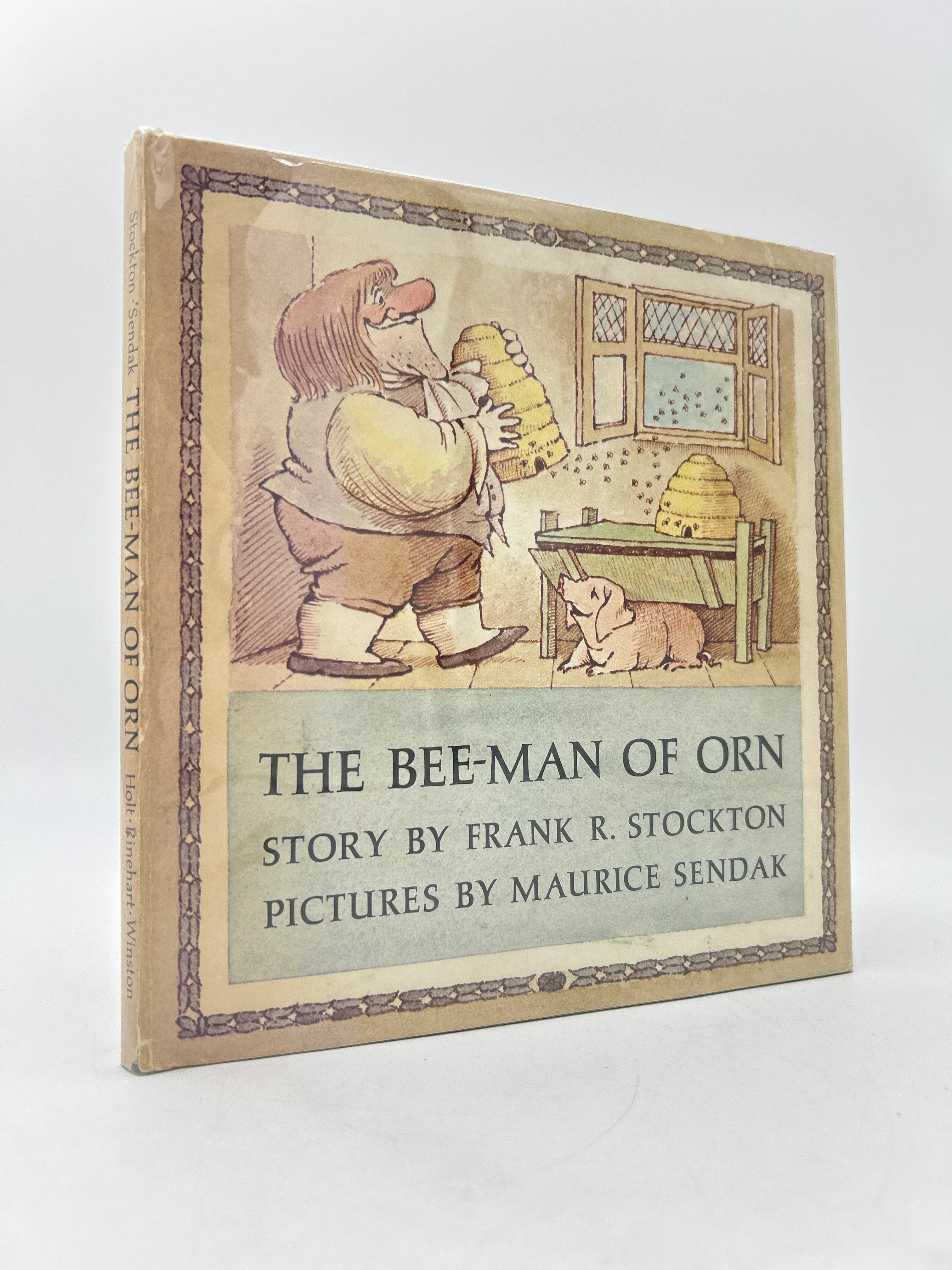
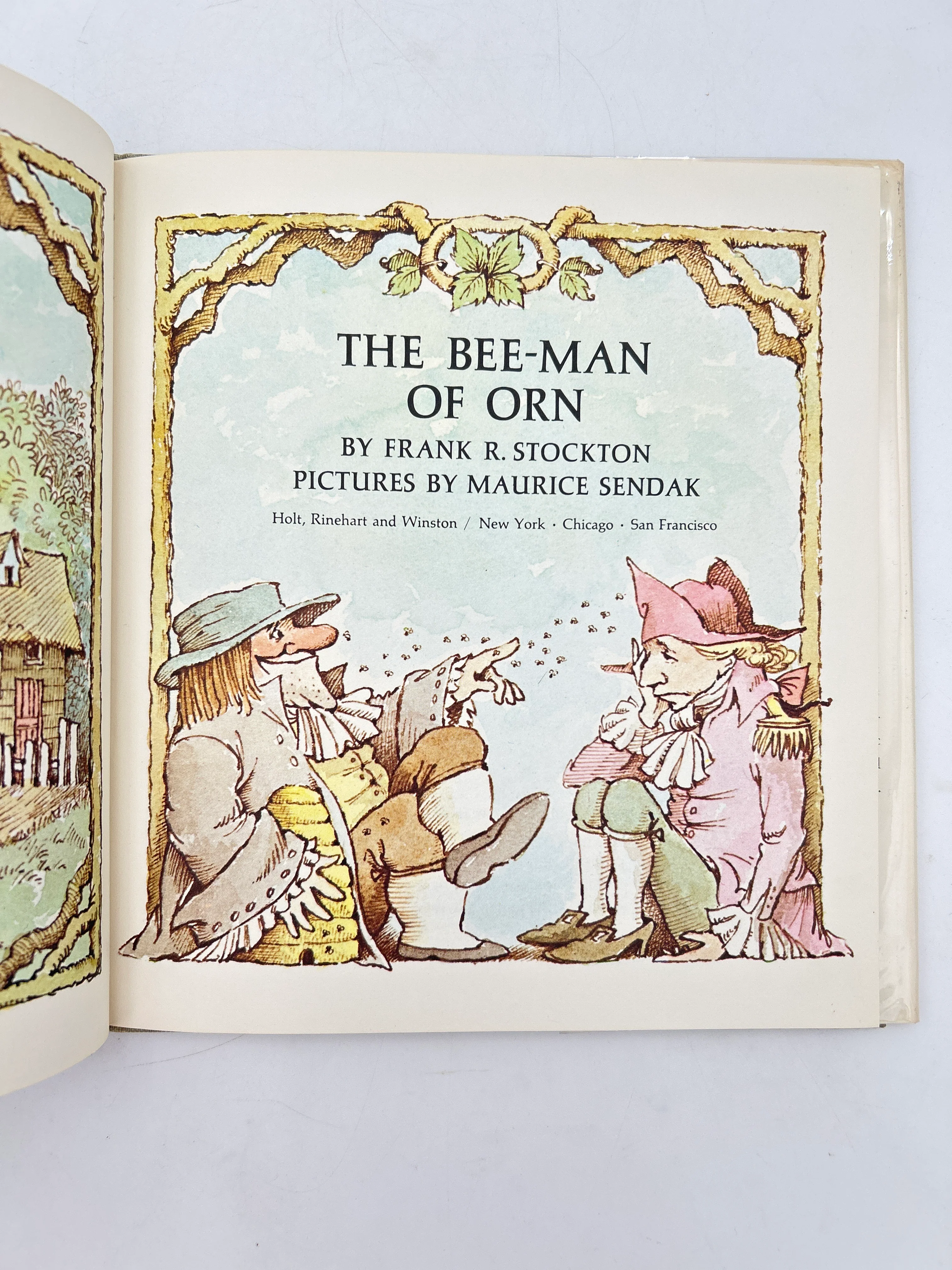
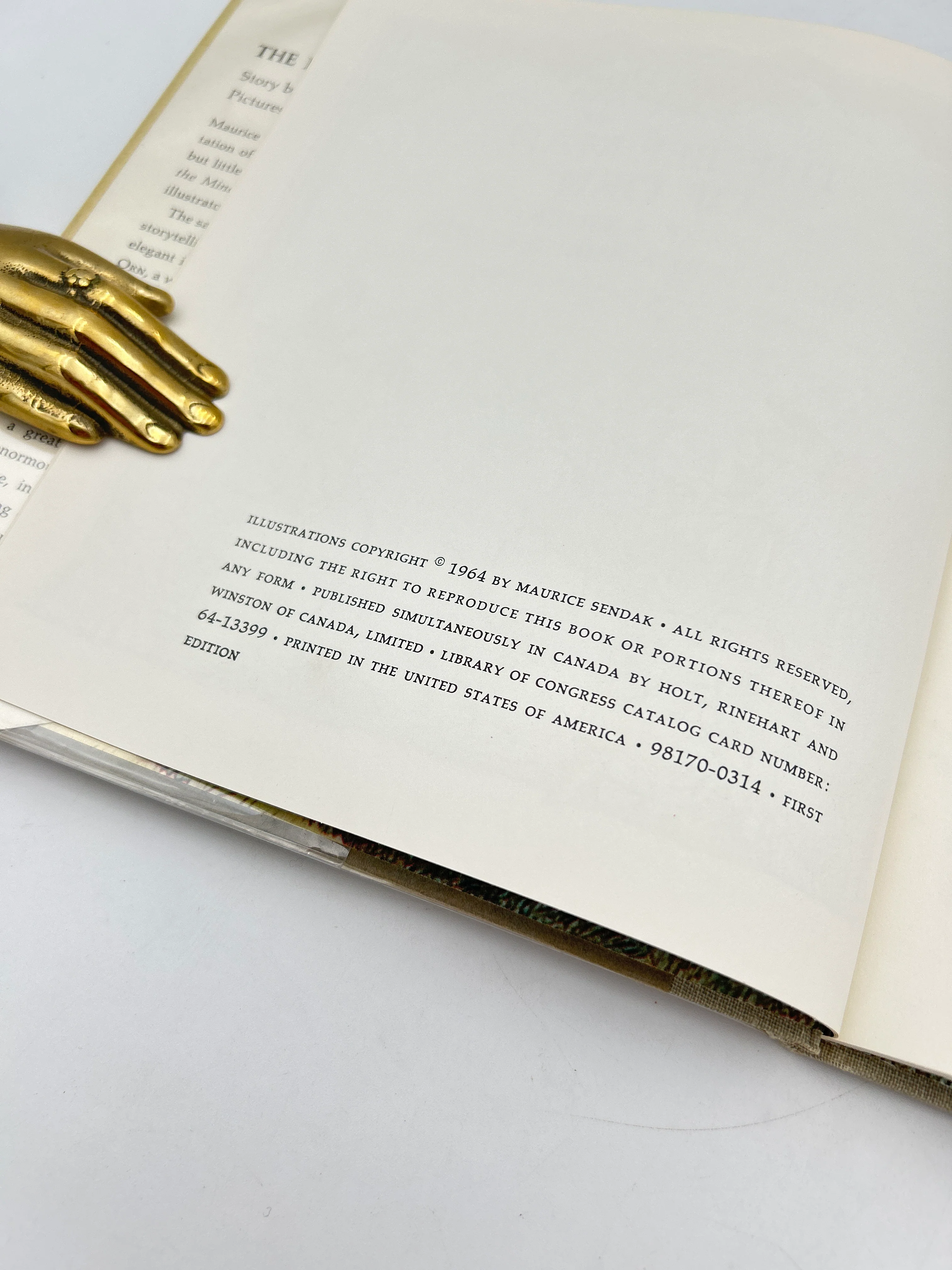
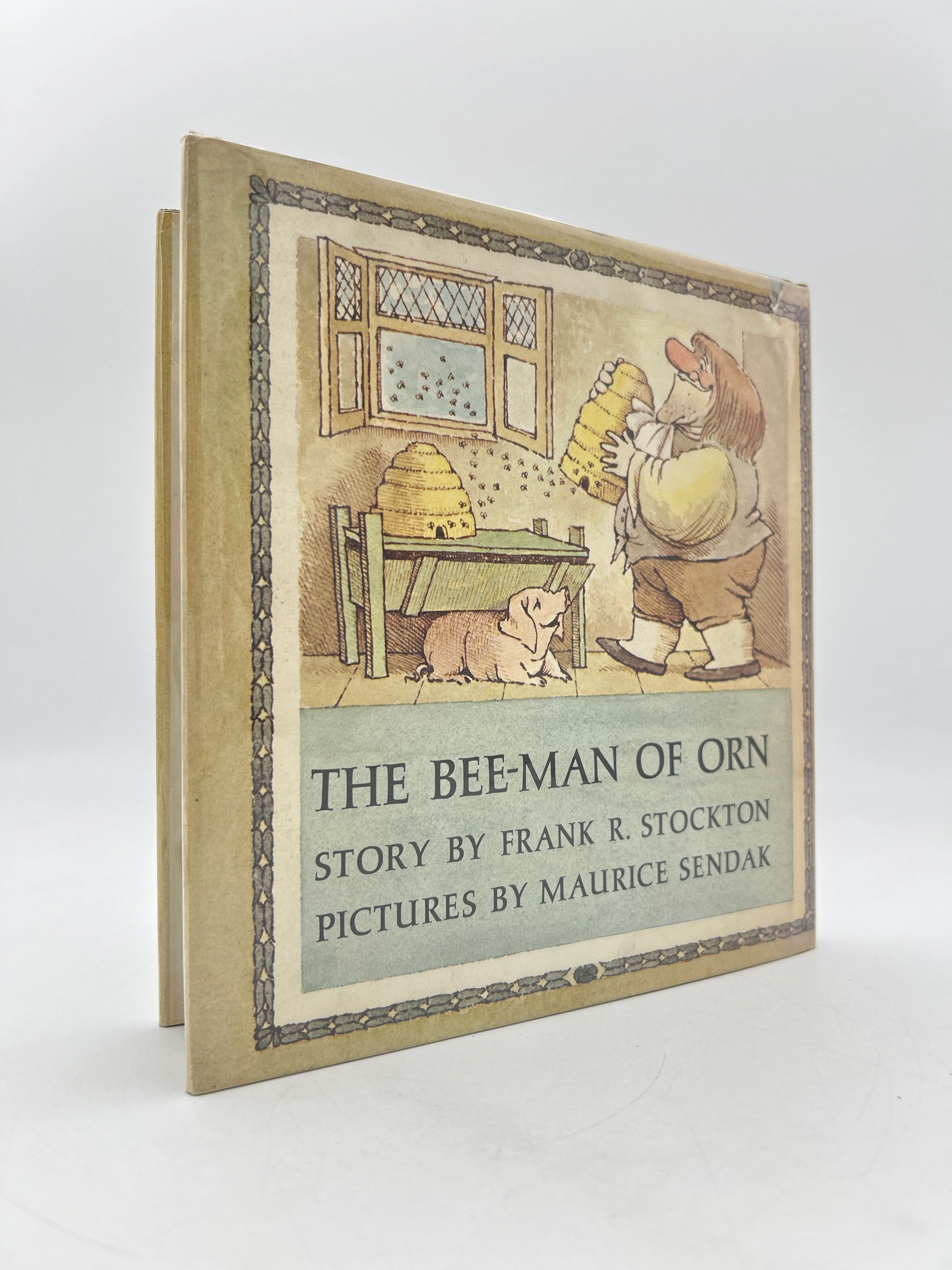
6C Frank R. Stockton. Pictures by Maurice Sendak. New York: Holt, Rinehart, and Winston, 1964. First Edition.
Notes
The Bee-Man of Orn is a whimsical, philosophical fairy tale first published in 1887. The narrative centers on a content, shriveled old man who spends his entire existence living among bees, even housing a swarm in his leather coat. His peaceful life is disrupted when a "Junior Sorcerer" informs him that he has been "transformed from something else"—though the sorcerer cannot say what. This sparks a comic quest for identity as the Bee-man wanders the country of Orn, eventually rescuing a baby from a dragon. Convinced the infant is his "original form," he is magically returned to babyhood. The tale concludes with a gentle twist: years later, the baby has grown back into the exact same shriveled, bee-loving man, suggesting that one's true nature is often inescapable.
Frank R. Stockton (1834–1902) was a celebrated American humorist and editor for the prestigious St. Nicholas Magazine. He is best known for his clever short story "The Lady, or the Tiger?", which remains famous for its unresolved ending. Stockton was notable for avoiding the heavy-handed "didactic moralizing" common in 19th-century children's books, preferring instead to use dry humor and matter-of-fact fantasy to poke fun at human foibles like greed and vanity. His writing style was marked by clarity and an understated tone that often drew comparisons to Mark Twain.
In 1964, the legendary Maurice Sendak—the Caldecott-winning creator of Where the Wild Things Are—reinterpreted Stockton’s tale. Sendak’s version is highly esteemed for its portly, heavily-jowled Bee-man and its "long-ago-and-faraway" atmosphere rendered in soft pastel and earth tones. Sendak viewed the entire book as the final piece of art, often fighting for specific colors and paper to match his vision. His illustrations for The Bee-Man of Orn are particularly significant because they showcase his ability to blend humor with a sophisticated, slightly "dangerous" artistic perspective
Description
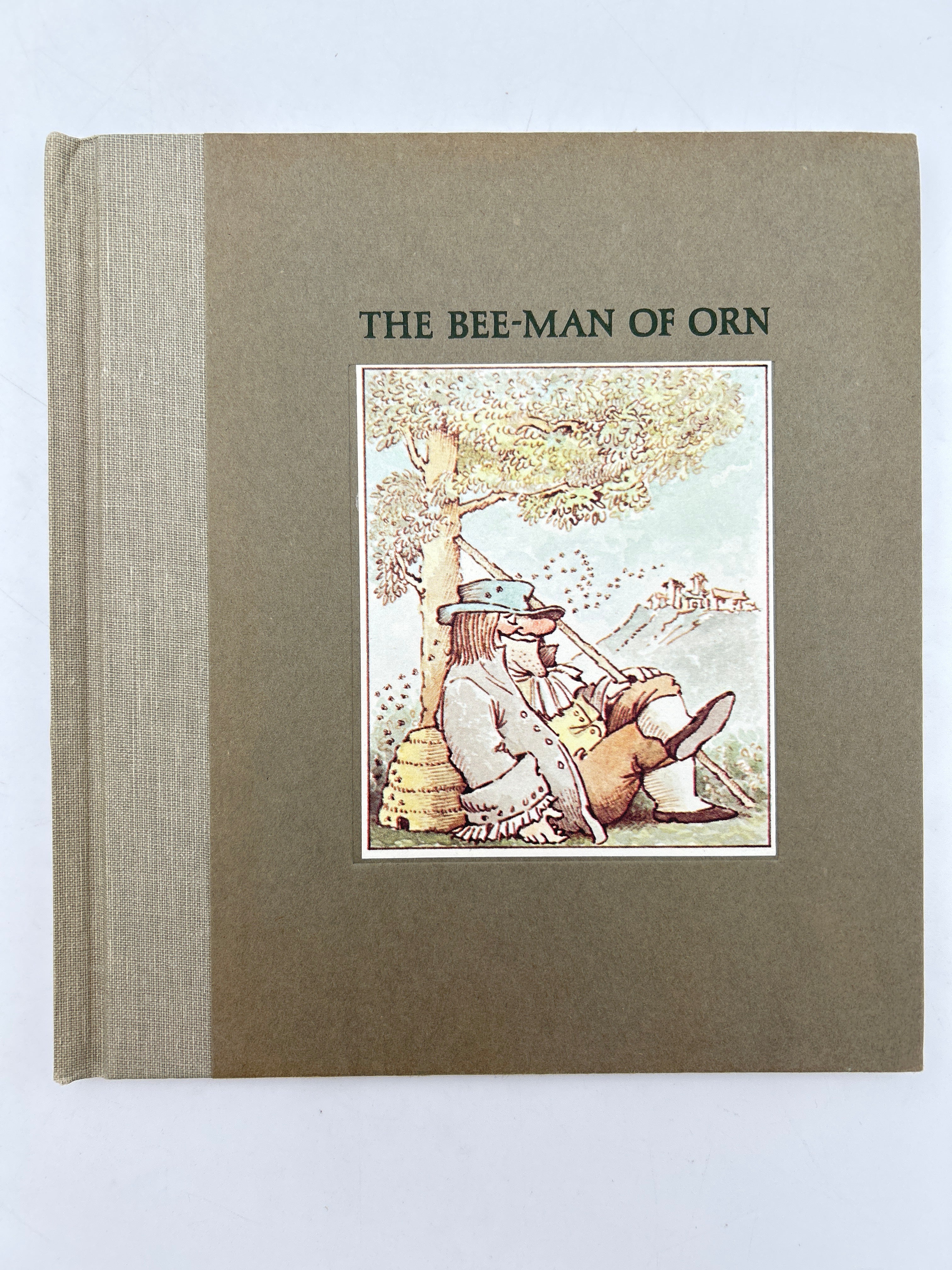
Square octavo. Grey cloth-backed paper-covered boards with colored illustration pastedown plate to upper board. Illustrated endpapers. Color illustrations throughout. Original pictorial dust wrapper. Very fine condition.
Details & Craftsmanship
Every detail has been carefully considered to bring you the perfect product.
Details & Craftsmanship
Every detail has been carefully considered to bring you the perfect product.
Details & Craftsmanship
Every detail has been carefully considered to bring you the perfect product.
Details & Craftsmanship
Every detail has been carefully considered to bring you the perfect product.
Description
6C Frank R. Stockton. Pictures by Maurice Sendak. New York: Holt, Rinehart, and Winston, 1964. First Edition.
Notes
The Bee-Man of Orn is a whimsical, philosophical fairy tale first published in 1887. The narrative centers on a content, shriveled old man who spends his entire existence living among bees, even housing a swarm in his leather coat. His peaceful life is disrupted when a "Junior Sorcerer" informs him that he has been "transformed from something else"—though the sorcerer cannot say what. This sparks a comic quest for identity as the Bee-man wanders the country of Orn, eventually rescuing a baby from a dragon. Convinced the infant is his "original form," he is magically returned to babyhood. The tale concludes with a gentle twist: years later, the baby has grown back into the exact same shriveled, bee-loving man, suggesting that one's true nature is often inescapable.
Frank R. Stockton (1834–1902) was a celebrated American humorist and editor for the prestigious St. Nicholas Magazine. He is best known for his clever short story "The Lady, or the Tiger?", which remains famous for its unresolved ending. Stockton was notable for avoiding the heavy-handed "didactic moralizing" common in 19th-century children's books, preferring instead to use dry humor and matter-of-fact fantasy to poke fun at human foibles like greed and vanity. His writing style was marked by clarity and an understated tone that often drew comparisons to Mark Twain.
In 1964, the legendary Maurice Sendak—the Caldecott-winning creator of Where the Wild Things Are—reinterpreted Stockton’s tale. Sendak’s version is highly esteemed for its portly, heavily-jowled Bee-man and its "long-ago-and-faraway" atmosphere rendered in soft pastel and earth tones. Sendak viewed the entire book as the final piece of art, often fighting for specific colors and paper to match his vision. His illustrations for The Bee-Man of Orn are particularly significant because they showcase his ability to blend humor with a sophisticated, slightly "dangerous" artistic perspective
Description
Square octavo. Grey cloth-backed paper-covered boards with colored illustration pastedown plate to upper board. Illustrated endpapers. Color illustrations throughout. Original pictorial dust wrapper. Very fine condition.