Original: $1,550.00
-65%$1,550.00
$542.50The Story
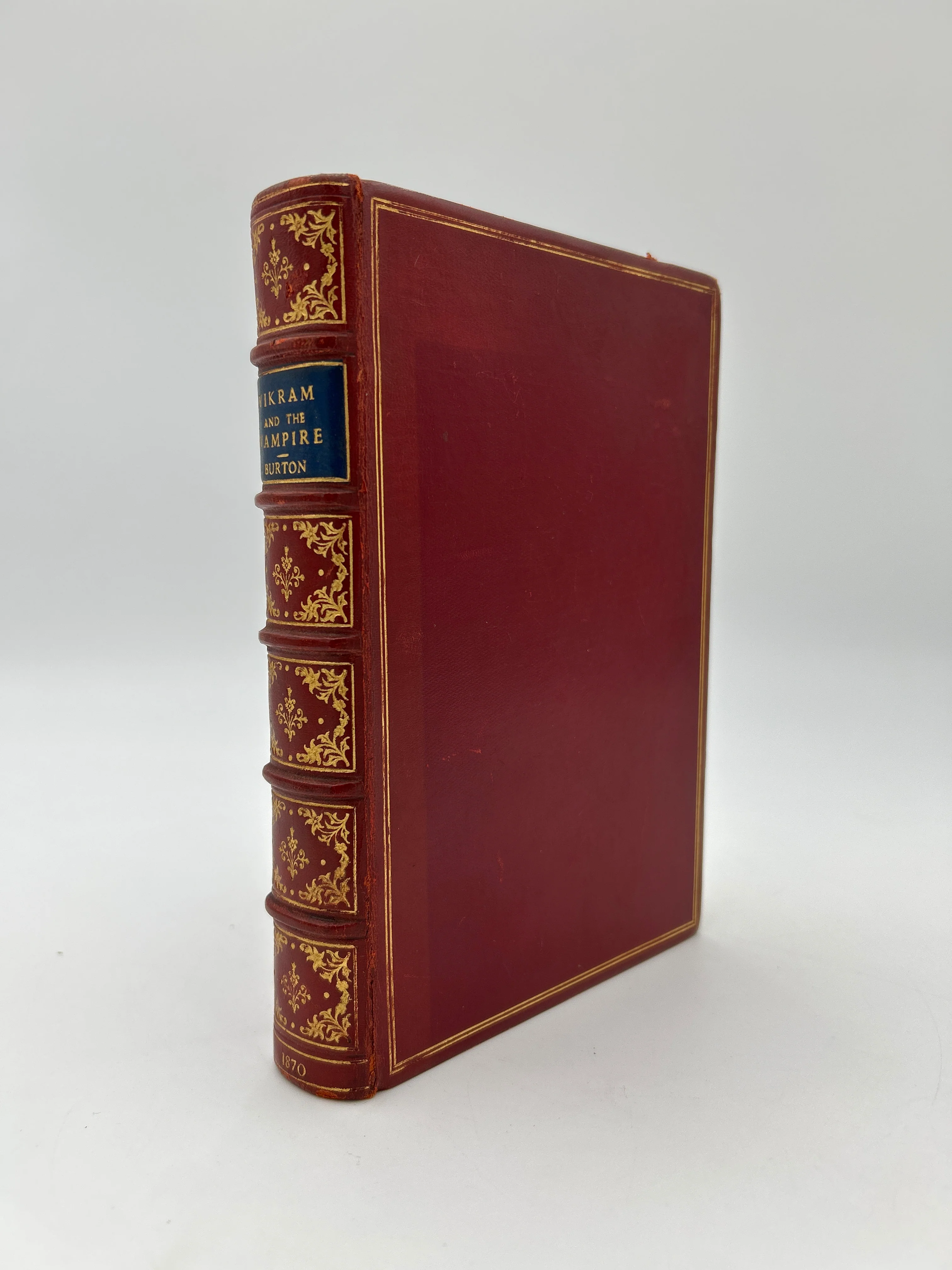
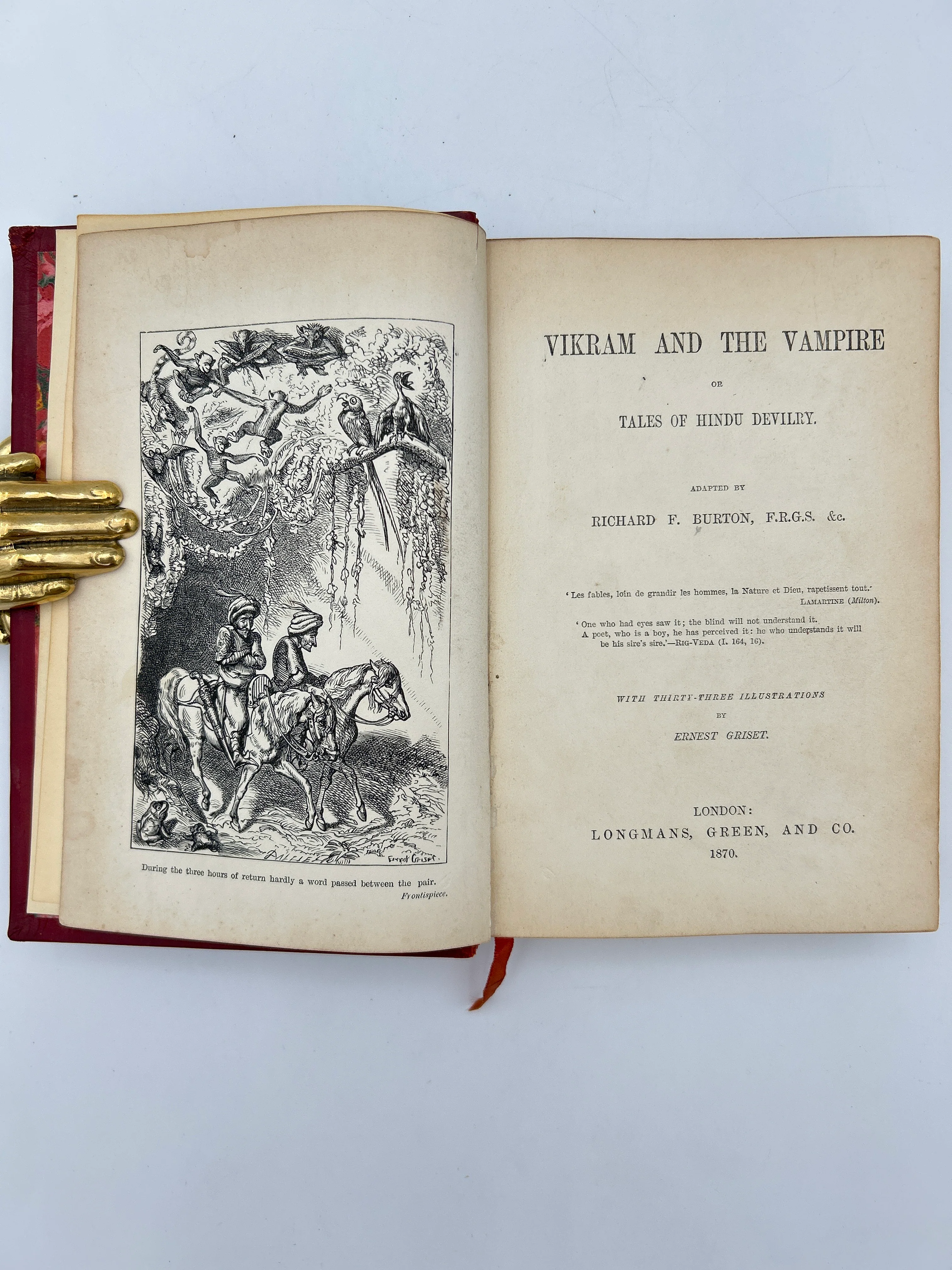
6b. Adapted by Sir Richard F. Burton, Illustrated by Ernest Griset. London: Longmans, Green, and Co., 1870. First Edition.
Notes
Vikram and the Vampire: Tales of Hindu Devilry is a collection of ancient Indian folk tales adapted into English by Sir Richard F. Burton, first published in 1870. The stories center around the legendary King Vikramāditya (Vikram), who is tasked with capturing a cunning vampire-like spirit known as a vetala. Each time Vikram tries to carry the vetala, the creature tells him a strange and moral-filled tale—often ending with a riddle or ethical dilemma—before escaping back to its tree. This cycle repeats with each story, combining elements of fantasy, morality, wit, and mysticism. The tales reflect Indian storytelling traditions, especially those found in ancient Sanskrit collections like the Baital Pachisi, from which Burton drew his source material.
Sir Richard F. Burton, a British explorer, linguist, and orientalist, was fascinated by world cultures and translated many Eastern literary works into English. His version of Vikram and the Vampire includes not only translations but also embellishments, commentary, and framing narratives influenced by Victorian tastes and his own flair for the exotic. The collection is both entertaining and culturally rich, offering insight into traditional Indian beliefs, social values, and storytelling techniques. While Burton’s style reflects the colonial mindset of his time, the tales themselves have endured for centuries, admired for their imagination, moral complexity, and deep roots in Indian folklore.
Description
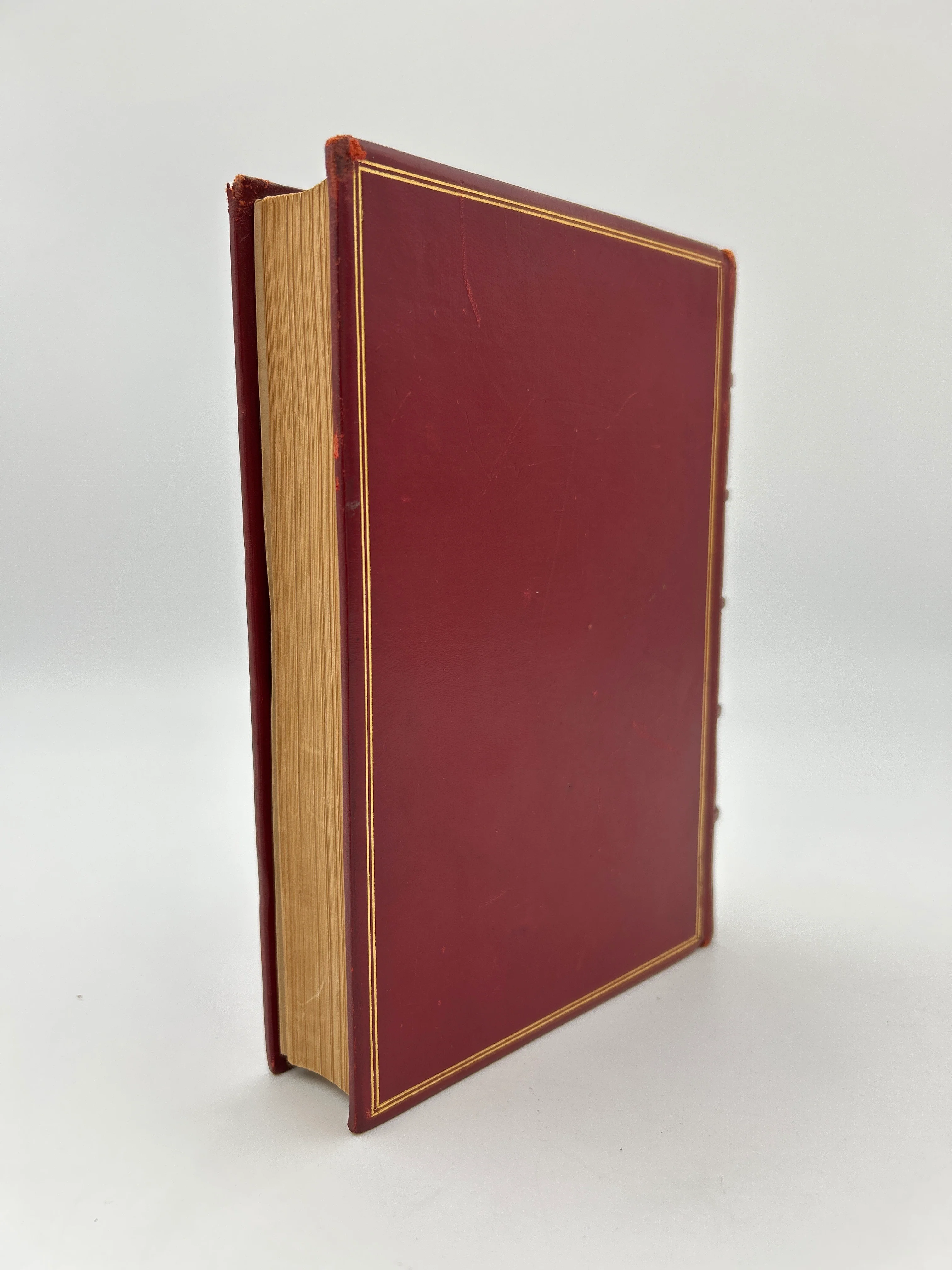
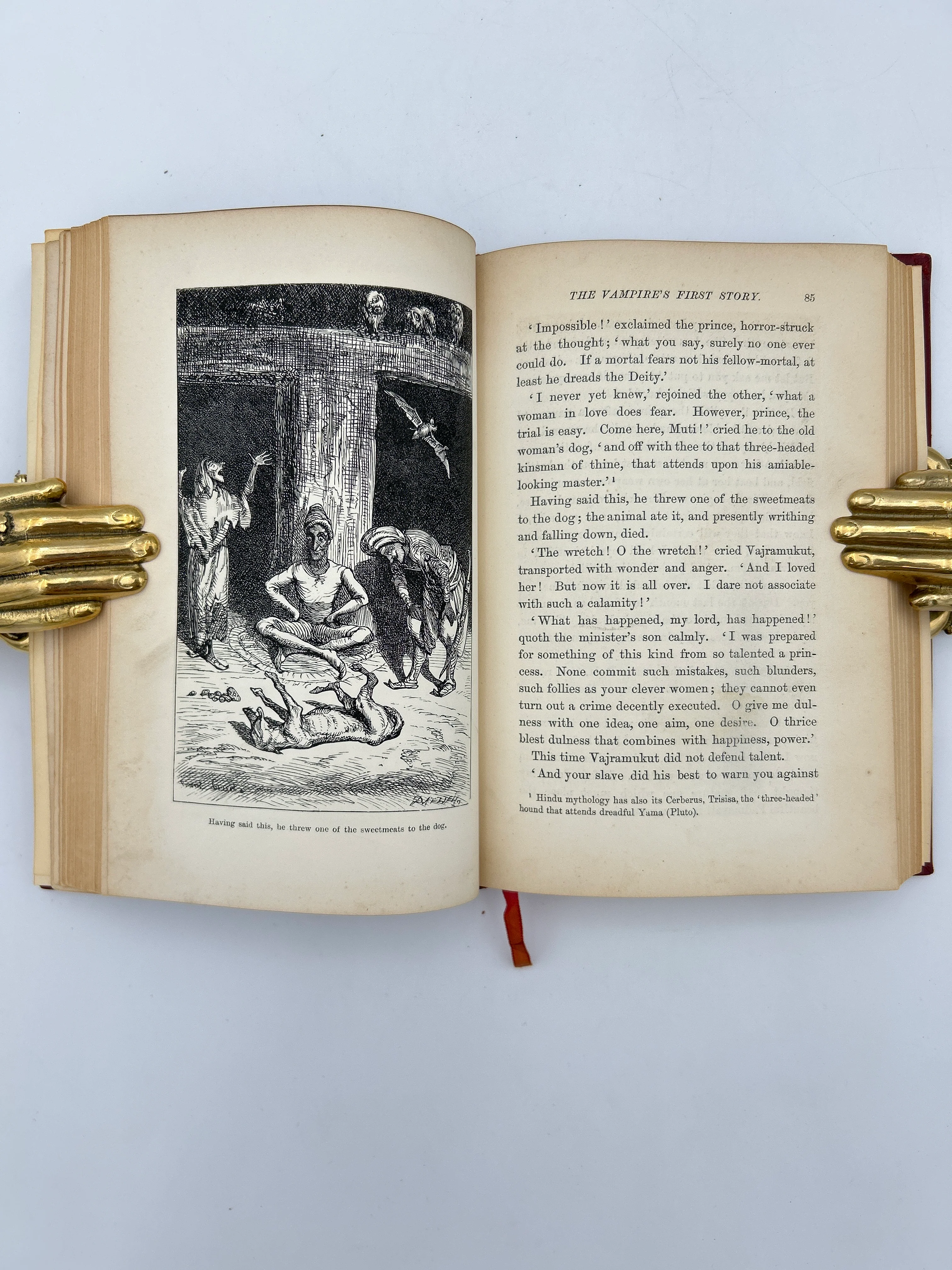
Red leather binding with gilt boarders and decorative elements along the spine. Five raised bands with black leather label with gilt lettering. Marbled endpapers. Minimal scuffing to the boards. Bumped upper corners. Thirty-three illustrations throughout. Fine condition overall.
Details & Craftsmanship
Every detail has been carefully considered to bring you the perfect product.
Details & Craftsmanship
Every detail has been carefully considered to bring you the perfect product.
Details & Craftsmanship
Every detail has been carefully considered to bring you the perfect product.
Description
6b. Adapted by Sir Richard F. Burton, Illustrated by Ernest Griset. London: Longmans, Green, and Co., 1870. First Edition.
Notes
Vikram and the Vampire: Tales of Hindu Devilry is a collection of ancient Indian folk tales adapted into English by Sir Richard F. Burton, first published in 1870. The stories center around the legendary King Vikramāditya (Vikram), who is tasked with capturing a cunning vampire-like spirit known as a vetala. Each time Vikram tries to carry the vetala, the creature tells him a strange and moral-filled tale—often ending with a riddle or ethical dilemma—before escaping back to its tree. This cycle repeats with each story, combining elements of fantasy, morality, wit, and mysticism. The tales reflect Indian storytelling traditions, especially those found in ancient Sanskrit collections like the Baital Pachisi, from which Burton drew his source material.
Sir Richard F. Burton, a British explorer, linguist, and orientalist, was fascinated by world cultures and translated many Eastern literary works into English. His version of Vikram and the Vampire includes not only translations but also embellishments, commentary, and framing narratives influenced by Victorian tastes and his own flair for the exotic. The collection is both entertaining and culturally rich, offering insight into traditional Indian beliefs, social values, and storytelling techniques. While Burton’s style reflects the colonial mindset of his time, the tales themselves have endured for centuries, admired for their imagination, moral complexity, and deep roots in Indian folklore.
Description
Red leather binding with gilt boarders and decorative elements along the spine. Five raised bands with black leather label with gilt lettering. Marbled endpapers. Minimal scuffing to the boards. Bumped upper corners. Thirty-three illustrations throughout. Fine condition overall.